Recently in a few different conversations that Iu2019ve had with Vietnamese friends the topic of wet rice agriculture and respect for women has come up.
Today there is a widely-held belief in Vietnam that an important characteristic of Vietnamese culture is a tradition of respecting women (Truyu1ec1n thu1ed1ng tru1ecdng phu1ee5 nu1eef trong vu0103n hu00f3a Viu1ec7t Nam), and that this is somehow related to wet rice agriculture and the worship of female spirits.
Any time I hear someone talking about such a tradition, I can immediately detect u201cessentialismu201d (bu1ea3n chu1ea5t luu1eadn) and nationalism. This is because I know that all societies change over time, and that it only became possible to share ideas at a national level in the modern era, after the development of modern educational systems and modern forms of communication (starting with newspapers, and then radio, tv and now the Internet).
Therefore, I know that there are no u201ctraditionsu201d that last for centuries (or millennia, as is the claim in the case of the tradition of respecting women in Vietnam).
So when I hear someone talk about a u201ctradition of respecting women in Vietnam,u201d my first reaction is to ask: Where does that idea come from?
Itu2019s actually very easy to find out, so letu2019s go see.

Question: Did anyone prior to the twentieth century say anything about a tradition of respecting women? Does it say that, for instance, in the u0110u1ea1i Viu1ec7t su1eed ku00fd tou00e0n thu01b0 or the u0110u1ea1i Nam thu1ef1c lu1ee5c?
Answer: No.
Question: Ok, then how about in reformist writings by people like Phan Bu1ed9i Chu00e2u or Phan Chu Trinh or other intellectuals who started to come into contact with Western ideas in the early twentieth century?
Answer: Nope. People like Phan Bu1ed9i Chu00e2u said a little bit about women. People of this generation where the first ones to talk about the Western concept of the nation, and I think I recall Phan Bu1ed9i Chu00e2u mentioning that women are important for the nation. However, people at that time did not talk about any u201ctradition of respecting women in Vietnam.u201d
Question: Maybe the French said something about that? Anything in French colonial-era writings about the u201cTradition annamite de respect des femmesu201d?
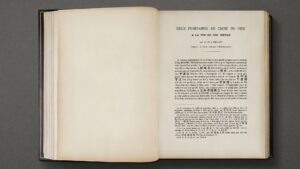
Answer: No, but French writings about the womenu2019s movement in the West did become known to some Vietnamese. The above image is of pages from a book on the international womenu2019s movement that was published in 1928 and which contains information that was translated from French and Chinese.
Question: Ok, then how about in the many magazines, newspapers and books that were written in Vietnamese using the Romanized script (quu1ed1c ngu1eef) in the 1920s and 1930s?
Answer: I have not found anything that talks about a tradition of respecting women in Vietnam, but there were books on, for instance, the Socialist effort to u201cliberate womenu201d that talked about the different ways that women were oppressed at different times in the past, and which argued that the Soviet Union had created a society where men and women were equal.

Question: I see. Well maybe this tradition of respecting women idea is one that was developed in South Vietnam before 1975, and then maybe was kept alive in the diaspora and has now made it back to Vietnam?
Answer: Good guess, but no, itu2019s not there either.
Question: Ok, then it has to be North Vietnam in the 1950s, during the time when scholars were introduced to Marxist scholarship!
Answer: Kind of. One idea that was written about at that time was the idea that Vietnam had once been a matriarchy. In Marxist historiography there is the idea that all societies go through the same stages of development (an idea that is no longer upheld by anyone, as far as I know), and Friedrich Engels wrote in The Origin of the Family, Private Property and the State about how he believed matriarchy was an early stage of human development.
This idea was written about in North Vietnam in the 1950s.

Question: I see, but thatu2019s not a u201ctradition of respecting womenu201d and it has nothing to do with wet rice agriculture. So for those ideas, there is only one possibility left: the post-u0110u1ed5i Mu1edbi period.
Answer: EXACTLY!!! In the 1990s, people like the late Tru1ea7n Quu1ed1c Vu01b0u1ee3ng and Tru1ea7n Ngu1ecdc Thu00eam both wrote about this topic.
To be fair, Tru1ea7n Quu1ed1c Vu01b0u1ee3ng had written in the early 1970s about a tradition of respecting women, however from what I can tell, Tru1ea7n Quu1ed1c Vu01b0u1ee3ng talked mainly about what he called a u201cmother principleu201d (nguyu00ean lu00fd mu1eb9 cu1ee7a vu0103n hu00f3a Viu1ec7t Nam) in Vietnamese culture. He did not connect together respect for women, agriculture and the worship of female spirits.
That was the work of Tru1ea7n Ngu1ecdc Thu00eam in the 1990s.

So is Tru1ea7n Ngu1ecdc Thu00eam correct?
There is an easy way to test that. All we have to do is to compare what Tru1ea7n Ngu1ecdc Thu00eam has said about Vietnam with what we know about other places.
Question: Are there other countries that engage in wet rice agriculture?
Answer: Yes! China, India, Thailand, Burma, Cambodia, Indonesia. . . the list goes on and on.
Question: Are there other countries where people worship female spirits?
Answer: Yes! China, India, Thailand, Burma, Cambodia, Indonesia. . . the list goes on and on.
Question: Do those places say that the existence of wet rice agriculture and the worship of female spirits is evidence of a u201ctradition of respecting women?u201d
Answer: No. . .
Ok, so now we have a problem. If this is something that is u201ctrueu201d then why is it that it is only in Vietnam that people have made this claim when the exact same conditions exist in other countries?

To answer that question we have to examine the writings of Tru1ea7n Ngu1ecdc Thu00eam (and Tru1ea7n Quu1ed1c Vu01b0u1ee3ng) and try to understand why they wrote what they did when they did.
The 1990s was a time when Vietnam was opening to the world, and it was also a time when Globalization was becoming more powerful. There were many people in Vietnam who felt nervous about the future, and who feared that international culture would overwhelm Vietnamese culture and society.
They therefore felt that they needed to strengthen Vietnamese culture to prevent that from happening.
How could they do that? Prior to u0110u1ed5i Mu1edbi, Socialist ideology had been used to try to hold Vietnamese society together, but with the fall of the Soviet Union, the Berlin Wall, etc., Socialism lost a lot of its appeal.
So in Vietnam, people turned to u201ctraditionalu201d culture, and tried to promote u201ctraditionalu201d values as a way to strengthen society (the exact same thing happened in the PRC at that time as well).
As this happened, the term u201cbu1ea3n su1eafcu201d (characteristic/essence) started to be written about A LOT.
Writers wrote about the u201cbu1ea3n su1eafcu201d of Vietnam, of Vietnamese culture, of Vietnamese everything.

It is in this context that this idea of the u201ctradition of respecting womenu201d was developed.
It is an idea that, as the above passage from a writing by Tru1ea7n Quu1ed1c Vu01b0u1ee3ng in the 1990s demonstrates, would not have made much sense prior to that time. In the 1970s Tru1ea7n Quu1ed1c Vu01b0u1ee3ng tried to publish a small book on the u201ctradition of respecting women in Vietnam,u201d and its publication was held up by a female cadre who said, u201cIf there was a tradition of respecting women, then why the heck did we have to set the problem of u2018liberating womenu2019?u201d
So why did this idea make sense in the 1990s? Why did someone like Tru1ea7n Ngu1ecdc Thu00eam combine together wet rice agriculture, the worshipping of female deities and respect for women and say that this is a timeless characteristic of Vietnamese culture?
Again, one would have to examine the writings of Tru1ea7n Ngu1ecdc Thu00eam, and interview him and others, to try to determine why he promoted that idea at that time.
What is extremely clear, however, is that the u201ctradition of respecting womenu201d in Vietnam is a NEW idea, and that it is an INVENTED idea. What is more, when it is described as a u201cbu1ea3n su1eafcu201d (a timeless characteristic) of Vietnam, it becomes an ESSENTIALIZED idea.
New ideas are not u201ctraditions.u201d They are u201cinvented traditions.u201d And nothing has a u201cbu1ea3n su1eafcu201d or essential characteristic that remains unchanged for centuries.
So again, when I hear about a u201ctradition of respecting womenu201d in Vietnam (or anywhere), I can tell right away that itu2019s an essentialized idea. Itu2019s not u201ctrue.u201d Whatu2019s u201ctrueu201d is that someone at some point in time felt that it was important to promote that idea and that s/he did so for some specific purpose.