
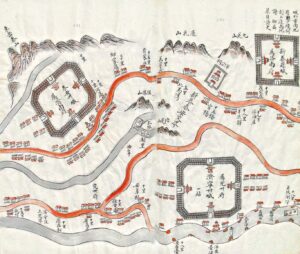
What is the most popular topic in the field of premodern Vietnamese history today? Which topic has seen more than 150 studies produced about it over the past 15 years, with the majority appearing in the past 10 years? Indeed, those numbers make it arguably the “hottest” topic of all...
Read More
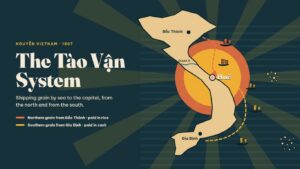
The Tào Vận (Grain Shipment) System in 19th-Century Vietnam
In the 19th century, the Nguyễn dynasty set up a system for shipping grain from the northern and southern halves of the country to the capital at Huế. Historians refer to this as “tào vận” (漕運), a term that refers to the shipment of grain by water, and was historically...
Read More
Random Writings from a Pineapple Field (Part 2)
Today my wife, Le Ha, told me that there was going to be an opening of an art exhibit at the university library and that she wanted to go to the event. I looked at the announcement that had been sent to her email. It was all in English, but...
Read More
Random Writings from a Pineapple Field
A couple of months ago I moved to Taiwan. Or perhaps I should say, I moved “back” to Taiwan, as I spent six years here back in the 1990s, and at that time, Taiwan definitely felt like a second home to me. It’s been 25 years since I last lived...
Read More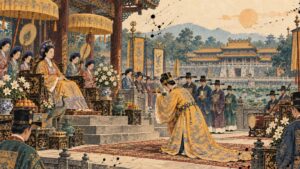
Emperor Minh Mạng’s Celebration of the Empress Dowager’s 60th Birthday
I recently read a really interesting article by historian Taga Yoshihiro on “Economic Aspects of Court Rituals and Ceremonies in Nineteenth Century Hue.” In the article, Taga examines the economics behind certain Nguyễn dynasty rituals. It’s a fascinating article, and I encourage everyone to read it. At one point in...
Read More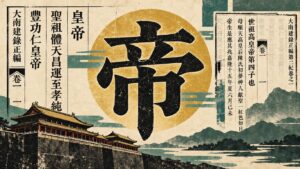
Vietnam had EMPERORS, not Kings!!
For years now, I keep coming across articles in English written by Vietnamese scholars in which Vietnamese rulers in the past are referred to as “kings.” King Gia Long, King Minh Mạng, King Lê Thánh Tông, etc. Those men were not “kings.” They were EMPERORS!!! Kings (vương 王) were not...
Read More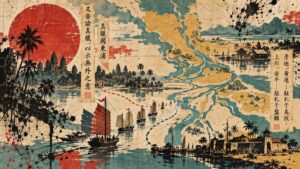
Chân Lạp as “Vô Ngoại”—What LLMs Reveal About the Past
In the previous post, I talked about how LLMs can do a better job of translating than humans can, and I gave an example of a factual mistake that ChatGPT found in a passage from the Vietnamese translation of the Đại Nam thực lục. There were other issues that ChatGPT...
Read More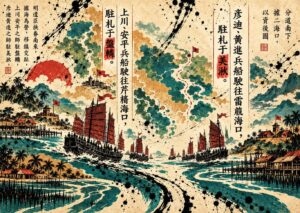
AI and the End of Bad Translations: A Case from the Đại Nam thực lục
In the early years of this blog, I used to write about what I called “the evils of quốc ngữ.” By that I was referring to the problem of scholars relying on flawed modern Vietnamese translations of texts that were originally written in classical Chinese. I was reminded of that...
Read More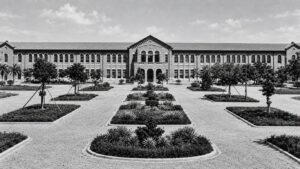
The Fascinating Story of South Seas History at Taihoku Imperial University
One of my scholarly heroes has long been the Taiwanese scholar Chen Ching-ho (Chen Jinghe 陳荊和). Trained at Keio University and the École française d’Extrême-Orient in Hanoi in the 1940s, Chen went on to produce foundational scholarship about a wide variety of topics in premodern Vietnamese history. For years, I’ve...
Read More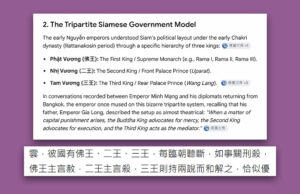
Google Now Knows More about 19th-Century Vietnamese History than any Human Being
The period of Nguyễn dynasty rule in the nineteenth century, particularly the reign of Emperor Minh Mạng (1820–1841), is richly documented in the official dynastic chronicle, the Đại Nam thực lục 大南寔錄 or “Veritable Records of Đại Nam.” By contrast, the modern scholarship on that period is quite limited. Why...
Read More
Global Vietnam is Up and Running!!
EXCITING NEWS!!! We are very pleased to announce that the first issue of “Global Vietnam” has been published, and is now available (free) for viewing online or to download (https://www.aup-online.com/content/journals/29501903/1/1). We would like to thank the associate editors, review editors, language support editor, and editorial board members and outside reviewers...
Read More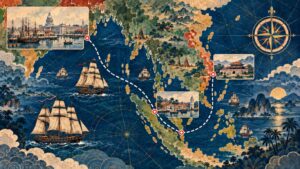
An 1830 Vietnamese Voyage to Calcutta
In 1830, Emperor Minh Mạng of the Nguyễn dynasty sent two ships on a voyage to Bengal. The purpose of the voyage was not to engage in trade, but instead, to investigate the conditions in that British-controlled territory and to gain navigational experience. The two ships that were dispatched on...
Read More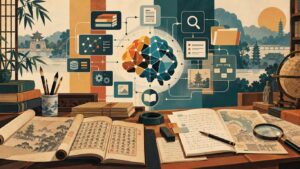
Do AI Systems Have Scholarly Cultures?
The more I work with LLMs in my research, the more it seems to me that we need to think more carefully about what exactly we are interacting with when we use something like ChatGPT, Claude, DeepSeek, etc. We tend to talk about “models,” and certainly the model is extremely...
Read More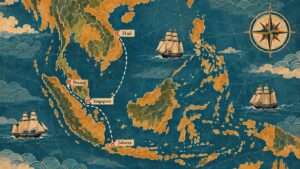
Chen Ching-ho’s “On the ‘Official Missions to Hạ châu’ (下洲公務) in the Early Nguyễn Period”
In 1990, Taiwanese historian Chen Ching-ho (Chen Jinghe 陳荊和) published an article in Japanese entitled “On the ‘Hạ-châu Missions’ (下洲公務) conducted during the early Period of the Nguyen Dynasty.” This was a pioneering article about Vietnamese maritime voyages to places to the south, such as Singapore, Penang, and Batavia (Jakarta),...
Read More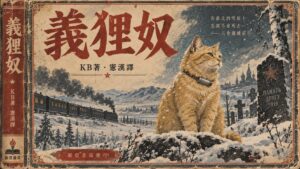
Phan Bội Châu’s “The Righteous Cat”
In the previous post, I wrote about how there is a body of writings that was produced by a small group of Vietnamese, including revolutionary Phan Bội Châu, who in the late 1910s and early 1920s wrote for a journal in Hangzhou, China called Military Affairs Magazine. These writings were...
Read More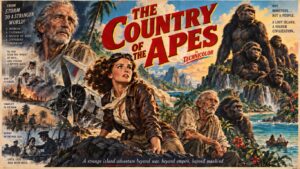
“The Country of the Apes” and other Phan Bội Châu Writings You’ve Never Heard Of
Have you ever heard of Vietnamese revolutionary Phan Bội Châu’s fictional writing “The Country of the Apes”? No, you haven’t. In fact, there are numerous writings by Phan Bội Châu that you have never heard of. That is because they were only “discovered” in 2007 by Taiwanese scholar Chen Qinghao...
Read More
