
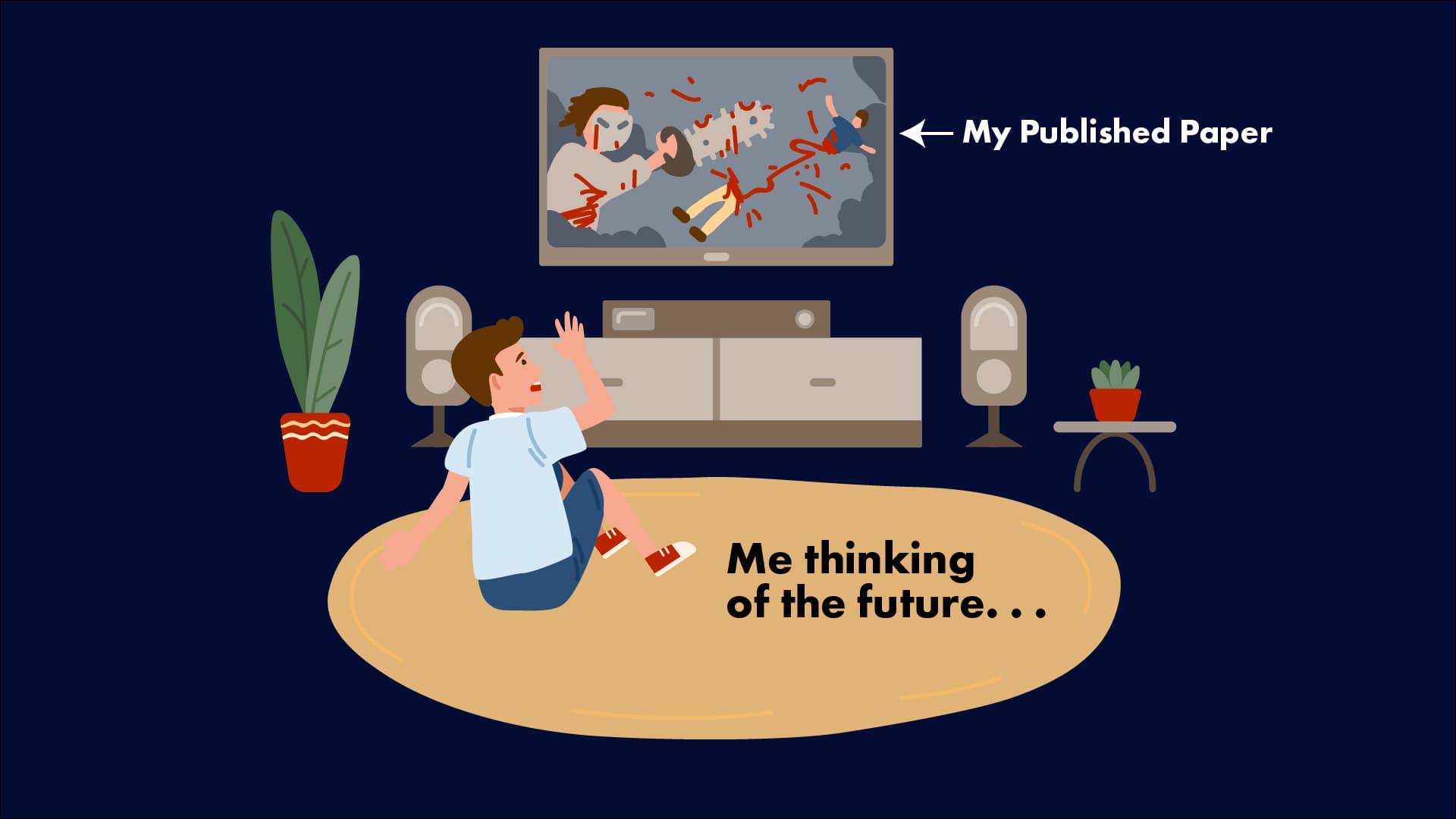
Whenever I write something for publication, I always think about “that graduate student.”
Who is that graduate student?
It’s the intelligent and talented person who is going to appear in the future. It might be in 5 years, or 10, or 20, or even 100, but s/he is coming.
And when s/he gets here, s/he is going to read what I published.

When you research a topic, it’s often the case that there are issues that you are not certain about. For those issues, you have to decide what to do.
You can keep researching until you feel confident that you understand the issue fully (or as fully as is possible). Or you can decide that it is impossible to solve (or completely understand) the issue. In which case, you will probably have to rethink what you are saying.
The one thing you don’t want to do, however, is to ignore the fact that you are not really sure about something, and to let that issue into your writing. Because that is exactly what that graduate student is going to notice.
Of course, sometimes it can be the case that you just don’t realize that you are wrong. I’m not talking about those instances, because that is something harder to avoid.
Instead, I’m talking about the times when you know something might not be completely correct, but it fits with what you want to say, so you go ahead and write it anyway, and as “luck” would have it, it makes it through the peer review process without people there noticing it either.
It’s in those instances that you need to think about that graduate student.
When I read published scholarship and find issues that are easy to debunk or prove incorrect, I always wonder if the author thought about that graduate student.
You have to think about her/him.
Because, sooner or later, s/he’s going to come.