

In 1894, French Sinologist Émmanuel-Édouard Chavannes translated a text written in the late seventh century by the Chinese monk, Yijing, entitled The Great Tang Biographies of Eminent Monks who Sought the Dharma in the Western Regions (Da Tang Xiyu qiufa gaoseng zhuan 大唐西域求法高僧傳).
In that work, Chavannes argued that a place in Southeast Asia that Yijing mentioned, Moluoyu, was Palembang. He came to this conclusion because he saw in the comments of Henry Yule’s 1871 translation of Marco Polo’s thirteenth-century travel account that Marco Polo had mentioned a place called Malauir, and Yule, based on the observations of Portuguese admiral Afonso de Albuquerque in the early-sixteenth century, had equated that name with “Malayo,” a place on the island of Sumatra, which Yule saw as indicating Palembang.
Further, there was another place in Southeast Asia that Yijing passed, a place called Shilifoshi. Following Stanislas Julien, an expert on the rendering into Chinese of Sanskrit terms and names, Chavannes saw in this Chinese name the Sanskrit name “Śrī-Bhōja.” Further, since Yijing passed Shilifoshi/Śrī-Bhōja before going by Moluoyu, Chavannes concluded that Shilifoshi/Śrī-Bhōja must be someplace in the southern part of Sumatra (iv, 37).
The placename “Shilifoshi” is extremely important for the “Srivijaya is a kingdom at Palembang that was referred to in Chinese sources as (Shili)Foshi and Sanfoqi” narrative. In 1918, George Cœdès would declare that Shilifoshi indicated not Śrī-Bhōja, as Stanislas Julien had logically concluded, but “Srivijaya,” a name that had been found on an inscription off the coast of southeastern Sumatra.
That Cœdès got the idea to equate Srivijaya with Shilifoshi is because scholars like Chavannes had placed Shilifoshi in the area of southeastern Sumatra. However, the technique that Chavannes had employed to do this was quite convoluted and insufficient. Rather than using the texts in which Shilifoshi was mentioned to determine its location, Chavannes found in an 1871 translation of a thirteenth-century text, a comment that referenced a sixteenth-century observation, and from this information, Chavannes felt that he could determine the location of a seventh-century placename.
While I think it’s fine to “triangulate” information in Chinese texts with information in other sources, one still needs to make an effort to determine the meaning of placenames in the genre where they appear, that is, in the Chinese sources. However, that is precisely what Chavannes did not do, nor did others who investigated these same issues.
One such person was Samuel Beal. Chavannes apparently wrote his book without being aware of Beal’s work, but Beal had likewise developed ideas about Moluoyu and Shilifoshi, ideas that were quite similar to those of Chavannes, both in terms of their content and methodology.
Samuel Beal and Shilifoshi
Samuel Beal (1825-1889) was one among the earliest British scholars to examine the writings of Chinese Buddhists. I haven’t been able to find where or how he learned Chinese, but he interpreted from Chinese to English while serving as a naval chaplain in China and Japan during the Second Opium War (1856-58), and in 1869, he published translations of the travel accounts of Faxian (c. 337–c. 422 CE) and Song Yun (fl. 510s–520s), two Chinese Buddhist monks who journeyed to India.
As for his ideas about Moluoyu and Shilifoshi, those were mentioned in a work entitled “Some remarks respecting a place called Shi-li-fo-tsai frequently named in the works of the Chinese Buddhist pilgrim I-tsing, c. 672,” in Livre des merveilles de I’lnde par le capitaine Bozorg bin Sahriyar de Ramhormoz, trad, par Marcel Devic, texte arabe et notes by P. A. van der Lith. Leiden, 1883-1886. 251-253.
“Shi-li-fo-tsai” is how Beal transcribed Shilifoshi. I don’t think there is any reading of the final character that gives us the “-ai” sound, but perhaps Beal was consulting a text that had a different character.
Beal’s remarks were included in a French translation of the Arabic work, the Kitāb ʿAjāʾib al-Hind (“Wonders/Marvels of India”), attributed to Buzurg ibn Shahriyār al-Rāmhurmuzī. This work contains stories told by merchants and sailors who were active in the Indian Ocean. The contents, therefore, likely date from different times, but the work itself probably dates from the tenth century.
Beal’s comments were meant to help explain a placename that appears in this text, called “Serboza.” Beal felt that this might refer to Shilifoshi, which as we saw in the previous post, Stanislas Julien had rendered as “Śribhôja.” To quote,
I shall adopt the spelling Śribhôja, agreeing as I do with the correctness of Stas. Julien’s restoration.
I think there are reasons for placing this country, or island, on the East coast of Sumatra, and near Palembang, or, on the Palembang River.
First, however, it is well to observe that in I-tsing’s time i. e. A. D. 671 the Southern route to India viâ Tonquin, Condor, Cambodia, Śribhôja, Quedâh, and thence either to Tamaralipti or to Nágapatam and Ceylon, was commonly used. How long before his time we can only surmise; perhaps Fa-hian (cire. 412 A. D.) returned from Ceylon by this route.
Of all places by this route named by I-tsing, Śribhôja appears to have been the most frequented by merchants, and by Buddhist priests or pilgrims.
As we can see here, Beal assumes that travel through Southeast Asia in this early period went through the Strait of Malacca. However, the most detailed information that we have of an itinerary through the region is that recorded by Jia Dan in the late eighth century, and as we saw in the series, “From Pelliot to Wade: Jia Dan’s Itinerary Through Maritime Southeast Asia,” that itinerary did not pass through the Strait of Malacca.
Hence, this idea that in the first millennium AD, travel between India and China went through the Strait of Malacca is an idea that from the start has been assumed rather than proven and documented with evidence.
After providing the above information, Beal goes on to mention three monks from Yijing’s era who stopped at Shilifoshi/Śribhôja and he cites one of his own works as the source for that information [Rev. S. Beal, “Two Chinese-Buddhist Inscriptions found at Buddha Gaya,” Journal of the Royal Asiatic Society, Vol XIII, Part IV (1881): 552-572].
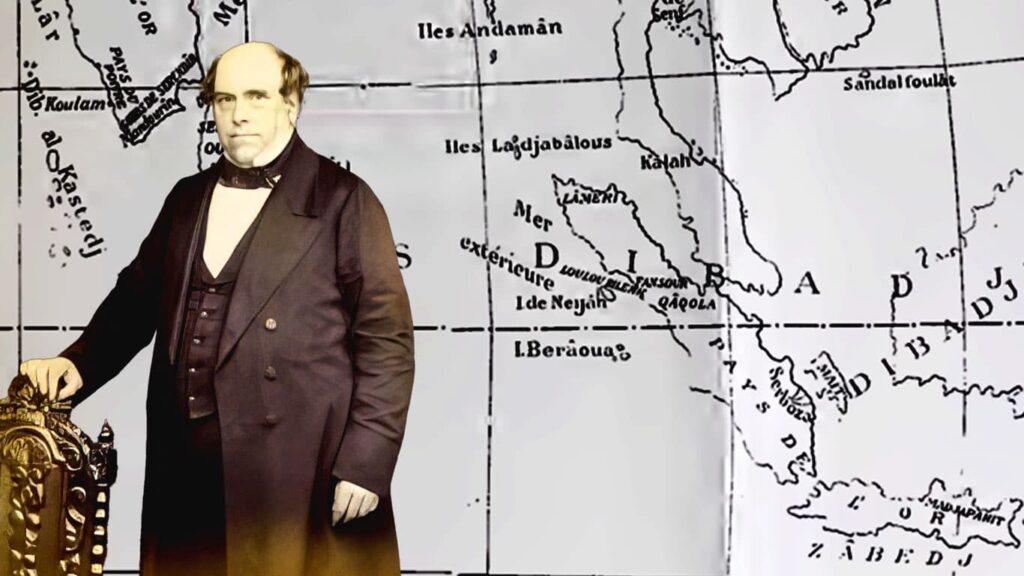
We can see from that work that Beal had been examining Yijing’s A Record of the Inner Law Sent Home from the South Seas (Nanhai jigui neifa zhuan 南海寄歸內法傳), as he compiled information in that article about monks mentioned in that text who had traveled to India.
Beal then cites that text in the next section of his note.
I will now notice the important statement found in I-tsing’s work the Nan-hai a. c. k. 1. fol. 3. a. He is speaking of the ten islands of the Southern sea, he says there are “ten or so”, he actually names eleven, in this order:
“Proceeding from the west and counting these countries, they are as follows: (1) Po-lu-sse-chow; (2) Mo-lo-yau-chow; which is the same as the present Shi li-fo-yaú-kwo; then (3) Mo-ho-sin-chow; (4) Ho-ling-chow; (5) Tan-tan-chow; (6) Pan-pan-chow; (7) Po-li-chow; (8) Ku-lun-chow; (9) Fo-tsai-po-lo-chow; (10) Ho-shen-chow; (11) Mi-kia-lan-chow; and several other little islands (chow), which I am not able to speak of.”
This is I-tsing’s account of these islands (chow 洲) of the Southern sea.
Let me provide my own translation of that same passage using the Pinyin Romanization.
(從西數之,有婆魯師洲、末羅遊州,即今尸利佛逝國是。莫訶信洲、訶陵洲、呾呾洲、盆盆洲、婆里洲、掘倫洲、佛逝補羅洲、阿善洲、末迦漫洲,又有小洲不能具錄),斯乃咸遵佛法,多是小乘;唯末羅遊少有大乘耳。
(Counting from the west, there are Polushi Island, Moluoyou Island, this is the current kingdom of Shilifoshi, Mohexin Island, Heling Island, Dandan Island, Penpen Island, Poli Island, Juelun Island, Foshibuluo Island, Ashan Island, and Mojiaman Island; there are also smaller islands that cannot all be recorded.) They all revere the Buddha’s Dharma, and most are followers of the Lesser Vehicle; only in Moluoyou is there a slight presence of the Greater Vehicle.
The part within parentheses is an annotation. What is recorded about Moluoyu in this annotation is slightly different from what is recorded about Moluoyu in a similar annotation in Yijing’s Tang Biographies of Eminent Monks. And it is written here as “Moluoyou,” with a different final character, but that’s not a big deal.
In the above annotation, it is recorded of Moluoyou Island (末羅遊州) that “this is the current kingdom of Shilifoshi” (即今尸利佛逝國是), whereas in the other text it says of the Kingdom of Moluoyu (末羅瑜國) that it has “now changed to Shilifoshi” (今改為室利佛逝也).
A lot of ink has been spilled trying to understand what these statements mean, and whether or not the use of the terms for “island” and “kingdom” is significant.
I will return to this passage later in this series. For now, however, what is important to note is that Beal saw Moluoyu and Shilifoshi as indicating the same place, whereas Chavannes believed that they were different.
Here is what Beal wrote:
The next island named is Mo-lo-yau which, he says, is the same as the Shi-li-fo-yau country, that is, as Śribhôja.
This is an important statement, because Col. Yule (M. Polo. II. p. 261.) has given good reasons for supposing the Malaiur of Marco Polo (which certainly corresponds with the Mo-lo-yau of I-tsing) to be the same as Palembang. Marco Polo says “After going 60 miles and again about 30 more, you come to an island which forms a kingdom and is called Malaiur. The people have a king of their own and a peculiar language. The city is a fine and noble one, and there is a great trade carried on there. All kind of spicery are to be found there, and all other necessaries of life”.
Here we have a description of Śribhôja; for Marco Polo calls it, as I-tsing does, first an island, then a kingdom; so I-tsing says the island of Mo-lo-yau, the same as the present kingdom of Shi-li-fo-yau; but secondly, the chief city is described by Marco Polo, “as a fine and noble one with a great trade;” this is precisely what the records of I-tsing convey; it was evidently, as I have said before, “a great centre of commerce.”
If then, as Col. Yule supposes, Malaiur be the same as Palembang, we have the statement of I-tsing to show that Śribhôja is the same as Mo-lo-yau, i. e. Malaiur, and therefore Śribhôja is also Palembang.
Did you get that? The string of connected names just got a bit longer here than the one Chavannes would later propose: Śribhôja = Mo-lo-yau = Malaiur = Palembang.
Although Beal equated Śribhôja and Moluoyu, whereas Chavannes did not, they both relied on sixteenth-century records that were referenced in Henry Yule’s 1871 translation of Marco Polo’s thirteenth-century travel account to conclude that seventh-century Moluoyu was Palembang.
What is more, Beal went so far as to take Marco Polo’s thirteenth-century description of Malauir to conclude that seventh-century Moluoyu had also been “a great centre of commerce.”
Beal then went on to talk about a place called Sanfoqi 三佛齊. He transcribed this as “San-fo-tsai.” The final character of that name can be read as “qi” or “zhai,” so that transcription is acceptable.
Sanfoqi is also incredibly important for the “Srivijaya is a kingdom at Palembang that was referred to in Chinese sources as (Shili)Foshi and Sanfoqi” narrative, as in 1918, George Cœdès likewise claimed that Sanfoqi was “Srivijaya,” and that during the Song dynasty period, this name came to replace the earlier name of Shilifoshi.
This is an essential part of the Srivijaya narrative, and yet, no scholar has ever been able to document or explain why this supposed “name change” took place.
The Supposed Sanfoqi-Sumatra Connection
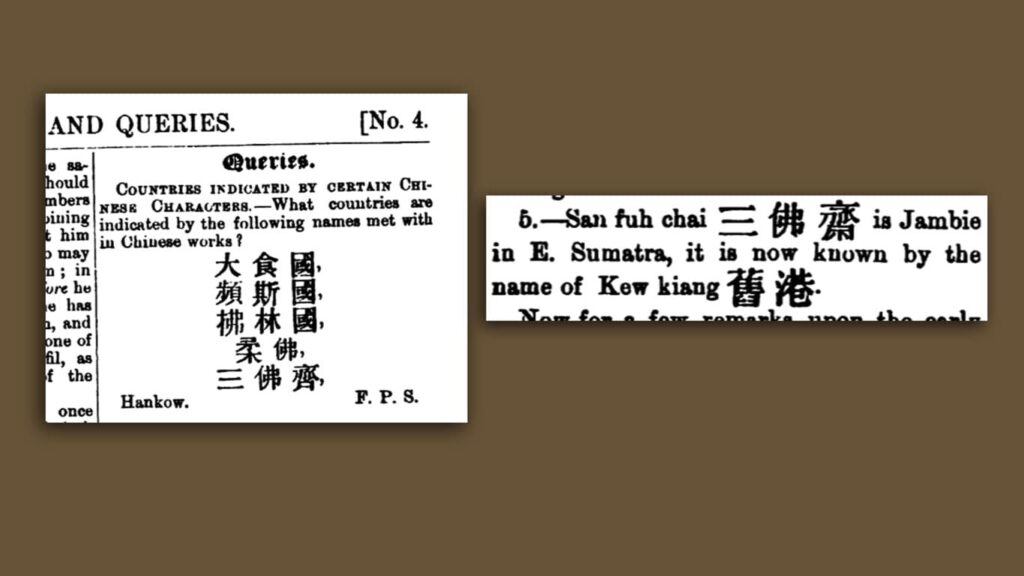
As far as I have been able to determine, the supposed connection between Sanfoqi and Sumatra was first mentioned in 1869, in a monthly publication called Notes and Queries on China and Japan: A Monthly Medium of Inter-Communication for Professional and Literary Men, Missionaries and Residents in the East Generally, Etc. As the name explains, this publication served as a forum for Westerners in East Asia to share information and ask questions.
In the April 1869 issue (Vol. 3, No. 4, pg. 55), British medical missionary based in Hankow Frederick Porter Smith (1833–1888), asked the question, “What countries are indicated by the following names met with in Chinese works?” One of the names listed was “三佛齊,” that is, Sanfoqi.
At the time, Smith was compiling a vocabulary list of proper names in Chinese and English, and as such, this question constituted an early form of what we would now call “crowdsourcing.”
It didn’t take long to get an answer. In the June issue of that same year (Vol. 3, No. 6, pg. 92), Smith’s compatriot, George Phillips, an interpreter for the British Consular Service in Amoy, responded by writing, “San fuh chai 三佛齊 is Jambie in E. Sumatra, it is now known by the name of Kew kiang 舊港 [Old Harbor].
I’m not sure if Smith did not agree with this answer, or if it simply came in too late, because when he published his vocabulary list the following year, in 1870, the definition of Sanfoqi was different. That work was entitled, A Vocabulary of Proper Names, in Chinese and English, of Places, Persons, Tribes, and Sects, in China, Japan, Corea, Annam, Siam, Burmah, the Straits and Adjacent Countries, and this is what it recorded about Sanfoqi:
三佛齊 San-fuh-tsí, a kingdom in the island of Sumatra. The piratical and comparatively civilized character of the people, agrees well with that of the Acheenese of the present day. Their houses are said to have been built on rafts or staging, on the waterside. The king bird of paradise, and the six-shafted variety came from there. The place called Yu-t’o-li has been referred to San-fu-tsí. (43)
While Beal used Marco Polo’s description of Malauir to imagine what seventh-century Moluoyu had been like, Smith took the description of Sanfoqi that can be found in various Chinese sources to attempt to locate it, and he decided upon Sumatra. However, the details in the above passage could describe myriad places in premodern Southeast Asia.

The Pernicious Translations of Willem P. Groeneveldt
George Phillips did not explain where he got the information that Sanfoqi was Jambi on the east coast of Sumatra and that it was presently called Jiugang, or Old Harbor. However, in 1876, Dutch Sinologist Willem Pieter Groeneveldt (1841-1915) published a collection of translated passages from various Chinese sources entitled Notes on the Malay Archipelago and Malacca Compiled from Chinese Sources, and in this work, he indicated the source of that information.
Groeneveldt’s collection of translated passages from Chinese sources was very helpful for scholars as it introduced a wealth of new information into a Western language, but the work was also extremely problematic, and ultimately it had an incredibly pernicious effect on later scholarship.
First, rather than organizing his book based on the sources, he divided the book into sections based on geography, with sections for Java (pgs. 6-59), Sumatra (pgs. 59-101), Borneo (pgs. 101-115, the Eastern Part of the Archipelago (pgs. 116-119), and The Malay Peninsula (pgs. 119-140).
What this means is that when Groeneveldt encountered terms that had not yet been clearly identified by scholars, such as Sanfoqi, he came to his own conclusions and inserted those places in what he believed was the proper geographic category.
How did he come to his own conclusions? He did so by looking at works that dated from long after the time of the places he sought to identify.
For instance, Groeneveldt began his section on Sumatra with a passage from the History of the Liang (635) on a place called Gantuoli 干陁利. In his 1870 vocabulary, Smith misread the first character in this name for one that looks similar and recorded it as Yu-t’o-li [Yutuoli].
Groeneveldt wrote of this place that (my emphasis) “We cannot identify this name, which soon disappears again, but the Chinese, who may know these things by uninterrupted tradition, all agree in saying that this is the Palembang of modern times.” (60)
By “soon disappears,” Groeneveldt was referring to the fact that this name appears in seventh-century works such as the History of the Liang, the History of the Southern Dynasties (659), and the History of the Chen (636), but not in later dynastic histories.
And as for the idea that “the Chinese. . . all agree in saying that this is the Palembang of modern times,” Groeneveldt was pointing to the fact that works from the late-Ming and early-Qing periods equated Gantuoli with Sanfoqi, which as we will see below, works from that time period also equated with the area of southeastern Sumatra.
So, for instance, in the early seventeenth century, He Qiaoyuan 何喬遠, wrote of Sanfoqi in his Mingshan cang 名山藏 that “Sanfoqi is the old Gantuoli. It is also called Bolin” (三佛齊國古干陀利又曰浡淋), while Zhang Xie 張燮 wrote in his Dong-Xi yang kao 東西洋考 of Old Harbor that “Old Harbor is the old kingdom of Sanfoqi. It was originally Gantuoli. It is also called Bolin” (舊港,古三佛齊國也。初名干陀利,又名渤淋).
So, in the early seventeenth century, this line of connections appeared: Gantuoli – Sanfoqi – Old Harbor – Bolin.
However, as Groeneveldt noted, Gantuoli had “disappeared” from Chinese sources over 1,000 years earlier. Further, Sanfoqi had “disappeared” over 100 years before these works were compiled as well.
What is more, when we examine Chinese sources from the final years that Sanfoqi was mentioned (late 14th/early 15th centuries), we find that Sanfoqi, Old Harbor, and a place called the Bolin or Baolin Polity were COTERMINOUS and SEPARATE PLACES.
This connecting of placenames was a scholarly practice that we find in late-Ming and early-Qing scholarship. Scholars tried to connect together placenames from the past and the present, however, many of the connections they made were not based on solid evidence, or in the case of Gantuoli, were not based on any evidence at all, and therefore, many of these connections are FALSE.
What is more, scholars at that time didn’t just do this for Gantuoli and Sanfoqi, they did it for MANY, MANY PLACES.
What this means is that virtually every Chinese source that was compiled from the late 1500s onward is potentially tainted by these later views, and that includes the works of the men who participated in the Zheng He voyages of the early fifteenth century, as the versions of their works that we possess today were all printed or copied after the late 1500s.
Therefore, in consulting sources from the late-Ming and early-Qing period to determine which geographic category to place the information that he found in earlier Chinese sources, Groeneveldt committed a FATAL MISTAKE. However, it is obvious that Phillips did the same, as did Pelliot and many other scholars of this era.
None of the scholars at that time realized how problematic the late-Ming/early-Qing sources are. Further, prior to my discovery of this matter, I am unaware of any other scholar ever having pointed out this problem either. As such, the errors in late-Ming and early-Qing scholarship continue to shape the ideas and writings of scholars today.
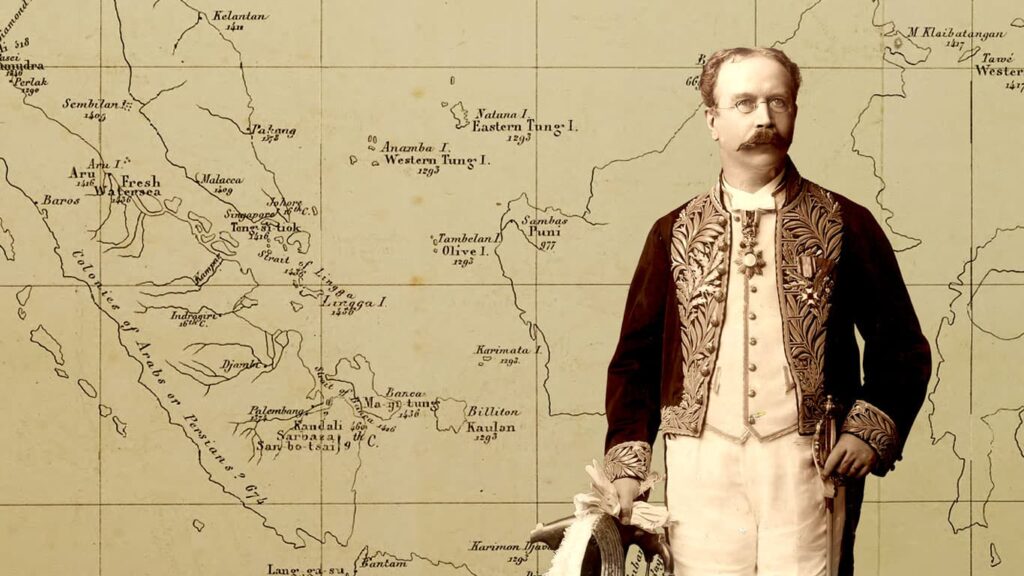
After providing information about Gantuoli in the History of the Liang, Groeneveldt then provided information about Sanfoqi, which he transliterated as “San-bo-tsai,” from the History of the Song (1345) and the History of the Ming (1739).
After first mentioning Sanfoqi, Groeneveldt stated the following in a footnote:
三佛齊, Arab travelers of the 9th century speak of the island of Sarbaza, which was subject to the king of Zabedj = Ya-ba-di or Java. Sar-ba-za and San-bo-tsai of course represent the same name, both perhaps with a not quite correct transcription. Vide “Relation des voyages faits par les Arabes et les Persans dans l’Inde et à la Chine dans le IX siècle, traduite par Reinaud. Paris. 1845.” P. 93. (fn. 2, pg. 62,)
Groeneveldt then went on provide translations of passages about Old Harbor in Ma Huan’s 馬 Ying-yai sheng-lan 瀛涯勝覽 (1451) and Zhang Xie’s Dong-Xi yang kao. Ma Huan was a participant in some of the Zheng He voyages in the early-fifteenth century, and Groeneveldt gave his work the date of 1416. That was when Ma Huan began writing this work, but it was not completed until 1451, and then continued to be edited and copied in the decades that followed. Hence, it is one of the “tainted” works of the late-Ming and early-Qing periods.
Groeneveldt included these latter two works in this section on “Sumatra” because they both state that Old Harbor was the old kingdom of Sanfoqi, and in a footnote to explain Old Harbor, Groeneveldt wrote that “舊港 Ku-kang [Jiugang, i.e., Old Harbor], the old river (sic.), is the Chinese name for Palembang up to the present” (fn. 1, pg. 71).
Then in his translation of Ma Huan’s account of Old Harbor, Groeneveldt rendered the opening passage as follows: “Ku-kang [Old Harbor] is the same country which was formerly called San-bo-tsai; it is also called Palembang.”
Groeneveldt rarely provided the Chinese text for his translations, but he did so here, as he put the following untranslated Chinese text in a footnote (fn. 1, pg. 73): 舊港卽古名三佛齊國是也浡淋邦屬爪哇國所轄。 This translates as Old Harbor is the old kingdom of Sanfoqi; the Bolin Polity under the jurisdiction of Zhuawa/Zhaowa [Java].
I suspect that the reason why Groeneveldt provided the Chinese text here was to justify his translation of “Bolin bang” 浡淋邦 as “Palembang.” As I have noted in my publications, this name ends with the character “bang” 邦, meaning a “polity.” Chinese would never use such a character in transcribing a foreign name, as readers would see it as meaning “polity” rather than part of the name.
This is precisely what we saw above in the writings of He Qiaoyuan and Zhang Xie. They both referred to “Bolin” only, as they understood the “bang” that sometimes appears with that name as meaning “polity.”
I am going into these details because there are two important matters that we can see here. 1) First, we can see that Groeneveldt started to provide some of the pieces of information that would form the basis for the “Srivijaya is a kingdom at Palembang that was referred to in Chinese sources as (Shili)Foshi and Sanfoqi” narrative. 2) Second, we can also see the flaws in his understanding of that information.
In particular, Groeneveldt followed the ideas of early-seventeenth-century Chinese scholars in believing that Old Harbor was a name for an earlier kingdom called Sanfoqi, and that this Old Harbor was also called “Bolin.” However, he then broke with the ideas of those early-seventeenth-century Chinese scholars by mistranslating “Bolin Polity” as “Palembang.”
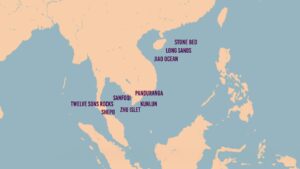
It is indeed the case that there was a place off the southeastern coast of Sumatra called Old Harbor. However, what I have demonstrated in my second article on this topic is that there were other “Old Harbors,” and one was in the area of Cambodia, where I argue Sanfoqi and a place called the Baolin Polity were also located. Further in the late-fourteenth and early-fifteenth centuries, that region was occupied by Javanese.
I don’t have space to repeat all of that here (please read the second “Rescuing History from Srivijaya” article). What is important to note in this post, however, is the way that scholars were connecting certain pieces of (bad) information. Groeneveldt played a significant role in this process, as did Beal, so let us return to see more of what he wrote.
Beal on Sanfoqi
After discussing the name, Shilifoshi, and equating it with Moluoyu and Palembang, Beal then wrote about Sanfoqi, which he transcribed as “San-fo-tsai.”
Again there is frequent notice in Chinese geographical works of a place called San-fo-tsai; this can hardly be the same as the Arabian Senéf, which seems rather to indicate Champa: but it is very probably only another form of Shi-li-fo-tsai i.e. S’ribhôja; or it is possible that it denotes San or Sambhoja i.e. the united Bhojas; just as we have the Samvrijjis, in Buddhist history, denoting the “united vrijjis”; this is not improbable moreover inasmuch as I-tsing sometimes speaks of “Bhoja” only, and not S’ribhôja. Is it possible that S’ribhôja was the capital of the Sambhôja districts? Lastly in »Notes and queries on China and Japan” (Vol III. n°. 6. p. 92), Mr. George Phillips remarks that the country San-fuh-chai is Jambie in East Sumatra, now known by the name of Kew-kiang. This has been also noted by M. Groeneveldt, and there can be little doubt that if Sam fo-tsai is the same as Kew-kiang or Kow-kong, that this represents Palembang. So again it seems evident that S’ribhôja was situated on the site, or, near the site, of the present Palembang. (252)
So, with Beal in the 1880s, we have even more of the pieces coming together for the “Srivijaya is a kingdom at Palembang that was referred to in Chinese sources as (Shili)Foshi and Sanfoqi” narrative.
I realize that this topic is detailed and complicated, but the one point that is hopefully clear is that the associations that were made in the second half of the nineteenth century between Shilifoshi, Sanfoqi, Palembang, Old Harbor and Bolin bang/Baolin bang, were not made by looking at the actual historical information about those places.
Instead, they were made through such means as looking at Henry Yule’s comments on Marco Polo’s travel account, consulting early-seventeenth-century writings by Chinese scholars that sought to connect past and present placenames, and trying to decipher placenames in medieval Arabic texts, etc.
This is why everything breaks down once one tries to interpret the sources based on the geographical framework that these scholars developed in the late nineteenth century. For instance, this is why Pelliot and everyone since cannot get Jia Dan’s itinerary to make sense. Everyone thinks that it goes down to the Strait of Malacca, in part because it mentions “Foshi,” and everyone follows these early scholars in believing that Foshi must be Shilifoshi at Palembang, so. . . they try, and try, but nothing works.
Moluoyu was not on Sumatra (I will indicate where it was later). That idea comes from Henry Yule’s comments in his 1871 translations of Marco Polo’s travel account.
Shilifoshi was not at Palembang. That idea comes from a combination of ideas: such as Beal’s equating Shilifoshi and Sanfoqi, and seventeenth-century Chinese writers equating Sanfoqi with Old Harbor, and Groeneveldt equating Old Harbor with Palembang.
Sanfoqi was not at Palembang. That comes from Beal’s imagination.
Bolin bang was not “Palembang.” That comes from Groenevedlt’s bad translation.
And yes, there was an Old Harbor near Palembang, but historically, there was another Old Harbor in the area of Cambodia.
As such, by the end of the nineteenth century, there were a lot of bad ideas in circulation, and as we will see in the subsequent posts, those bad ideas have remained in circulation to the present.
Finally, no one has ever done what I just did above here, that is, to trace the “genealogy of knowledge” for key terms in the “Srivijaya is a kingdom at Palembang that was referred to in Chinese sources as (Shili)Foshi and Sanfoqi” narrative, like Moluoyu, Shilifoshi, Sanfoqi, Old Harbor, and Bolin bang. However, that is an extremely basic task that every scholar should carry out.
Scholars should always ask themselves: How do we know what we know?
In this case, why do we think that Moluoyu is in southeastern Sumatra? Why do we think that Shilifoshi and Sanfoqi were there as well, and that these names both indicate “Srivijaya”? Why do we think that Shilifoshi and Sanfoqi were the same place? Why do we think that Chinese only ever referred to one Old Harbor in Southeast Asian history? Why do we think that “Bolin bang” is “Palembang” and not the “Bolin Polity”?
No one who has written on early Southeast Asia using information from Chinese sources in the past century has ever asked themselves these fundamental questions and carried out the basic task of investigating them.

Am looking forward to see if any of the criticisms you formulated will have been taken into account in the soon to be published book by D. O’Reilly, Empires of the Southern Ocean: Early Civilizations of Mainland and Insular Southeast Asia.
I remember reading O’Reilly’s Early Civilizations of Southeast Asia and it was definitely old-school.
When I first started writing about this years ago, I somehow thought that there were people out there who were familiar with the sources, who had spent time working with them, and who saw all the problems that one encounters in getting the sources to make sense to support what scholars have written about them.
Prior to like 2020, I had only dabbled in the sources for this part of Southeast Asia, but in the little that I had done, it was obvious to me that the “Srivijaya narrative” was not supported by what is in the sources. So, I assumed that other people out there who can read Chinese had seen that as well.
However, in writing these recent posts, it has really made it clear to me that the scholars who have worked on early Southeast Asia using Chinese sources have not spent any serious time with those sources. They all just repeat what has been said before, and when they have tried to figure something out or resolve an issue, they have done so, not by going to the sources and figuring them out, but by looking at what other scholars have already written.
So, if that’s where the experts on the historical sources are at, then obviously we can’t expect much from O’Reilly, who is an archaeologist.