
In 1377, the kingdom of Sanfoqi sent an envoy to the Ming court to request an official seal for the Sanfoqi monarch. The Ming Hongwu Emperor obliged, and sent an envoy to deliver the seal.
That Ming envoy, however, never made it to Sanfoqi. Instead, word eventually reached the Ming emperor that the envoy had been intercepted and killed by Javanese.
This tragic event marks the last time in Chinese sources that we can see evidence of interactions between the Ming and Sanfoqi.

The Ming had first made contact with Sanfoqi in 1370, just two years after coming to power, and in the years between 1370 and 1377, Sanfoqi had sent a few tribute missions to the Ming court.
One of those missions was from a king called Da-ma-lai-sha-a-zhe 怛麻來沙那阿者, a name which is also recorded as Da-ma-sha-na-a-zhe 怛麻沙那阿者. This name corresponds nicely with the name of a king in the Cambodian chronicles during this time period, Thommeasokareach (Dhammāśokarāja).
The Sanfoqi envoy who journeyed to the Ming court in 1377, requested a seal for the successor of this king. That request apparently so bothered some Javanese that they killed the Ming envoy who was sent to deliver the seal.

This seemingly isolated event apparently had major repercussions for the region. At the end of the fourteenth century, in 1397, the Ming emperor learned that few tribute missions were arriving from the south, and he immediately blamed this on the conflict between Java and Sanfoqi.
The emperor wished to encourage tributary kingdoms to resume sending tribute, however he feared that if a Ming envoy was sent to the region to deliver that message, he would be intercepted and killed, this time by Sanfoqi, rather than Java as had occurred earlier.
It is not clear why the emperor thought this way, and his order for how his message should be delivered is even more difficult to decipher. The emperor had heard that Sanfoqi was now under the control of Java, and he instructed his officials to first contact Siam (Ayutthaya), and to order Siam to inform Java to then communicate with Sanfoqi that it was the emperor’s intent for tribute missions to resume.

Why would the Ming emperor think that the way to communicate with Sanfoqi was to first order Siam to transmit the emperor’s message to Java?
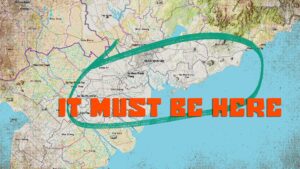
To understand this, we first need to be clear about where Sanfoqi was located. As I demonstrated in the second post in this series, all evidence in Chinese sources from that time period places Sanfoqi on the Southeast Asian mainland, and I would argue that they place it in the area of Cambodia.
That’s next to Siam, so involving Siam in some communication could possibly make sense. But this is far from Java. So how can Java be related? Read on, as this will become clear in future posts.