
[Update: As I’ve researched this further, I’ve changed my mind a little bit. I still am 1 billion % sure that the “Srivjaya” that has been talked about in academic writings – that is, a supposed maritime polity based at Palembang – did not exist. What I think the “Srivjjaya/Srivishaya” in inscriptions refers to is the “royal center” of a tran-peninsular trade “empire” based at what is now Songkhla in southern Thailand. I’ll leave this post as I originally wrote it, but here is my updated view].
There was never a kingdom called Srivijaya.
Whatever you have heard or read about a supposed maritime polity in Southeast Asia by that name which supposedly prospered from roughly the seventh to the thirteenth centuries is not true.
Instead, the “evidence” that has been used to write the history of “Srivijaya” is about other places, and that historical information tells fascinating stories about the Southeast Asian past that have never been told by modern historians.
Let me explain.
The “Srivijaya myth,” as I will label the belief in the existence of a Southeast Asian maritime kingdom by that name, is ultimately based on the misinterpretation of two pieces of information.
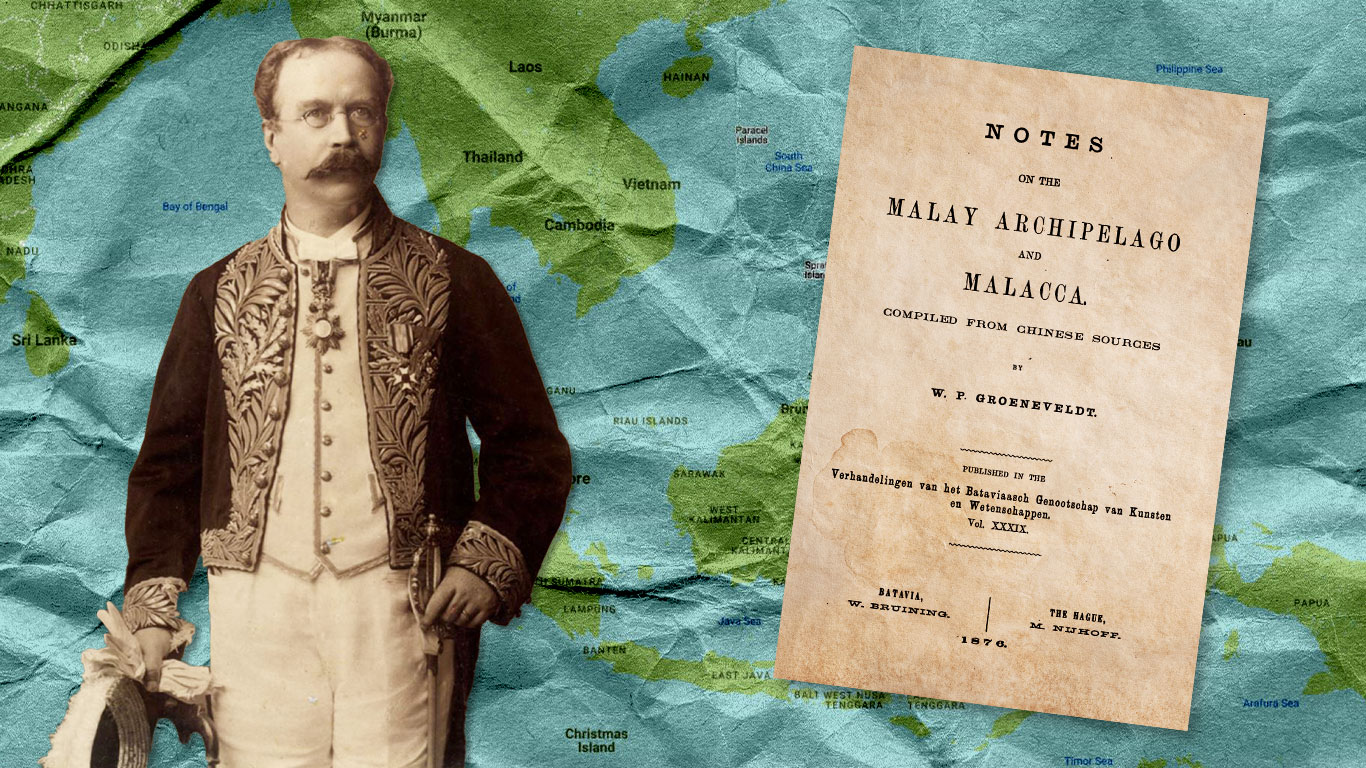
The first piece of misinterpreted information concerns a place in Chinese historical sources called “Sanfoqi” 三佛齊 and was misinterpreted by, among others, a Dutch scholar by the name of Willem Pieter Groeneveldt.
Groeneveldt was an early Dutch Sinologist who spent many years working in Asia for the Dutch government in various capacities. He served first as interpreter for the Dutch resident in Pontianak on the island of Borneo and later for the Dutch consul general in Shanghai.
While working in Shanghai, Groeneveldt produced a volume of translations entitled Notes on the Malay Archipelago and Malacca Compiled from Chinese Sources. This work was published in 1876 in Batavia, where Groeneveldt had been sent from Shanghai to serve as an interpreter.
Groeneveldt obtained a few Chinese historical texts that contained information about Southeast Asian polities. In these works, Groeneveldt discovered that there had been a kingdom in Southeast Asia which the Chinese had referred to as “Sanfoqi,” or what he transcribed as “San-bo-tsai.” However, he noted that from those sources, “We are not told at what particular place San-bo-tsai was situated.”
Nonetheless, there was some information in those texts which led Groeneveldt to conclude that Sanfoqi/San-bo-tsai had been located on the island of Sumatra somewhere near Palembang. Texts that Groeneveldt examined which had been compiled in the late Ming/early Qing periods stated that a place called “Old Harbor” (Jiugang 舊港) had formerly been called “Sanfoqi.”
Groeneveldt was aware that the Chinese in the Netherlands East Indies at that time referred to some place around Palembang as “Old Harbor” and he therefore concluded that this must be where Sanfoqi/San-bo-tsai had once been located.
Through that connection, Groeneveldt linked a kingdom mentioned in Chinese historical sources (Sanfoqi) with the island of Sumatra.
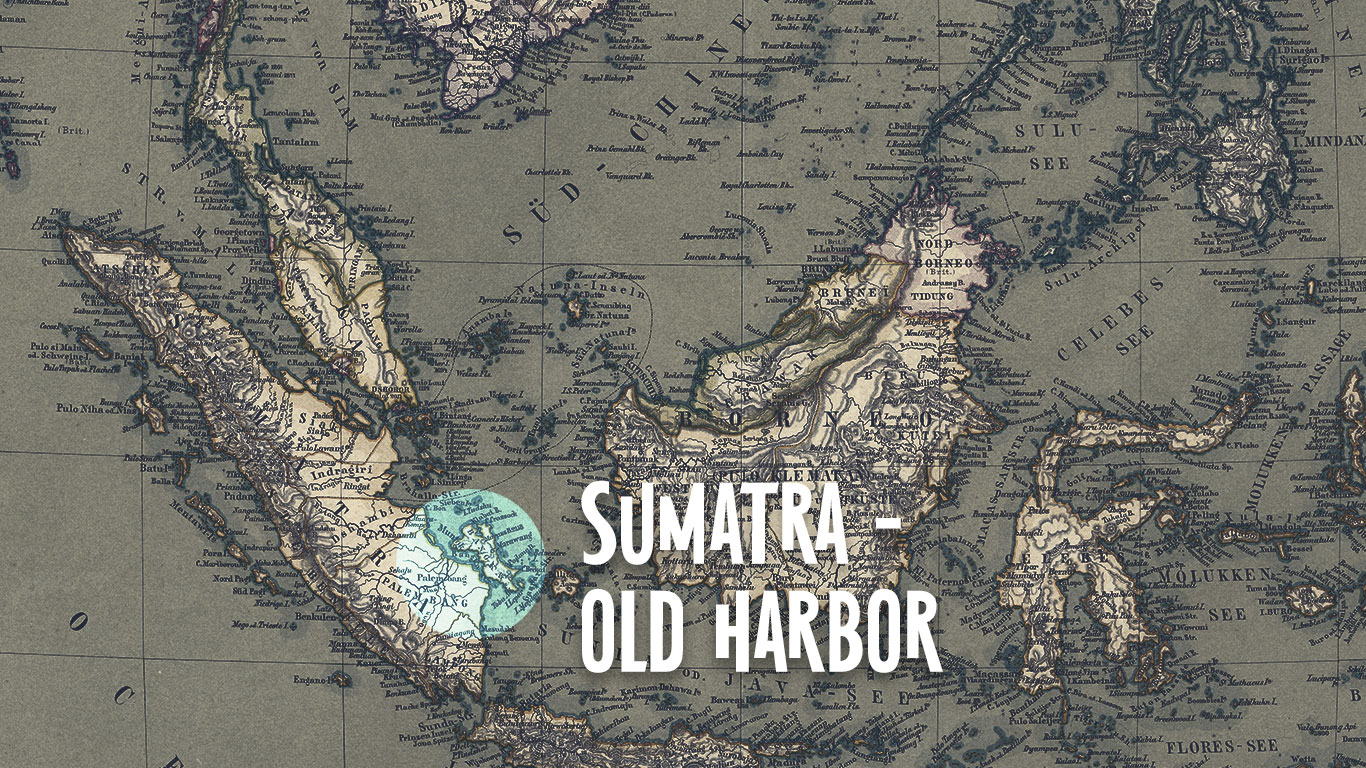
This was a good guess, but what Groeneveldt was unaware of is that there was another “Old Harbor” in Southeast Asia. This is a fact which, as far as I can tell, no other scholar since has been aware of either.
This other Old Harbor was not in island Southeast Asia, but instead, was along the coast of what is now southern Vietnam. This Old Harbor was explicitly documented by Ming Dynasty official Huang Zhong 黃衷 in a 1536 text called Haiyu 海語 (Sea Conversations), where it is mentioned as a place to the south of Champa on the sea route from China to Siam.
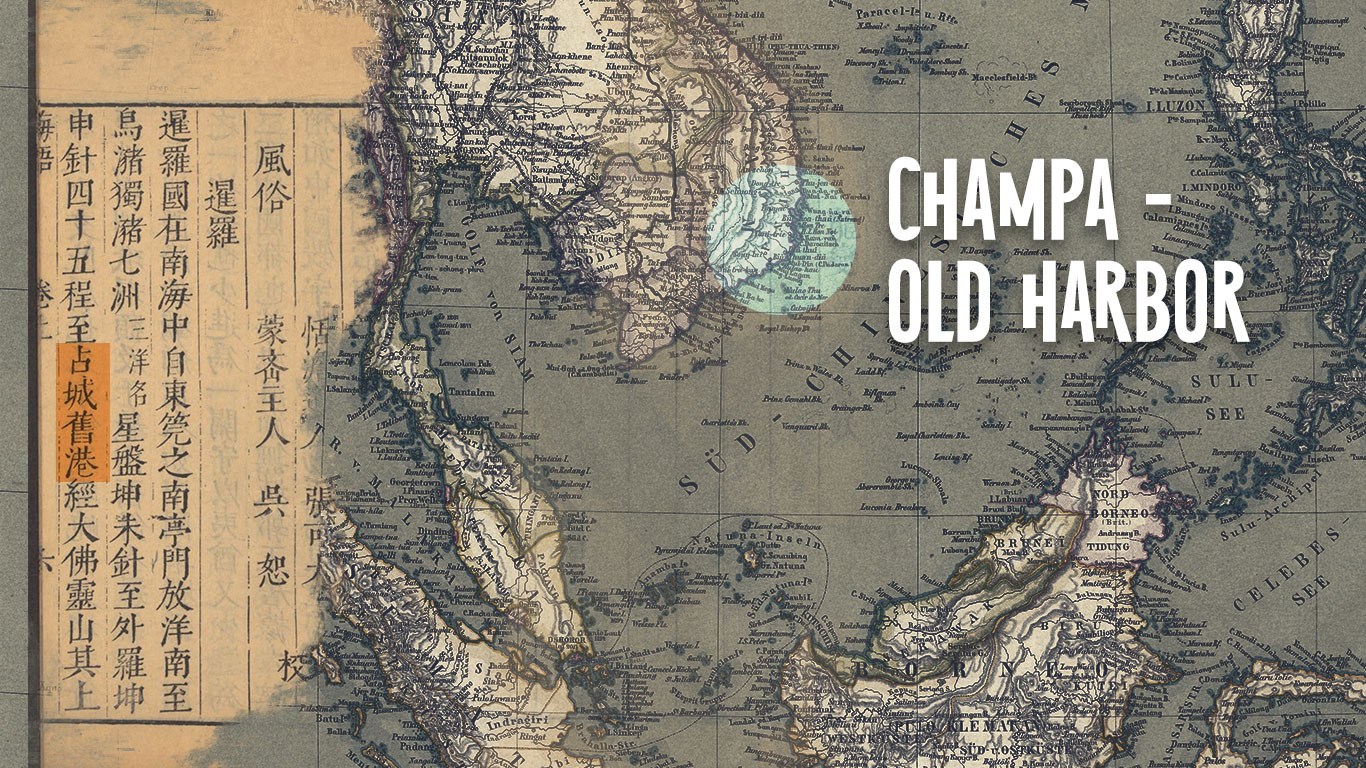
I was able to locate this reference with the benefit of digital tools. Prior to the digital age, it would have been more difficult to find this reference.
Nonetheless, in the analog age it was still extremely clear that there were problems with Groeneveldt’s idea that Sanfoqi was on the island of Sumatra. Indeed, Groeneveldt himself had difficulties getting the information in the Chinese sources to fit this interpretation.
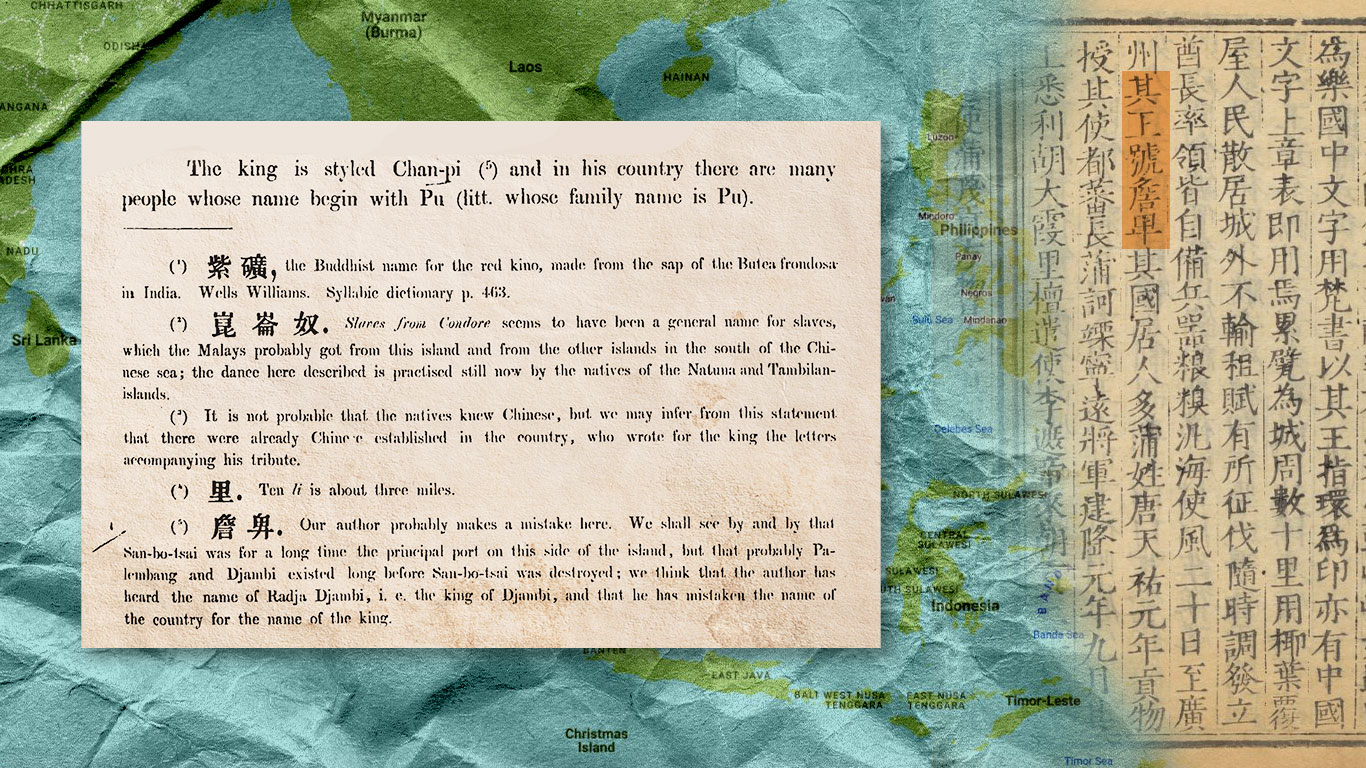
For instance, there is a passage in the History of the Song, one of the earliest texts to contain information about Sanfoqi, which states that the king was called “zhanbi” 詹卑. To Groeneveldt, who had concluded that Sanfoqi was on Sumatra near Palembang, this term sounded like “Jambi,” a settlement to the north of Palembang on that same island. But how could the king of a kingdom around Palembang be called “Jambi,” the name of a different place?
Groeneveldt decided that “Our author probably makes a mistake here. . . we think that the author has heard the name Radja Djambi, i.e. the king of Djambi, and that he has mistaken the name of the country for the name of the king” (63).
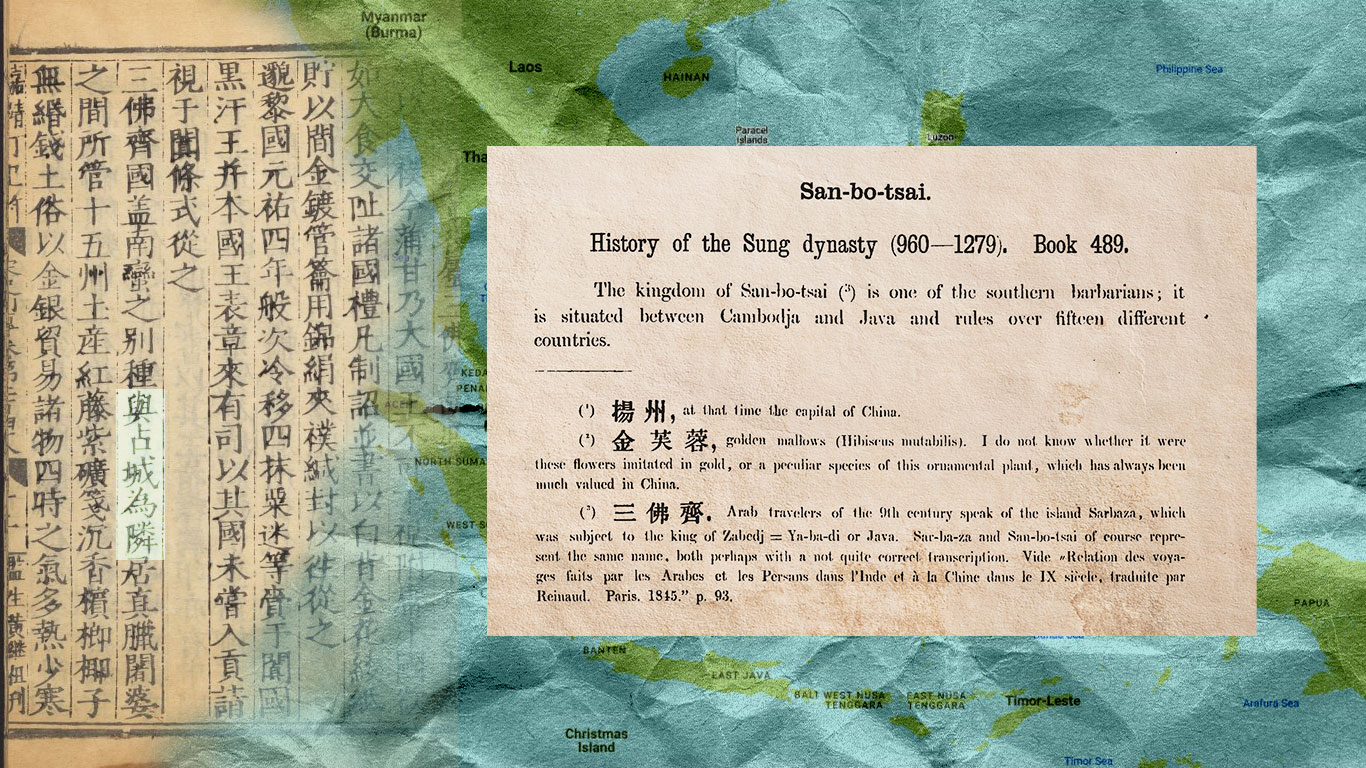
Similarly, the History of the Song also states the following about Sanfoqi: “The kingdom of Sanfoqi is probably a variant type of the Southern Savages. Neighboring Champa, it is between Zhenla and Shepo/Dupo, and governs over 15 territories.” (三佛齊國,蓋南蠻之別種,與占城為隣,居真臘、闍婆之間,所管十五州。)
Groeneveldt then “translated” this passage as follows: “The kingdom of San-bo-tsai is one of the southern barbarians; it is situated between Cambodja and Java and rules over fifteen different countries.”
Whoa!! Wait!! Where did “neighboring Champa” go??!! That’s pretty important information, isn’t it? If Sanfoqi was “neighboring Champa” then it could not possibly have been on the island of Sumatra, right?
Oh, wait, now I see. Right. That piece of information did not support Groeneveldt’s interpretation. So, what did he do? He deleted it. Poof!! Gone! Problem solved.
(There is also a major problem here with equating Zhenla and Shepo/Dupo with Cambodja and Java, respectively, but that will lead to a discussion that is too long and detailed for this post.)
Let us pause here and consider the kind of “knowledge” Groeneveldt produced.
He made an interpretation about Sanfoqi – that it was located somewhere on the island of Sumatra near Palembang. He then tried to get the rest of the information about Sanfoqi in Chinese sources to fit that interpretation. However, as the cases of “zhanbi” and “neighboring Champa” show, it didn’t.
So, what did Groeneveldt do then? He deleted the information in the case of “neighboring Champa” and he dismissed the information about the king being called “zhanbi” by saying that the Chinese scholar who recorded it must have made a mistake. And he did this by imagining an implausible situation where some guy in China “had heard the name Raja Jambi” and then got confused when he was writing about Sanfoqi and called it by that name. . .
This is NOT how historical knowledge is constructed. Instead, it is how myths are created, and ultimately Groeneveldt’s misinterpretation would serve as the foundation for a myth, the Srivijaya myth, but for that to happen, “Srivijaya” had to first be “discovered.” That is where the second misinterpretation took place.
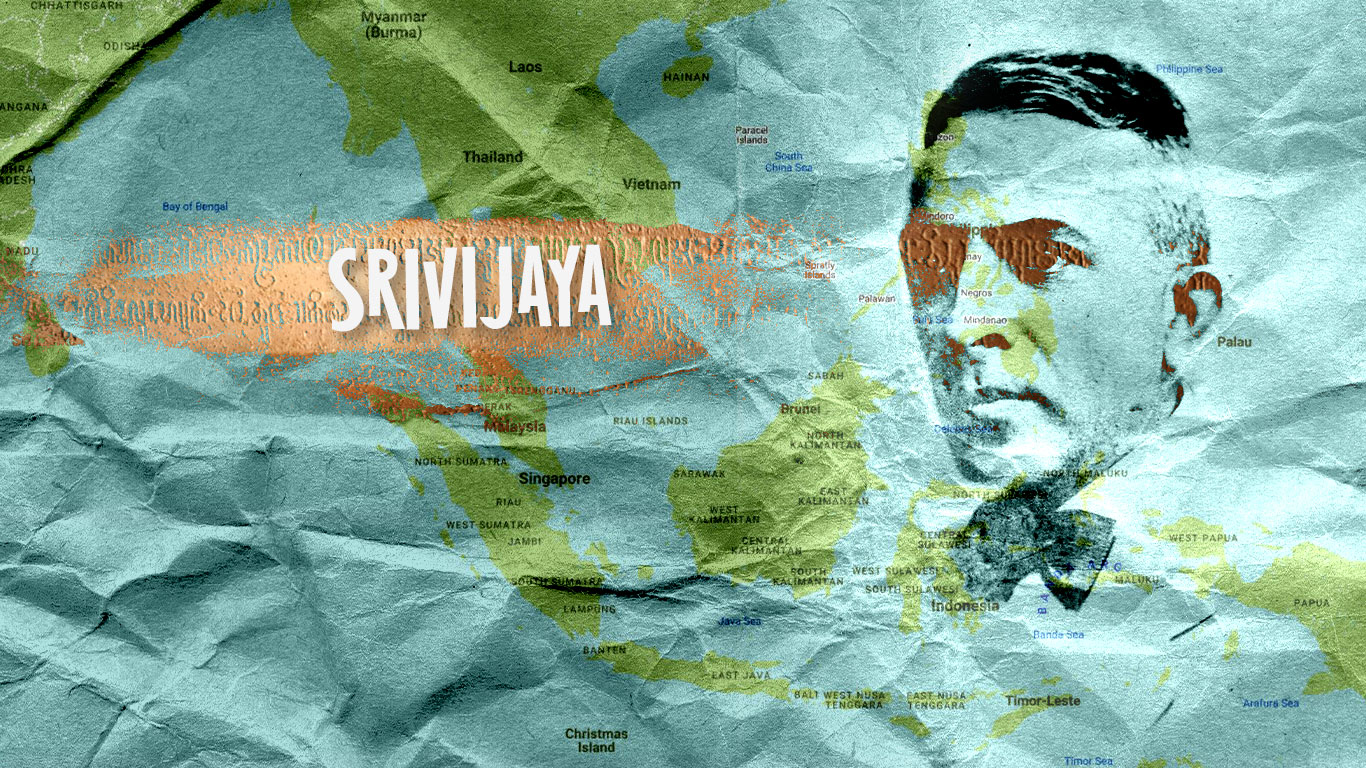
In 1918, French scholar George Cœdès misinterpreted some information in an inscription to argue that this kingdom of Sanfoqi, which Groeneveldt had erroneously claimed was located on the island of Sumatra, was called “Srivijaya.”
The inscription in question is known as the Kota Kapur inscription and it was written in 686 CE. It is in Old Malay with some Sanskrit words, and it was found in 1892 on the island of Bangka off the southeastern coast of Sumatra near Palembang. Dutch epigrapher Johan Hendrik Caspar Kern then transcribed and translated this inscription into Dutch, and published that information in an article in 1913.
The text of this inscription contains a passage which mentions the gods protecting the “kadatuan” of “Sri Vijaya.” The first term here is in Old Malay while the second is in Sanskrit.
At the core of the term “kadatuan” is the word “datu,” meaning “chief” or “leader” or “ruler.” A “kadatuan” was the space of a “datu,” and that could refer to a space as small in scale as a palace, or something larger, like a domain or kingdom.
As for “Sri Vijaya,” “sri” is an honorific term that is placed before nouns, and “Vijaya” means “victory.” When put together, this term can mean “the great victory” or “the great victorious one.” Further, “Vijaya” was used as the name of people, perhaps most famously prior to this point by a “Prince Vijaya” who founded a kingdom on the island of Sri Lanka in the sixth century and whose history was recorded in the Mahāvaṃsa (Great Chronicle), a text that was influential in early Buddhist Southeast Asia.
Kern translated these two terms together to mean “the realm of His Majesty Vijaya” (rijk van Z. Maj. Wijaya). That was an extremely logical historical interpretation.
In 1918, however, George Cœdès stated that “Sri Vijaya” here must be read to indicate the name of a kingdom – “the kingdom of Srivijaya.” That was an extremely modern, nation-centric interpretation.
Cœdès then went further and stated that this supposed kingdom must be the same place as the “Sanfoqi” which Groeneveldt had (erroneously) determined had been located somewhere near Palembang.
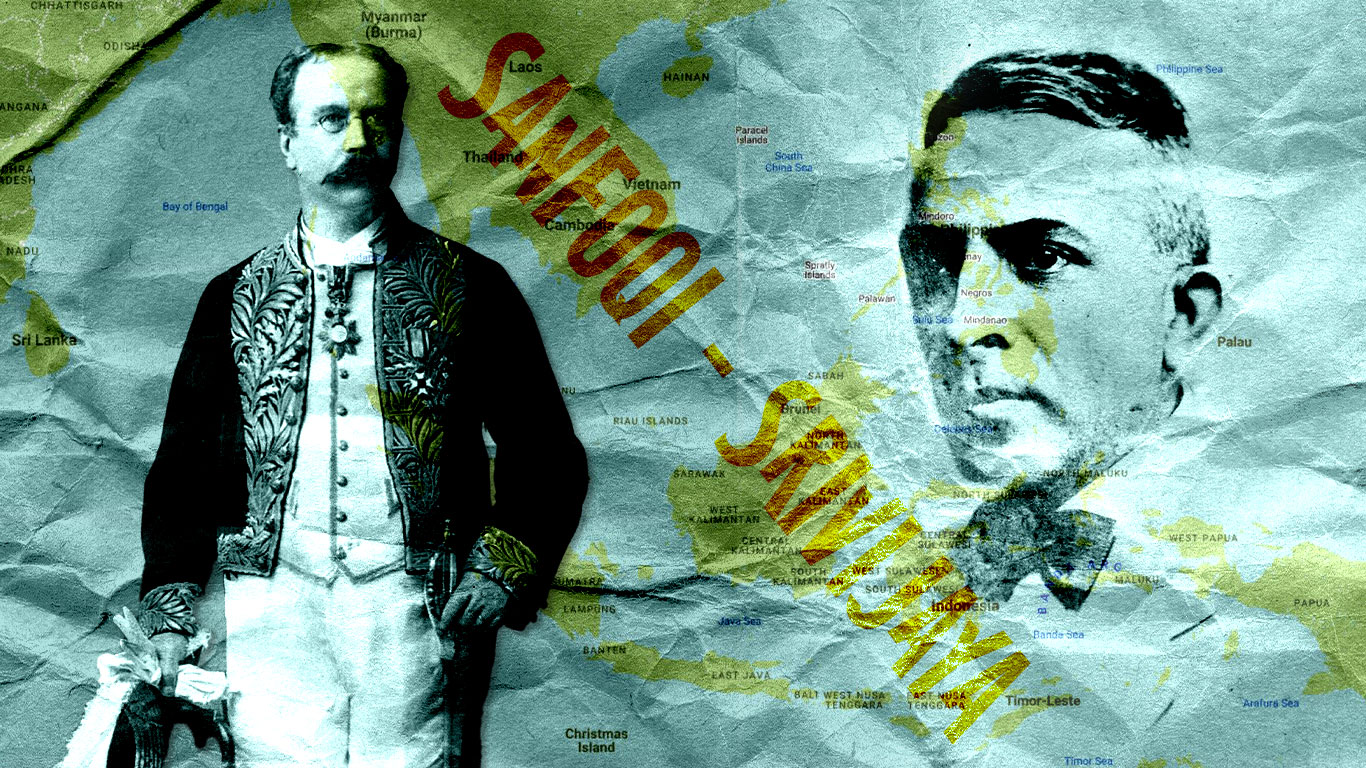
These are the two misinterpretations that serve as the foundation of the Srivijaya myth. The first one misinterprets Chinese sources to claim that Sanfoqi was located on Sumatra somewhere around Palembang and the second misinterprets an Old Malay inscription to claim that the term “Sri Vijaya” must be the true name of Sanfoqi, rather than the name of a datu who ruled over a domain for which we have no name.
Ever since these two “discoveries” were made, scholars have been trying to get information in historical sources to support this interpretation of the past. However, there are many passages in historical sources that do not support this view of the past.
Scholars have therefore resorted over the years to following the same approach as Groeneveldt, which is to try to find a way to explain away the information which contradicts the Srivijaya myth.
Again, that is NOT how historical knowledge is constructed, but this is the type of “knowledge” that the Srivijaya myth is built on.
The information that has been used to write the “history” of “Srivijaya” is therefore not about a place called “Srivijaya” and most of it has nothing to do with the island of Sumatra either. Instead, it is about other places. And the story that information tells about those other places is a fascinating one, and one which has never been told by modern historians.
I have written a two-part article entitled “Rescuing History from Srivijaya: The Fall of Angkor in the Ming Shilu” which deals with this issue in detail. It will be published in the journal, China and Asia: A Journal in Historical Studies (CAHS). Part 1 will be out very soon.

![Read more about the article Srivijaya 04: Was Zhenla Cham[ic]?](https://leminhkhaiblog.com/wp-content/uploads/2020/11/9221c-00-fengtuzhi-768x432.jpg)

When I was an undergrad Coedes was held up us the great scholar who had discovered a lost kingdom. I’m not in any way competent to comment, but CHAS is a very prestigious journal and your challenge to the current consensus is, well, far-reaching.
Thank you, sir!!
Yea, there is this weird dynamic in the field of Southeast Asian history. The vast majority of historians of SEAsia cannot read the types of historical sources that people like Coedes attempted to read, and they don’t make the effort to try to learn to do so either. Meanwhile, they are very interested in “decolonizing” the past and creating an “autonomous” history for Southeast Asia. So, because Coedes “discovered” a SEAsian kingdom, he has become a “good guy,” and that belief is sustained by the fact that these historians cannot read the types of sources that Coedes used. In reality, however, if we really want to “decolonize” history, then we have to be able to read the sources that Coedes (and others) used and figure out where they distorted them and went wrong.
Sri Vijaya is the identification at which the Visayan group of peoples in the central Philippines is claimed to have originated from.
The Yin-yai-sheng-lan, compiled at 1416 AD, makes perfect statement: “Chiu-chiang (Old Port/River) is the same country which was formerly called San-bo-tsai; it is also called P’o-lin-pang (Palembang) and [currently] is under the supremacy of Java.”
I know. Please read the 2nd part of the article where I discuss that source. It will be posted soon on leminkhai.blog