
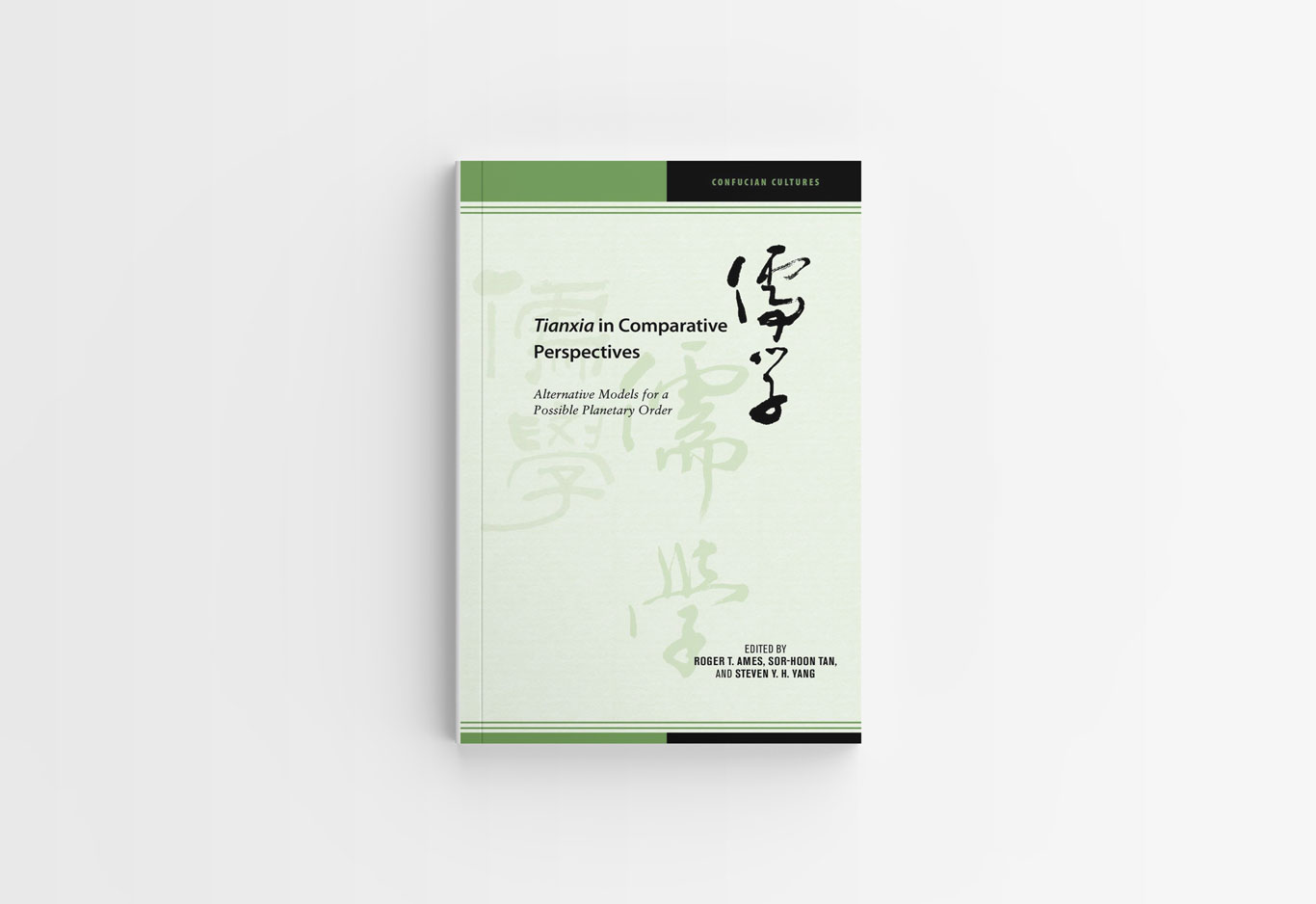
A few years ago, I was invited to write a paper on the concept of “Tianxia” (Thiên Hạ) in nineteenth-century Vietnam, and that paper has now been published.
The paper is called “Tianxia as Anticosmopolitan and Protoracial: A Case Study of Late Imperial Vietnam” and it is published in a book entitled Tianxia in Comparative Perspectives: Alternative Models for a Possible Planetary Order that was edited by Roger T. Ames, Sor-hoon Tan, and Steven Y. H. Yang (Honolulu: University of Hawaii Press, 2023).
For those who do not know, “Tianxia/Thiên Hạ” is a very old concept in East Asia. It literally means “All Under Heaven,” and it is a term that was used to refer to such concepts as “the empire” or “the (important) people in the empire” or “the known world,” etc.
When I was asked to write a paper on this topic, I did not know what I would say. So, I looked through the main historical records for the nineteenth century, the Veritable Records of Đại Nam (Đại Nam thực lục), to see how this term was used.
At the same time, I also looked at what people today are writing about Tianxia/Thiên Hạ and came across the work of Zhao Tingyang, a Chinese political philosopher.
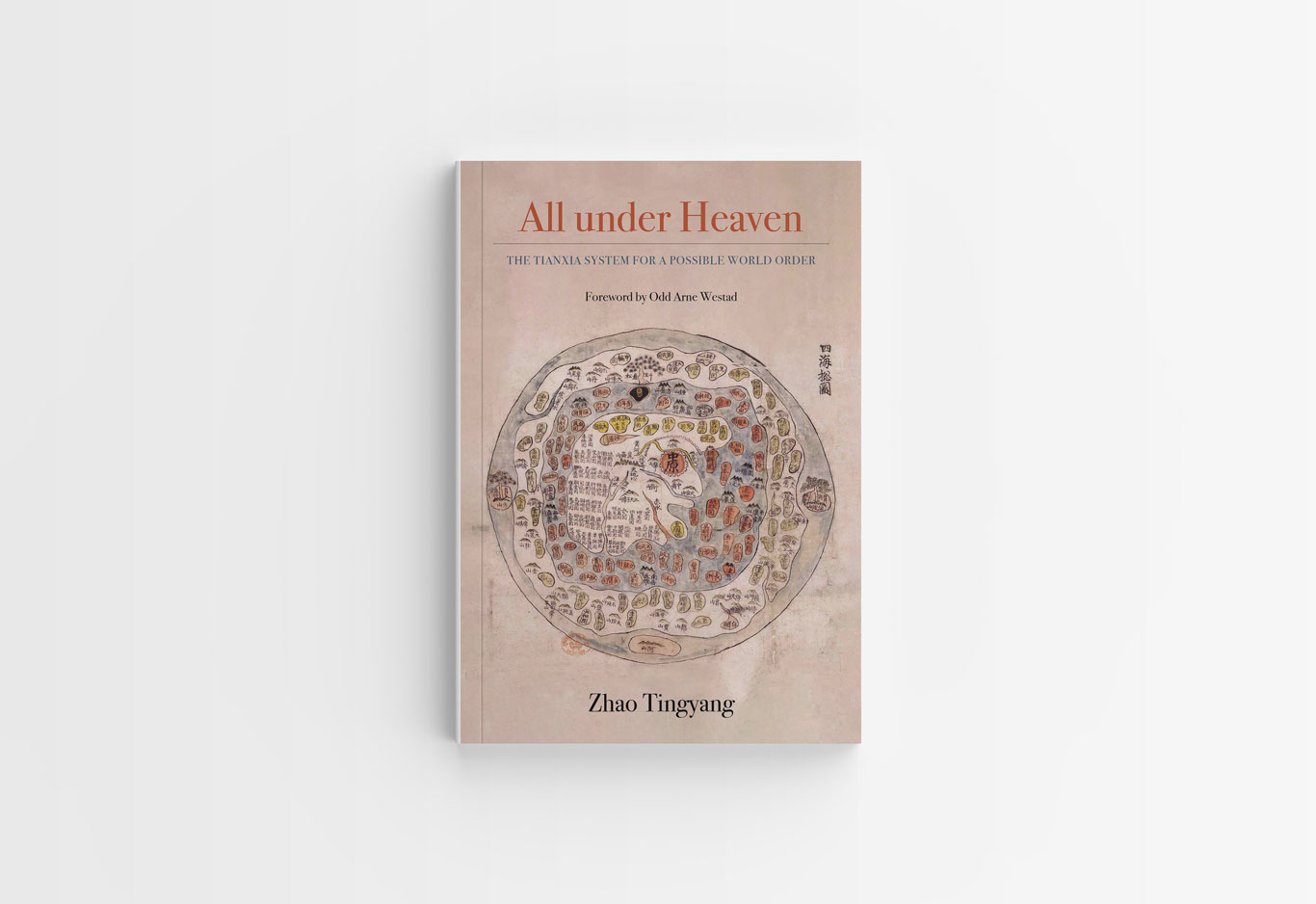
Over the past couple decades, Zhou Tingyang has attempted to develop a philosophy for world order that could serve as an alternative to the Western world order of nation states. To do this, he has looked into the Chinese past, and has found inspiration in the concept of Tianxia.
To Zhao, the concept of Tianxia can provide for a more inclusive and less divisive world order than that maintained by the West, as he argues that the West not only divided the world into nation-states, but also introduced other divisive categories, such as race.
In making this argument, Zhao Tingyang echoes the ideas of a school of thought in the West known as Decoloniality, which also argues that the West imposed divisive categories on the world through the processes of imperialism and colonialism.
I disagree with both of these views, as I find that they both either do not investigate the pre-colonial past or ignore inconvenient truths about the pre-colonial past. So, in this paper, in writing about Tianxia/Thiên Hạ in nineteenth century Vietnam, I challenged the ideas of Zhao Tingyang and Decoloniality scholars.
A pre-print version of the paper is available here.

This is a very interesting article. With a distance of a few years, are there any aspects you view differently today?
Not that I can think of. I don’t know if that is a good sign or a bad sign. . . But, yes, I still think that these ideas (those of Zhao Tingyang, and Decoloniality scholars) that the West is unique in creating categories that are used to exploit people is historically false.
Having said that, I guess that there is one point that I thought of developing further, and that is about the “ethnicization” of peoples. Prior to contact with the West, it looks like the Vietnamese mainly used the general category of “savage” to refer to what we would today refer to as “ethnic minority groups.” A lot has been written about the artificial nature of modern ethnic categories, etc. However, as problematic as they may be, governments today have “ethnic minority policies” that at least in theory can do things like help preserve cultures and languages. So, what I wonder is if those categories had not been created, would the larger (pre-colonial-contact) category of “savage” have been able to do the same in the modern age? What would have happened if colonial contact (and the subsequent ethnicization of various peoples) had not taken place? What would a modern “savage policy” that sought to preserve culture and languages look like? Would such a policy even have been able to emerge as long as that derogatory category still existed? If so, what might it have changed to?
Thank you professor. That chinese author conveniently forgets that not long ago, the middle kingdom called everyone outside their control Nam man, Đông Di, Bắc Địch, Tây Nhung. For this author, a less divided world order would be akin to subjugation of all surrounding lands placed under the rule of preferably a single person, ie an emperor or general secretary.
“Thiên hạ ” come from Kinh thi ,Tiểu Nhã chapter ; 溥天之下 Phổ thiên chi hạ
Phổ = khắp, phổ biến= wide , widespread , everywhere
Thi Kinh 詩經: “Phổ thiên chi hạ, Mạc phi vương thổ” 溥天之下, 莫非王土 (Tiểu nhã 小雅, Bắc san 北山) Khắp nơi dưới trời, Đâu chẳng là đất của vua.
溥天之下 Phổ thiên chi hạ