The True Vietnamese Revolutionaries

I’ve long had a problem with the general narrative about the history of late-nineteenth and early-twentieth century Vietnam. Over and over you read in books that the Nguyễn Dynasty failed to deal with the French, and as a result of this, the “old world” of traditional Vietnam, and classical Chinese, died and the “new world” of reformers and revolutionaries like Phan Bội Châu took over, and that led to the Tonkin Free School in 1907 where vernacular Vietnamese written in quốc ngữ was promoted, etc. and. . . that’s the end of the story, as that road all leads to 1945.

What’s wrong with this narrative? First of all, Phan Bội Châu spent very little time in Vietnam in the early twentieth century, and his writings were not published at that time, so how could he have been influential?

(more…)

Continue ReadingThe True Vietnamese Revolutionaries

Wealth and Power, Mencius and 1910 Vietnam

In the nineteenth century there were Chinese scholars who realized that China needed to catch up with the technological advances of Western nations. This was referred to as the need for “wealth and power” (fuqiang 富强).

What Chinese scholars did not want, on the other hand, were Western ideas, as they felt that those were inferior to Chinese ideas.

(more…)

Continue ReadingWealth and Power, Mencius and 1910 Vietnam

A 1910 Vietnamese Defense of the Yijing

The arrival in East Asia in the nineteenth century of people in steamships from the industrializing West was a shock to the educated elite there, and they struggled to understand why it was that there were people in the world who had created technologies that were so different, and so much more powerful and advanced, than anything in East Asia at the time.

Many scholars looked into the ancient texts that they studied in an effort to pass the civil service exams and declared that there was nothing about Western technology that did not already exist (or which the potential to emerge did not exist) in ancient texts.

The Classic of Changes (Yijing 易經) was particularly important for these efforts, as it declared that in antiquity the sages had “fashioned implements” (zhiqi 制器) by “regarding the images” (shangxiang 尚象) of the 64 hexagrams in that work.

(more…)

Continue ReadingA 1910 Vietnamese Defense of the Yijing

The Idea for a Mandarin Language in Early-20th-Century Vietnam

The civil service examination was of course an extremely important institution in Vietnamese history, but it is a topic that has yet to be researched in depth. Indeed, trying to understand how that institution worked is a daunting task, and it is understandable that not many scholars have tried to take on this difficult topic.

Recently I took a look at some documents that were produced in the nineteenth and early twentieth centuries that contain questions from the exams and “ideal answers.” Known as Selected Essays from the Palace Exam [Hội đình văn tuyển 會庭文選], these texts were meant to serve as study guides for future exam takers.

(more…)

Continue ReadingThe Idea for a Mandarin Language in Early-20th-Century Vietnam

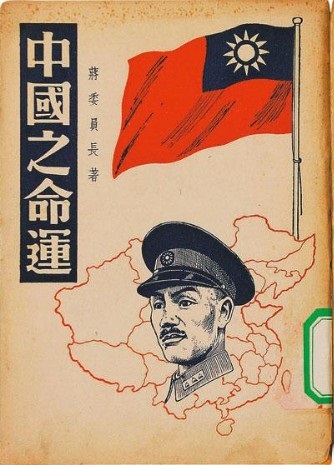
Hồ Chí Minh and China’s Destiny

I was reading a newspaper from Republican China today called the Central Daily (Zhongyang ribao 中央日報). On 19 May 1946 it published a brief article entitled “Việt Chairman Hồ Chí Minh Translates China’s Destiny; Since Publication it has been Selling Extremely Well.”

(越主席胡志明譯中國之命運,出版後極暢銷)

(more…)

Continue ReadingHồ Chí Minh and China’s Destiny

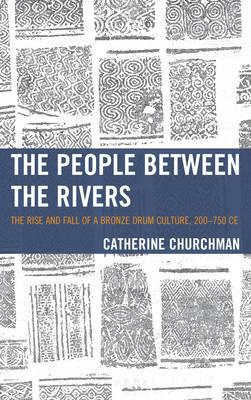
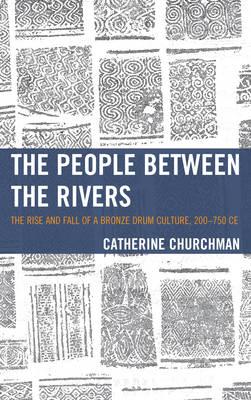
A Review of “The People between the Rivers”

In 1976, Edward Schafer published a book about “the South” in the medieval Chinese imagination called The Vermilion Bird: T’ang Images of the South. Filled with fascinating details about everything from plants to people, Schafer’s book demonstrated how vast and rich the information in Chinese sources is for the region of what is now Guangdong and Guangxi provinces, as well as northern and parts of central Vietnam, in the first millennium CE.

At the same time, however, in focusing on how Chinese “thought” about the south, The Vermilion Bird is not an ideal work to read in order to gain a sense of “what actually happened” in that region during that time period. This is a gap that Keith Taylor’s 1983 work, The Birth of Vietnam, partially filled as it provided a very detailed narrative of the history of the Red River Plain, part of the larger region that is examined in The Vermilion Bird, from the earliest times up through the period of Tang Dynasty rule.

(more…)

Continue ReadingA Review of “The People between the Rivers”

A Musical.ly Review of “The People between the Rivers”

There is a wonderful book by Catherine Churchman coming out in a couple of weeks called The People between the Rivers: The Rise and Fall of a Bronze Drum Culture, 200-750 CE.

I will post a detailed review of this important work when it is actually published, but in anticipation of that, here is a musical.ly review of the book.

(more…)

Continue ReadingA Musical.ly Review of “The People between the Rivers”

The Premodern Past that Haunts Modern Vietnamese

There at it again. For the past few days Vietnamese cyberspace has been filled with articles and discussions about whether Chinese characters (chữ Hán) should be taught in schools in Vietnam.

I think the article that got the current debate started was one that called for teaching Chinese characters in order to “preserve the clarity of Vietnamese” (Cần dạy chữ Hán để giữ sự trong sáng của tiếng Việt), and this provoked somewhat of a backlash from some people who see this idea as some kind of effort to make Vietnam more “Chinese.”

(more…)

Continue ReadingThe Premodern Past that Haunts Modern Vietnamese

Knowledge Production, Globalization and Vietnamese Studies

The video below aired on ThinkTech Hawaii and covers a range of topics that the Engaging With Vietnam conference series deals with, from knowledge production to globalization.

A big mahalo to Dr. Grace Cheng of Hawaii Pacific University for inviting us and facilitating a great conversation!!

(more…)

Continue ReadingKnowledge Production, Globalization and Vietnamese Studies

Phan Bội Châu, the Later Trần and the Ngô

I love the early twentieth century, as that is when the Vietnamese worldview started to change dramatically, and the documents from that period make that perfectly clear.

I’ve been writing about a fifteenth-century document known as the “Great Pronouncement on Pacifying the Ngô” (Bình Ngô đại cáo), and of course the question of what the term “Ngô” refers to has come up.

The limited evidence from the fifteenth-century makes it difficult to determine what exactly that term meant at that time, but early twentieth century writings make it very clear what the term meant at that time.

A case in point is an historical novel that Vietnamese revolutionary Phan Bội Châu wrote in classical Chinese in the early twentieth century called The Lost History of the Later Trần (後陳逸史 Hậu Trần dật sử).

(more…)

Continue ReadingPhan Bội Châu, the Later Trần and the Ngô