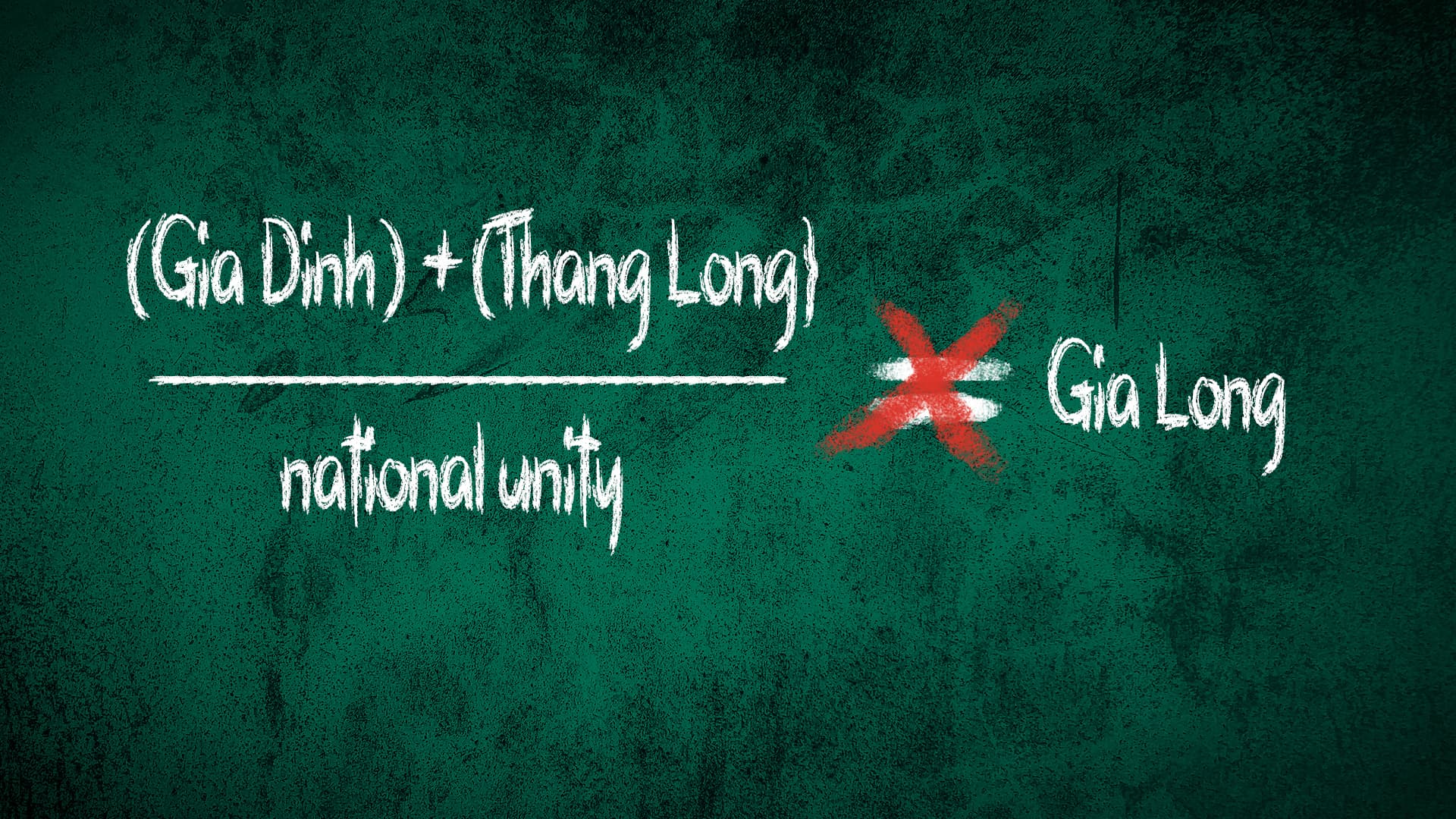
“Gia Long” Does NOT Mean “Gia Định + Thăng Long”
I keep coming across references to this idea that in 1802, Nguyễn Phúc Ánh, the founder of the Nguyễn Dynasty, to quote Wikipedia: “crowned himself emperor, under the reign name…
I keep coming across references to this idea that in 1802, Nguyễn Phúc Ánh, the founder of the Nguyễn Dynasty, to quote Wikipedia: “crowned himself emperor, under the reign name…

“Gia Định báo” is the name of what many people consider to be the first Vietnamese newspaper. It was first published in 1865 in Vietnamese using the Latin script.“Gia Định”…

Several months ago, or maybe longer, I downloaded a new article that I wanted to read, but I’ve only now had time to do so.The article is by Trần Thị…
For basically as long as scholars have been writing in English about premodern Vietnamese history, there has been an effort to argue that Vietnam (or at least part of it)…
The period from 1883-1885 was a dramatic time in Vietnamese history. The troubles began with the passing of Nguyễn Dynasty Emperor Tự Đức, an emperor who had ruled for over 35 years.
In the two years that followed, four emperors would rise and fall before Emperor Đồng Khánh ascended the throne and ruled or for four years, a comparatively long reign in those troubled times.
Emperor Đồng Khánh thus brought some stability to the Nguyễn Dynasty, but the conditions in which he ruled were different from those of his predecessors.
I have been trying to figure out the chronology of events that led to the establishment in 1896 of the Quốc học, a school in the Nguyễn Dynasty capital of Huế that was dedicated to teaching French to the children of the royal family and Nguyễn Dynasty officials.
From what I have been able to determine so far, it was French governor-general Paul Armand Rousseau’s idea. Rousseau then consulted with the French resident-superior in Huế, Ernest Albert Brière, who in turn discussed the matter with members of the Nguyễn Dynasty Privy Council (Viện Cơ mật 機密院).
In bringing up this matter, Rousseau and Brière indicated that they had someone in mind to serve as the director of the Quôc học, a man by the name of Ngô Đình Khả.
I recently came across a fascinating text from the early twentieth century that contains a critique of the Dông Kinh Nghĩa Thục. The Đông Kinh Nghĩa Thục (東京義塾, Tonkin Free School) is a school that was set up in Hanoi in 1907 where “modern” (Western) subjects where taught, and where students were encouraged to learn to read and write in Vietnamese using the Romanized script (quốc ngữ) rather than classical Chinese (Hán).
This school was shut down by the French colonial authorities a year later. The usual explanation for this is that the French accused some of the leaders of the school for being involved in tax protests that broke out at that time in central Vietnam.
In the modern (nationalist) history of Vietnam, the brief existence of this school is regarded as an important moment in the nationalist struggle against French colonial rule when Vietnamese sought to take steps to modernize their society, but ultimately were stopped by the French).
One major “blind spot” that exists in our understanding of modern Vietnamese history concerns what happened at the Nguyễn Dynasty court in the late nineteenth and twentieth centuries.
For most of the nineteenth century, historians can consult compilations based on Nguyễn Dynasty court records that are known as “veritable records” (thực lục 實錄), but no such collections were made for the late nineteenth and twentieth centuries.
Court documents from that period, however, do still exist.
I’ve recently been doing some research using a nineteenth-century geography called the Đại Nam nhất thống chí 大南一統志 (Unified Gazetteer of Đại Nam). As usual, once you start looking closely at a text and comparing that text with what has been written about it. . . you run into all kinds of problems.
When the Nguyễn Dynasty came to power in 1802, there was a Confucian Temple (Văn Miếu 文廟) in Long Hồ hamlet, outside the imperial citadel. In 1807, Emperor Gia Long ordered that a new Confucian Temple be constructed in the nearby An Ninh hamlet.
That same year, Emperor Gia Long also ordered that a shrine dedicated to the father of Confucius (Khải Thánh từ 啓聖祠) be constructed.