
New Article – “Sinology in Vietnam”
An article that I wrote a year or two ago has just been published. It is called “Sinology in Vietnam.”There are people who would label anything that was written in…
An article that I wrote a year or two ago has just been published. It is called “Sinology in Vietnam.”There are people who would label anything that was written in…
I came across a Vietnamese newspaper from the late 1930s-early 1940s called the “Tràng An Báo.” This name is interesting. “Tràng An” is usually written now as “Trường An” and…
In 1976, linguists Jerry Norman and Tsu-Lin Mei published an influential article entitled “The Austroasiatics in Ancient South China: Some Lexical Evidence.” In this article, Norman and Mei offered linguistic evidence that they said could “show that the Austroasiatics inhabited the shores of the Middle Yangtze and parts of the southeast coast during the first millennium B.C.”
One of the (many) problems with the way that modern Vietnamese history has been written about (both by historians inside and outside of Vietnam) is that there is virtually no recognition of any Chinese intellectual influence on Vietnam in the 1920s and 1930s when in fact there was significant influence.
Everyone recognizes that the traditional Vietnamese elite were deeply influenced by the ideas of their counterparts in imperial China. Everyone also recognizes that early-twentieth-century reformers like Phan Bội Châu were influenced by the ideas of late-Qing reformers like Liang Qichao.
But then after that. . . there is virtually no mention of any kind of intellectual connection between members of the Vietnamese elite and their counterparts in the Republic of China (ROC).
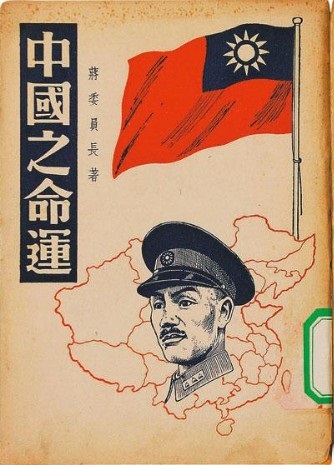
I was reading a newspaper from Republican China today called the Central Daily (Zhongyang ribao 中央日報). On 19 May 1946 it published a brief article entitled “Việt Chairman Hồ Chí Minh Translates China’s Destiny; Since Publication it has been Selling Extremely Well.”
(越主席胡志明譯中國之命運,出版後極暢銷)
In 1976, Edward Schafer published a book about “the South” in the medieval Chinese imagination called The Vermilion Bird: T’ang Images of the South. Filled with fascinating details about everything from plants to people, Schafer’s book demonstrated how vast and rich the information in Chinese sources is for the region of what is now Guangdong and Guangxi provinces, as well as northern and parts of central Vietnam, in the first millennium CE.
At the same time, however, in focusing on how Chinese “thought” about the south, The Vermilion Bird is not an ideal work to read in order to gain a sense of “what actually happened” in that region during that time period. This is a gap that Keith Taylor’s 1983 work, The Birth of Vietnam, partially filled as it provided a very detailed narrative of the history of the Red River Plain, part of the larger region that is examined in The Vermilion Bird, from the earliest times up through the period of Tang Dynasty rule.
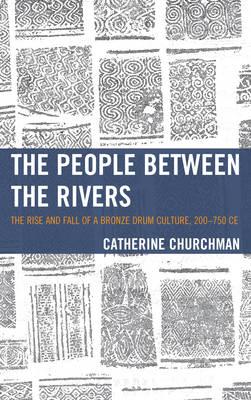
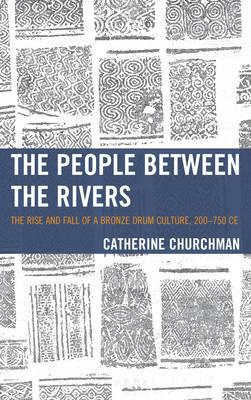
There is a wonderful book by Catherine Churchman coming out in a couple of weeks called The People between the Rivers: The Rise and Fall of a Bronze Drum Culture, 200-750 CE.
I will post a detailed review of this important work when it is actually published, but in anticipation of that, here is a musical.ly review of the book.

There at it again. For the past few days Vietnamese cyberspace has been filled with articles and discussions about whether Chinese characters (chữ Hán) should be taught in schools in Vietnam.
I think the article that got the current debate started was one that called for teaching Chinese characters in order to “preserve the clarity of Vietnamese” (Cần dạy chữ Hán để giữ sự trong sáng của tiếng Việt), and this provoked somewhat of a backlash from some people who see this idea as some kind of effort to make Vietnam more “Chinese.”
https://www.youtube.com/watch?v=gvtLqVukuIc Responding to a call from “Jacques from France,” Dr. K. and guest The Midnight Dreamer discuss the question of “Who were the Ngô?” on the WTXT’s Late Night Textual…

There is a fifteenth-century document that is today very famous in Vietnam. It is called the “Bình Ngô đại cáo” (The Great Proclamation on Pacifying the Ngô) and today it is seen in Vietnam as a kind of “declaration of independence” that was made after the Ming Dynasty forces were driven out of the Red River Delta after some two decades of occupation.
For years I have had problems with this interpretation of this document, and there are many posts on this blog which deal with this topic. I do not see this document as a “declaration of independence” but as a “declaration of victory” of one faction in the Việt world over another faction.