

I have been arguing that History cannot survive AI, and some people have been offering contending views, such as the idea that AI can’t do certain things that certain historians can.
I agree, but I still think that History is toast. Let me explain.
I do not see evidence that AI is currently more “intelligent” than certain historians. The simplest way to look at this is to recognize that some people engage in extensive work with un-digitized materials, and that this provides them with more information to develop their ideas than an LLM possesses.
However, that fact (or any other argument that we can come up with about the uniqueness of the work of historians) is not going to be sufficient to prevent History, the profession, the field, from getting wiped out by AI. That is what I am arguing, not that AI (in it’s current form) is more intelligent than some historians.
Unlike in the nineteenth century when you had counts and barons and dukes who produced historical writings, the people today who do the kind of historical research that AI cannot (yet) replicate are generally not financially independent. Instead, they mainly rely on universities to provide for their livelihood.
In return for a salary, historians are supposed to produce historical scholarship, but their main responsibility is usually to teach undergraduate students and to train them with the same skills that they possess.
That entire enterprise, however, is in deep, deep trouble. And when a weak or undermined enterprise encounters a new technology that can automate or replicate much of its work, the outcome is usually not good for that enterprise.

Higher education, like other legacy institutions, has certain beliefs about itself that do not reflect reality, but I think that anyone who has spent time in a university is aware of its problems.
There is a talk related to this from a few years ago by Alan Soon of Splice Media in Singapore that I really like. It is on changes in the media landscape. In the talk, Soon points out that journalist have certain “sacred cow” beliefs about the media that simply do not match reality, and that the failure of traditional media, like newspapers, to adapt to the new conditions of the digital age has been in no small part due to the inability of people in the media world to understand the reality of their industry, as opposed to their own idealized views. To quote:
“Media has a whole bunch of sacred cows, and this is what I wanted to get to. We have in our heads this notion that people paid for news back in the good old days, right? Never mind the fact that newspapers were never sold on the premise of news: they were sold because they had classified ads; they were sold because they had a sports section; they were sold because people wanted you know the cinema listings. People never bought newspapers just for news and yet we have this notion that that’s exactly what people are going to be paying for.”
This statement can likewise be made about universities, and higher education more generally. I asked ChatGPT to rewrite that paragraph but to make it about higher education, and to use information from this Substack article by my friend Chad Raymond. Here is what it wrote:
“Higher education has its own set of sacred cows, and here’s the one I want to talk about. We have this idea lodged in our heads that in the “good old days” people went to university purely to pursue knowledge for its own sake, right? Never mind the fact that, in reality, many students have always come for other reasons entirely: to get a credential that leads to a job, to live on their own for the first time, to keep playing a sport they love, or simply to enjoy the social life and amenities. Universities have long catered to these priorities—campus tours brag more about gyms and stadiums than libraries, and the credit hour measures time in a seat, not learning in a mind. People never flocked to college just for intellectual enrichment, and yet we keep acting as if that’s what higher education is—and will continue to be—about.”
Students have never flocked to universities to learn what historians have to teach them. Prior to the digital age, many students saw a History major as possible preparation for such things as a career in journalism or preparation for law school, etc.
By the 2010s, as the number of History majors started to decline dramatically, I found that many of those who were still choosing to major in History were doing so because they saw it as the easiest way to get the credential of a university degree, and that they had no idea what they actually wanted to do, but becoming an historian was definitely not an option that they were considering.
Meanwhile, the “capstone” of a History major has long been the 25-page paper, in 12-point Times New Roman font, double-spaced, with citations following the Chicago Manual of Style, and including some kind of primary source(s). And decades into the digital age, this remains the norm.
For all of the years that I have been involved in higher education, I have heard profs talk about (and have seen) how underwhelming these final projects often are. Indeed, I have seen committees formed to “investigate” this issue and reports issued with “recommendations,” but all to no avail.
While students may start with the best intentions, the combination of taking multiple classes, working part-time jobs, fulfilling family responsibilities, etc., invariably results in a final paper that at best “gets the job done.” And the students will be the first to admit this.
As such, historians at universities do not successfully impart their supposed unique knowledge and skills on undergraduate students (and that’s what those committees were set up to try to address), which is theoretically their main role.
And this is just talking at an ideal level. Were we to take into account all of the profs who read monotonously off PowerPower slides, or who teach online by uploading videos once, or who provide little or no feedback to students, or who do not respond to email questions, or the large classes that make more individualized mentoring impossible, or the increasing reliance on over-worked adjunct instructors, etc., then the degree to which the ideal differs from the reality becomes much more extreme.

Enter AI into this environment. First and foremost, it solves the problem that students face. They don’t have the time to write that damn final paper, and now they don’t need to. An LLM can do it for them. Problem solved.
So, what does that replace?
Does it replace the process whereby young intellectuals finetune their skills in the historiographical craft?
Only in a very limited number of cases.
In the majority of cases, it replaces a sloppy, mediocre, underwhelming-for-everyone-involved ultimately disappointing process where students have to jump through certain hoops to get an often obscenely-expensive credential.
In other words, the issue is not that LLMs are not as “intelligent” as some historians, and that therefore, History will be fine. The issue is that they lay bare the lie of the enterprise that the History profession is based on, and which it depends on for its existence.
That supposedly specialized knowledge that only professional historians can impart? Actually, that’s not happening, and LLMs can do that far better than many of those specialists. So why do we need those specialists? They’re expensive to maintain. A university could use that salary money to invest in what it really prioritizes and what students actually attend for: a hipster café with super fast Wifi.
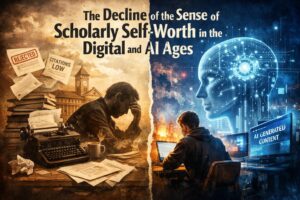
This is why History is toast. It’s been living a lie that has become ever more obvious in the digital age, but now LLMs are shining a spotlight directly on it.
University administrators will never admit or state that the current system is a scam. However, they will use its current failings to embrace AI as a means to “improve pedagogy” by making it more “individualized” especially for majors with small numbers of students.
Goodbye, historians.

Finally, there is the issue of the unique work that historians supposedly do, which is to dig deep into archives to find critical pieces of information that enable us to gain new perspectives on the past.
Last night there was an article in my Google feed entitled “Boston Public Library Aims to Increase Access to a Vast Historic Archive Using AI.”
I found that title strange. I couldn’t think of how “AI” could increase access to an archive. Digitization can do that. But AI?
So, I clicked on the link and read about how the Boston Public Library has signed an agreement with OpenAI and Harvard Law School to digitize a trove of government documents. In return for paying for the digitization, OpenAI will be allowed to train its LLM on the “data” in the documents.
Now I understand. AI itself is not increasing access to a vast historical archive. Instead, an AI company is paying for the digitization of documents that people will then be able to access. . . but all of that information will then also be in the company’s LLM as well. . .
What this article made me realize is that even this claim that historians make about all of the un-digitized materials that are still out there, well, OpenAI is coming for those materials, and coming with $$.
My guess would be that Anthropic, Google, Meta, and xAI won’t sit on the sidelines and let OpenAI do that alone.
When the number of History majors started to decline in the 2010s, historians responded by stating “but we teach critical thinking!”
Now that LLMs can replicate the core skills that they are responsible for teaching, the source of their bread and butter, the exclamation will be “but we examine un-digitized sources!”
The critical thinking argument didn’t work/matter and the un-digitized documents one won’t either.
As such, in addition to the important issue of universities being about many things other than learning, historians rely for their livelihood on a job at universities that rarely achieves its goal, and which LLMs can now replicate. No argument about critical thinking or un-digitized documents is going to convince a university administrator of the importance of this job in the AI age.
I would argue that this alone is sufficient to support my point that History (the profession/field) is toast. Then, however, if we consider that whatever working historians there still are will increasingly use LLMs in their work. . . then I have no idea what History (the practice and output) will be like going forward, but it will be very different from what it is now.

Have you read Ed Zitron, Liam? https://www.wheresyoured.at/the-haters-gui/?ref=ed-zitrons-wheres-your-ed-at-newsletter
Not trying to make any sort of comment, just curious if you’ve come across him.
Sorry, it’s a bit bombastic and might be an endurance test but curious if you find the reasoning at all persuasive.
Hello Phan Dinh Phung, thanks for the comment, and what an honor to meet you, sir!!
No, I was not aware of Ed Zitron. I make no claim to have any expertise about economics, but in general what he says strikes me as sensible. People keep talking, for instance, about how there is potential for a “1-person billion-dollar company,” but I really don’t see how LLMs or AI more generally can enable that, because anything one person can do, can easily be replicated by another, or subsumed into the services of a Microsoft or Meta, etc.
He mentions that Midjourney is making money, but there are now all these other companies that do the same thing, and companies that existed before Midjourney (like Envato Elements and Freepik) now offer the same image generation capabilities (as well as other products/services for the same price), and you can also do it for free with open-source tools like ComfyUI. So even with Midjourney, I don’t see how they can stand out over the long run.
So, yes, economically we could be in a total AI bubble. However, for the things I’ve been writing about, I don’t think that matters. As long as a decent LLM can keep operating at the level they are operating at right now, higher education, and particularly fields that are totally reliant on texts, like History, are in huge trouble, simply because LLMs can do the text-based work that is so central to those fields.
Thank you! I am hoping that the enormous electricity and water demands also mean that the impact of LLMs will ultimately be limited, but as you know I have a knack for fighting hopeless causes ; )
The hopeless causes you fought for made possible the ascent of a Vietnamese family under French rule, which, more than half a century later, would culminate in the presidency of one of its sons over postcolonial South Vietnam. I wonder whether AI has become sufficiently sensible to take note of the intriguing detail that during the Buddhist revolt which would precipitate the downfall of that president and his family Thich Quang Duc self-immolated at the cross section of two Saigon boulevards, one of which was named after you whose anticolonial movement the president’s father had helped suppress, a fact that, as noted earlier, contributed in no small part to the rise of their clan.
Yes, it looks like AI can do this.
This is the type of thing that an historian would piece together gradually, and conceivably this is also the type of thing that one could discover through a conversation with an LLM.
In a conversation that only took a few seconds, I asked these questions:
1) Phan Dinh Phung was a Vietnamese scholar-official who resisted French colonization in the nineteenth century. Thich Quang Duc was a Buddhist monk who immolated himself in 1963 in protest against the South Vietnamese government. Is there any connection, real or symbolic, between these people?
2) Did a member of the Ngo clan suppress Phan Dinh Phung?
3) At the intersections of which streets did that Buddhist martyr take his life? [the response pointed to an irony]
4) But doesn’t the irony extend to the Ngo family as well?
At which point, ChatGPT 5 said this:
“Thích Quảng Đức’s self-immolation happened on a street named after the very patriot that Ngô Đình Khả — father of Ngô Đình Diệm — helped suppress in the 1890s.
That means the physical setting of the protest carried an unintentional historical echo: a place honoring someone crushed by the Ngô family’s earlier collaboration now became the stage for moral defiance against the Ngô family’s later rule.”
Ok, so that exact line of questions is probably not one that an historian would ask, but it is easy to imagine someone asking questions, checking things/hunches, and stumbling upon that realization.
I then asked ChatGPT if it could come up with other examples, and it did, like this one:
“The 1963 Huế Buddhist protests near the Nam Giao Esplanade
Historical echo: The Nam Giao Esplanade was the Nguyễn dynasty’s ritual site for Heaven-worship — a Confucian state ceremony symbolizing legitimacy and harmony between ruler and ruled.
Later event: In May–June 1963, Buddhist demonstrations against Ngô Đình Diệm’s regime in Huế often began or gathered near this area.
Irony/echo: The site that once projected royal moral authority became a gathering point for subjects challenging the state’s moral authority.”
With a little (but not much) work, I could easily see a paper emerge here on “place, meaning, and memory. . .”
We can’t keep thinking that we are somehow above LLMs. They can do our work well enough already. Our profession, in its current form, is totally screwed.
Even assuming that a historian would write the entire article on “place, meaning, and memory. . .” him/herself, I strongly suspect that such an article is written for an audience of just two peer reviewers whose future submissions may very probably be peer-reviewed by that historian. Thanks to their peer-reviewed publications, all of them could then secure tenured positions at the universities where they have been working. If my admittedly caricatural suspicion happens to be accurate, then there is no reason whatsoever to shed one single tear for the impending demise of this incestuous and self-serving scholarly-industrial complex at the hands of AI. Madonna, after all, also exhorted Argentina not to cry for her.
Its demise, as you pointed out elsewhere, does not mean the end of history as a profession. Great historians do not tend to waste time on place, meaning, and memory. They have written about the struggle for the mastery of Europe, about millenarianism and peasant politics in Vietnam or about new guard and old order in Vichy France, for instance. They have inquired into the great enterprise, which was the Manchu reconstruction of imperial order in seventeenth-century China as well as chronicled the role citizens played during the French Revolution at the end of the eighteenth century.
Hồ Tài Huệ Tâm made me think the apocalypse was imminent. Wakeman caused me to regret my ignorance of Sino-Vietnamese which would have enabled me to enjoy his two volumes more thoroughly, and after finishing Schama I felt the urge to grab a spike and thrust it through an aristocrat or more appropriately his turn-of-the century incarnation. But who on Earth would be able to survive one thousand pages of AI-generated prose?
As an avid consumer of epic history, I would welcome the return of elite historians who craft page-turners for the masses, a pivot which the advent of AI may well precipitate!
It’s interesting that you should mention Wakeman. I keep thinking about The Great Enterprise and how I feel like it is rarer now to see books like that, ones that make a monumental contribution to a field by doing the basic work of covering a significant topic (like a dynastic transition) that hasn’t been addressed thoroughly already, and which do it in clear enough language so that it can also be of interest to certain people beyond the Ivory Tower.
However, I also remember that when his next book came out, Policing Shanghai, I was (in hindsight, naively) surprised to see this in the acknowledgements:
“Research assistance was provided by a number of Chinese history graduate students at Berkeley. These included Douglas Fix, David Fraser, Blaine Gaustad, Shang Quan, Jeffrey Wasserstrom, Timothy Weston, Xu Guomin, and Yu Maochun. I owe a very great debt to my two professional research assistants: Susan Stone, who heled copyedit an earlier version of this book, and Elinor Levine, who provided assistance with tables, charts, appendixes, miscellaneous research, collation, and final compilation of the manuscript.”
“Oh,” I suddenly realized, “THAT’S how these guys write such big books so fast!!”
I just checked The Great Enterprise, published in 1985, and similarly, it says the following:
“Research assistance has been provided by, among others, Blaine Gaustad, Jonathan Grant, Ann Hsu, Huang Ch’un-li, Joseph Huang, Lionel Jensen, Lin Shang-chien, Richard Shek, Karl Slinkard, John Woodbury, and Yeh Wen-hsin. . . Michael Mass and Josephine Pearson helped with the preparation of early drafts of the work, and Andrienne Morgan created the maps. The index was completed with the help of Blaine Gaustad, Ann and Jeffrey Wasserstrom, and Yeh Wen-hsin. Editorial advice and encouragement were freely given by Grant Barnes, Phyllis Killen, and my dear friend the late Philip Lilienthal. My special thanks go to John S. Service for his extraordinarily keen and expert copy-editing, and to Susan Stone whose close, concerned, and continuous involvement in the writing of this work helped bring it to completion.”
When I see this, or when I think about the fact that the Pelliots and Masperos of the colonial era likely had unnamed traditionally-trained scholars who served as “research assistants,” then I see digitization as a great “democratizer,” as a single person can now do the research that the Wakemans/Pelliots/Masperos of the world relied on others to carry out for them, and LLMs (even if they are not used to help with research), can make up for the loss of editing services by publishers.
However, a lot of materials have been digitized for quite some time now, and yet, I don’t see these kinds of monumental works appearing much. Here, I think this phrase/characterization of yours is very relevant: the “incestuous and self-serving scholarly-industrial complex.” For years now, I have found the huge conferences dismaying. I look at sessions with 25 panels of 4 people each and can’t find a single presentation that would interest me enough to want to listen (way too much -ality / -ivity and way to little substance).
Meanwhile, a year ago, I met an “amateur historian” in France who had, with the assistance of ChatGPT, written hundreds of pages, in English, of a history that had something to do with the Caribbean. If I remember correctly, it was interweaving history and “fiction,” and from the guy’s description, it sounded like it would be very interesting to read.
So, yes, I agree. If AI eliminates the “incestuous and self-serving scholarly-industrial complex,” then more power to it! Let’s read about the Caribbean!!
AI still can’t decipher the Indus script neither able to document languages adequately by its own. AI is limited by human knowledge. Few days ago I asked GPT-5 to draw a map of Indo-European languages and it created abominations instead. Then I asked it what is Santali verb conjugation and how Santali pronominal affixes correlate/cognate with Vietnamese free pronouns, it ended up with a self made-up language out of nowhere.
Thanks for the comments!!
I’m not a linguist, so I haven’t tried to do any linguistic work with an LLM. But on the Indus script, an LLM can’t produce knowledge from nothing. It can only predict the probability of a word coming after another word. So we shouldn’t expect it to be able to decipher the Indus script.
However, based on what it can do, researchers at Google and some universities in Europe have just developed a new tool, Aeneas, that they say can help decipher fragments of Latin texts by looking for parallels across other Latin inscriptions and predicting what the next word(s) in a fragment of an inscription might be.
https://deepmind.google/discover/blog/aeneas-transforms-how-historians-connect-the-past/
The point of what I wrote above, however, is that LLMs do not have to function at the highest levels of scholarly activity, such as deciphering fragments of ancient inscriptions, for them to still wipe out scholarly disciplines. Without university jobs, historians and the field of History can’t survive, and LLMs can currently 1) do the job of teaching what historians teach to undergraduate students and they can 2) do the writing that undergrads do to get a History degree. So, what’s left?
Another point I should make is that I think a lot of people in higher education have a false sense of security, because as experts on something, they played around with ChatGPT at some point, got some crazy results, and saw some hallucinated sources, and then they concluded that AI is not a threat. Sometimes what people think an LLM can’t do is just the result of their lack of knowledge of how to prompt the LLM to do what they want it to do, but in certain cases, sure, it doesn’t perform. However, in many, many others, it does just fine.
As for the hallucinated sources, from the very beginning, I’ve always suspected that this was a deliberate “filter” that AI companies placed in LLMs to not totally freak out professors and universities, so as to prevent a major backlash when ChatGPT was first released, and I suspected that gradually over time, this filter would be turned down and the citations would become more accurate.
I just asked ChatGPT 5 about Proto-Austroasiatic terms for a house. It gave me some feedback that I can’t verify, but it also said that it could produce a “full comparative table” for me. I asked it to do so, and there it referenced “Alves 2023,” a recent study on that topic (and Mark Alves is a leading scholar on this topic), and linked to the article on his ResearchGate page, as well as to the article on the publisher’s page.
I then opened a new chat and asked it to provide me with a citation in APA 7th ed style of the latest study on Proto-Austroasiatic terms for house. It did so perfectly, providing a citation for a 2025 article by Alves and Charles Higham, and it provided a citation for Alves 2023 as well.
Not all that long ago, ChatGPT would not have done this. It would have told me to consult scholarly sites like Academia.edu and ResearchGate or databases like JSTOR. Now it does provide accurate citations.
Is this because LLMs are getting better at what they do? Or is it because, seeing how professors and universities have been successfully lulled into complacency, now the AI companies are turning down that “hallucinate citations so that profs don’t freak out” filter?
Whatever the case may be, can we use an LLM to produce truly innovative scholarship? To some degree, yes. While LLMs cannot access new information on their own, new information can be “fed” to them, and they can make connections that historians are unaware of. As the example in the comment above about locations where events took place that have some kind of historical “echo” suggests, LLMs can be used to develop new ways of looking at the past.
However, we also have to admit that plenty of the scholarship out there is not particularly innovative, and LLMs can definitely help improve a lot of such work. So, even if it can’t be “ground-breaking,” it can lead to new ideas and it can improve on plenty of the work out there (and it can do all of that in seconds).
Can we use an LLM to learn everything that is taught in a university History course? In many cases, probably yes.
Can we use an LLM to write whatever written assignments are necessary to get an undergraduate degree in History? Definitely!!
Again, I can’t speak for the field of linguistics, but History, in its current text-centric form, looks to me to be in serious trouble.
I resemble that remark!
(For the unfamiliar, that’s a Three Stooges reference.)
My wife, a professor of English, faces the same situation — AI exposes the lie upon which the entire academic English profession is based. And AI is also tolling the bell for political science, at least at the undergraduate level.