There is a kingdom by the name of Zhenlifu 真里富 (also, Chen-li-fu) that is mentioned in a Song dynasty source known as the Song huiyao jigao 宋會要輯稿 (Draft Institutional History of the Song).
In 1960, historian O. W. Wolters wrote an article about this kingdom and claimed that it “lay to the west of Cambodia and had access to the Gulf of Siam.” As I explained in the post, “Zhenla in the Tang and Song,” that is not where Zhenlifu was located.
Instead, Zhenlifu was a very small polity that was located somewhere in what is now central Cambodia.
Wolters undoubtedly came to his conclusion because Zhenlifu is mentioned in Song sources as being to the southwest of a place called “Zhenla” 真臘, and Wolters saw that term as indicating something like “the country of Cambodia.”
Therefore, when he saw that the History of the Song says that Zhenlifu was one of Zhenla’s “dependent/vassal centers in a corner in the southwest “(其屬邑有真里富,在西南隅), he looked at the geography to the southwest of the country of Cambodia and decided that it must have “lay to the west of Cambodia and had access to the Gulf of Siam.”
In the Tang and Song periods, however, Zhenla was not equivalent to “the country of Cambodia,” and therefore, Zhenlifu’s spacial relationship to Zhenla cannot be understood in terms of the relationship between “the country of Cambodia” and other places.
I explain exactly how we should understand the term “Zhenla” in the texts from the Tang and Song periods in the above post.
Wolters’ article is entitled “Chen-li-fu: A State on the Gulf of Siam at the Beginning of the 13th Century” and it was published in the Journal of the Siam Society. In the article, Wolters first translates the information about Zhenlifu in the Song huiyao jigao, and then he discusses that information.
Years ago, the Siam Society digitized the back issues of its journal and made them available online (Thank you very much for doing that!!). Unfortunately, in scanning this article, two pages of Wolters’ translation were skipped (pages 4-5).
I have therefore made a translation with the help of AI and am providing it here with some of my own comments.
嘉定九年七月二十日 (此句與下文不應,當有錯漏)。真里富國,不知立國始於何年,其國在西南隅,東南接波斯蘭,西南與登流眉為鄰,所管聚落六十餘處,土產象牙、犀角、土蠟、降真番油、麤香、荳蔻、烏紋木等。其主所居傚佛殿,皆用金器,唐朝紅綿為幕。國主所服以白為尊,帳用白羅銷金。官僚朝見,俛首合掌以為至禮。帳蓋用乾紅為之,其次用茜紅,又其次用紅斑,其下用靑。凡有移文,黑皮為冊,白粉成書。其聚落處各有主管官僚,所用惟銀器,幷以花絹為幕。俗好佛法,凡有不平之訟,則往靈驗寺對飲佛水,平安者為實,疾病者為虛。民所樂者,緋紅羅絹、瓦器而已。博易衣食皆用碎鉛。 (其所用緋紅羅絹、瓦器之類,皆本朝商舶齎到彼博易。) 欲至中國者,自其國放洋五日抵波斯蘭,次崑崙洋,經真臘國,數日至賓達椰國,數日至占城界,十日過洋, (傍東南有石塘,名曰萬里,其洋或深或淺,水急礁多,舟覆溺者十七八,絕無山岸,) 方抵交趾界,五日至欽、廉州,皆計順風為則。 (謂順風者,全在夏汛一季,南風可到。若回國,須俟冬季北風,捨是則莫能致也。)
20th Day of the 7th Month of the 9th Year of the Jiading Reign [1216] (This sentence does not correspond with the text that follows and likely contains errors or omissions.)
Regarding the Kingdom of Zhenlifu 真里富, it is unknown in which year the kingdom was founded. It is located in the southwest corner [of the region]; to the southeast it borders Bosilan 波斯蘭, and to the southwest it neighbors Dengliumei 登流眉. It governs over sixty settlements [juluo 聚落].
Its local products include ivory, rhinoceros horn, beeswax, jiangzhen [aromatic], foreign oils, coarse incense, cardamom, and striped ebony [dark wood with light-colored streaks].
The ruler’s residence imitates the style of a Buddhist hall. It makes use of gold vessels exclusively, and the curtains are made of Tang dynasty red silk. In the ruler’s attire, white is considered the most honorable color, and his canopy is made of white gauze embroidered with gold. When officials present themselves for an audience, they bow their heads and join their palms as the highest form of respect.
Canopies made of deep red come first; the next rank uses madder red; the next uses mottled red; and the lowest rank uses green.
For all official correspondence, black leather is used for the scroll, and white powder is used for the writing.
Each settlement has an official in charge. They use only silver vessels and use patterned silk for curtains.
The customs of the land favor the Buddha dharma [Fofa 佛法]. Whenever there is a lawsuit that cannot be resolved, the parties go to the Temple of Numinous Efficacy [Lingyan si 靈驗寺 and, facing each other, drink Buddha water. The one who remains at peace is deemed truthful, while the one who falls ill is deemed false.
What the common people enjoy most are simply crimson silk gauze and earthenware pottery. For trade in food and clothing, they use bits of lead [as currency]. (The crimson silk gauze, earthenware, and similar items they use are all brought there for trade by merchant ships from our current [Song] Dynasty.)
For those wishing to travel to the Middle Kingdom: setting sail from this kingdom, one arrives at Bosilan after five days. Next, one crosses the Kunlun Ocean 崑崙洋, passes the Kingdom of Zhenla, and after several days arrives at the Kingdom of Bindaye 賓達椰. After several more days, one reaches the frontier of Zhancheng 占城. From there, one crosses the ocean for ten days. . .
(To the southeast lie the rocky banks named the “Ten Thousand Leagues” [Wanli 萬里]. The ocean there varies in depth, the currents are swift, and reefs are numerous. Seven or eight out of ten boats capsize and sink there. There are absolutely no mountains or shores.)
. . . before finally arriving at the border of Jiaozhi. From there, it takes five days to reach Qinzhou and Lianzhou. All these travel times are calculated based on a favorable wind.
(By “favorable wind,” it refers entirely to the summer monsoon season, when one can arrive with the south wind. To return to their country, one must wait for the north wind of the winter season; aside from this, it is impossible to make the journey.)
This passage has some information about the location of Zhenlifu, and I have discussed it already in the post, “Zhenla in the Tang and Song.”
In that post, I argue that Zhenlifu was located in what is now Cambodia. As we will see below, the information here about the Temple of Numinous Efficacy (Lingyan si 靈驗寺) makes that case for Cambodia even stronger (actually, I would say irrefutable).
慶元六年八月十四日,慶元府言:「真里富國主摩羅巴甘勿丁恩斯里房麾蟄立二十年,遣其使上殿官時羅跋智毛簷勿盧等齎表, (其表係金打卷子,國主親書黑字。) 貢瑞象二及方物。 (象牙二十株,犀角五十株,土布四十條。)」詔本府以禮館待,方物令人管押前來,其象留於穩便處飼養,別聽指揮。(綱首蒲德脩言:自今年三月離岸,五月二十二日從本國海口放洋,幸遇南風,晝夜行舟,六十日到定海縣。)
14th Day of the 8th Month of the 6th Year of the Qingyuan Reign [September 23, 1200]
Qingyuan Superior Prefecture reported:
“The ruler of the Kingdom of Zhenlifu 時羅跋, Mo luo ba gan wu ding en si li fang hui zhe 摩羅巴甘勿丁恩斯里房麾蟄, who has been on the throne for twenty years, sent his envoys, Upper Palace Officials Shiluo bazhi 時羅跋智, Maoyan wulu 毛簷勿盧 and others to present a memorial (The memorial is a scroll made of beaten gold; the ruler personally wrote the text in black characters.).
They offered two auspicious elephants and local products as tribute (The products include: 20 ivory tusks, 50 rhinoceros horns, and 40 bolts of native cloth.).
An imperial edict ordered the superior prefecture to host the envoys with official courtesy. The local products were to be escorted [to the capital], while the elephants were to be kept in a secure and convenient place for feeding and care, pending further instructions.
(The consignment agent [gangshou 綱首], Pu Dexiu 蒲德脩, stated: “We departed from the shore in the third month of this year. On the 22nd day of the fifth month, we set sail from the estuary of that kingdom. Fortunately meeting a south wind and sailing day and night, we arrived at Dinghai District in sixty days.”)
Wolters suggests that this king’s title might have been (I’m changing his Wade Giles transcription to Pinyin) “Mo-luo-ba?’s Kamrateng An Sri Fang-hui-zhe 摩羅巴甘勿丁恩斯里房麾蟄.
I guess he has the “Mo-luo-ba” as a placename, but as far as I can tell, the “ba” could be “vraḥ” in the common expression found on many inscriptions: vraḥ kamratāṅ ʼañ śrī (My Holy High Lord Sri).
But yes, this looks Khmer. Also, in the name of one of his officials, Shiluo Bazhi 時羅跋智, the “bazhi” could be “pati.”
Finally, Pu Duxiu 蒲德脩 is an interesting name. This man is described as a “gangshou” 綱首. I translated this term as “consignment agent,” following Richard von Glahn. In his article, “The Ningbo-Hakata Merchant Network and the Reorientation of East Asian Maritime Trade, 1150–1350” (Harvard Journal of Asiatic Studies 74.2, 2014: 249-279), he explains that:
Chinese overseas trade in this era most commonly was organized as group ventures in which a number of investors contracted to outfit a trading vessel, with each investor in effect purchasing a certain proportion of cargo space. These group ventures were not partnerships; each investor was responsible for his own cargo, which they typically entrusted to consignment agents or supercargoes (gangshou 綱首 or gangsi 綱司). (273)
Wolters, meanwhile, wrote that the gangshou “were prominent foreign merchants familiar with conditions in Chinse ports and available to foreign rulers in handling affairs in China.”
In the case of a place like Zhenlifu, I’m not sure who the “investors” were, however, I would argue that Pu Dexiu was definitely a foreigner, and in particular, a Cham. As I have argued for a long time, Song-era sources are filled with “Pu’s” and I am convinced that these were Cham mariners. See “The Rise of the Pu’s – FINALLY EXPLAINED.”
So, we have a Cham-Khmer combination, and that fits perfectly with the time, as well as with the conditions in the Cambodian world. In the account of its main access point for the Song at that time, Sanfoqi 三佛齊, the History of the Song records that “many of the residents of this kingdom are surnamed ‘Pu’” (其國居人多蒲姓).
I’m pretty sure that the Chinese never conducted a survey of the population, but they were undoubtedly familiar with the consignment agents that they dealt with, men who were Cham mariners whose names began with the Cham honorific, “po,” which the Chinese then made into the surname, “Pu.”
十月一日,宰執進呈次,上曰:「真里富國金表已見之,甚可笑,止是金打小卷子,又於木皮上別寫一卷,其狀屈曲,皆不可曉。盛書螺鈿匣子又折一足,弊陋之甚,內有數斤纈帛。此必海上小國,如一小州之類。」謝深甫等奏:「番字一體,絕類琴譜,竟不知所言何事,方欲下慶元府令譯而來。」上曰:「可令譯來。」既而本府言:「蒲德脩等幷譯語人吳文蔚將金表章辯譯表文。所有木皮番字一軸,據蒲德脩等譯語,即係金表章副本,意一同,恐大朝難辨識金表字文,本國又令南卑國人書寫番字,參合辯照。」至是,奏上焉。
1st Day of the 10th Month
During the presentation by the Grand Councilors, the Emperor said: “I have seen the golden memorial from the Kingdom of Zhenlifu. It is quite laughable. It is merely a small scroll made of beaten gold. There is another scroll written on tree bark; the shapes [of the characters] are curved and bent, and none of it can be understood.
The mother-of-pearl inlaid box containing the documents has a broken leg and is extremely shabby. Inside, there are a few catties of tie-dyed fabric. [The information following this point is not included in the digitized version of this article posted on the Journal of the Siam society website] This must be a small maritime kingdom, similar to a small prefecture.”
Xie Shenfu and others replied: “The style of the foreign script looks exactly like zither notation [tablature]. We truly do not know what it says. We were just about to send an order to Qingyuan Superior Prefecture to have it translated and sent here.”
The emperor said: “Order them to translate it.”
Shortly thereafter, the superior prefecture reported:
“Pu Dexiu and the others, along with the interpreter Wu Wenwei, have deciphered and translated the text of the golden memorial.
As for the scroll of foreign writing on tree bark: according to the translation by Pu Dexiu and his group, it is a duplicate of the golden memorial, and the meaning is identical. Fearing that the Great Court would have difficulty recognizing the script on the gold memorial, the [Zhenlifu] kingdom ordered a person from the Kingdom of Nanbei 南卑 to write the foreign script [on the bark] to serve as a reference for deciphering.”
At this point, [the translation] was presented to the emperor.
As I noted above, the scan of the article by O. W. Wolters is missing two pages, starting from the middle of this passage.
Hence, readers will not see, for instance, that the emperor viewed Zhenlifu as “a small maritime kingdom, similar to a small prefecture” (海上小國,如一小州之類).
Nanbei 南卑 could be Nanpi 南毗. This was a kingdom in the far southwest of the world as it was known to the Chinese at that time. Some scholars have equated it with Malabar. That could be true, but at this point, I pretty much don’t trust anything that has been written until I thoroughly investigate it myself, and I haven’t done that yet with Nanpi.
In any case, yes, from this context, it would appear that the golden memorial was probably written in an Indic language that was known by people from different lands, like Sanskrit.
十五日,詔令學士院回答勑書,幷支給紅緋羅絹一千匹、緋纈絹二百匹,等第回賜本國進奉人,發遣回國。其瓦器,令慶元府收買給賜。
同日,詔沿海制置司津發真里富國瑞象二赴行在。
An imperial edict ordered the Institute of Academicians to draft a formal reply letter. Furthermore, [the edict ordered] the disbursement of 1,000 bolts of crimson silk gauze and 200 bolts of crimson tie-dyed silk, to be bestowed upon the tribute bearers of that kingdom according to their rank, and for them to be sent back to their country.
Regarding the earthenware [requested by the envoys], Qingyuan Superior Prefecture was ordered to purchase it and bestow it upon them.
On the same day, an imperial edict ordered the Coastal Defense Commission to transport the two auspicious elephants from the Kingdom of Zhenlifu to the Temporary Capital [Lin’an/Hangzhou].
I don’t have any comments about this section, so let’s continue.
開禧元年八月二十三日,真里富國進獻瑞象一隻、象牙二枝、犀角十株。詔令慶元府以禮館待本國所遣官,取所進表幷象牙、犀角差人管押前來。仍詢問表文如係番書,就行仔細辯譯,及約計所進物價申尚書省,以憑支降回賜。所進象,令沿海制置司計置津發赴行在。譯表文云:「悉哩摩稀陀囉跋囉吽小心消息,心下意重,知有大朝,日日瞻望。新州近大朝,新欲差一將安竺南旁哱囉,差出來同大朝綱首拜問消息。回文轉新州,已知大朝來去。今差一將出來,不敢空手,有雄象一頭,象牙一對共重九十二斤,犀角一十隻共重一十一斤,盡進奉大朝。望乞回消息,意要欲知大朝,年年進奉不絕。十月間可發回文差到人。四月初九日出港,分付去行在進奏院。相公悉哩摩稀陀囉跋囉吽送納。」既而本府言:「已照慶元六年例支給米麵酒館待番官外,所進象在海遭風大浪擺,損四腳,兼伏熱不食水草身死,所是象牙幷表文黃封印記,差人管押投進。」詔令學士院回勑書,賜紅綿纈羅一百匹、紅綿纈絹一百匹,仍更給降緋纈絹五十匹賜所遣來人,令本府等第支散,以禮館待,發遣回歸。仍責委綱首說諭本國所遣官,海道遠涉,今後免行入貢。
23rd Day of the 8th Month of the 1st Year of the Kaixi Reign [September 8, 1205]
The Kingdom of Zhenlifu presented one auspicious elephant, two ivory tusks, and ten rhinoceros horns.
An imperial edict ordered Qingyuan Superior Prefecture to host the officials sent by that kingdom with proper courtesy, and to take the memorial they presented, along with the ivory and rhinoceros horns, and dispatch personnel to escort these items [to the capital].
Furthermore, [the edict instructed] to inquire if the memorial is written in a foreign script; if so, proceed to decipher and translate it carefully. Also, estimate the value of the presented goods and report it to the Department of State Affairs, to serve as the basis for determining the return gifts.
Regarding the presented elephant, the Coastal Defense Commission was ordered to arrange for its transportation to the Temporary Capital [Lin’an].
The translation of the memorial stated:
“Sili moxituoluobalahong 悉哩摩稀陀囉跋囉吽 [sends] humble news. My heart is heavy with intent; knowing of the Great Court, I look toward it daily.
“Xinzhou [新州, ‘New Region’] is near the Great Court. Recently, I wished to dispatch General Anzhunanpangboluo 安竺南旁哱囉 to go out together with the Great Court’s consignment agent to pay respects and ask for news. When the return documents are transferred to Xinzhou, we will know of the Great Court’s dealings.
“Now, dispatching a general to go out, I dare not let him go empty-handed. There is one male elephant, a pair of ivory tusks (totaling 92 catties), and ten rhinoceros horns (totaling 11 catties), all offered to the Great Court.
“I hope to beg for a reply; my intention is to understand the Great Court and to offer tribute every year without fail. A reply can be issued in the tenth month to the arriving personnel.
[The ship is] departing port on the ninth day of the fourth month. Please hand this over to the Capital Memorial Bureau.
Submitted by Minister Silimoxituoluobalahong.”
[This is where the scanned version of Wolters’ article resumes after the two missing pages] Shortly thereafter, the superior prefecture reported:
“We have already provided rice, flour, and wine to host the foreign officials, following the precedent of the 6th Year of Qingyuan. However, regarding the presented elephant: while at sea, it was battered by wind and heavy waves, injuring its four legs. Furthermore, suffering from trapped heat, it refused to eat water or grass and has died. We are dispatching personnel to present the ivory tusks and the memorial under yellow seal.”
An imperial edict was issued ordering the Institute of Academicians to draft a formal reply letter.
[The Emperor] bestowed 100 bolts of red floss tie-dyed gauze and 100 bolts of red floss tie-dyed silk [for the King]. Furthermore, an additional 50 bolts of crimson tie-dyed silk were granted to the envoys who came. The superior prefecture was ordered to distribute these gifts according to rank, host the envoys with courtesy, and send them back.
Furthermore, the consignment agent was charged with instructing the officials sent by that country as follows: “The sea route involves traveling a great distance. From now on, you are exempted from carrying out tribute missions.”
As I explain in the post, “The Rise of the Pu – FINALLY EXPLAINED,” Xinzhou (or New Region), was a name that Chinese in the Song period gave to a place in the area of Zhancheng (“Champa”).
From this passage, we can see that Xinzhou was an important link between the Chinese court and places in Southeast Asia, like Zhenlifu.
When we add to this the fact that many tributary missions from the region had men surnamed “Pu” either leading or assisting, we can see that the Cham indeed played an extremely important role as middlemen in the world of Song-Southeast Asia tributary relations.
While that is the end of this passage in the Song huiyao jigao, there is another text from the Song dynast period, Zhou Qufei’s late-twelfth-century Lingwai daida 嶺外代答 (Representative Answers from Beyond the Passes) that mentions a place in Zhenla called “Zhanlipo” 占里婆.
I strongly suspect that this is the same as Zhenlifu. Here is what it records.
南海諸蕃國皆敬聖佛。相傳聖佛出世,在真臘國之占里婆城。聖佛,女子也,有夫。渡海而舟為龍王所蕩,乃謂龍玉曰;「使我登岸,當歲生一子以奉龍王。」既,海神送其舟于占里婆城,乃顯神異。人有慢輕,必降禍焉;人有祈求,必赴感焉;人有自欺於前,必報驗焉。南蕃皆敬事之。凡相爭者,必相要質于聖佛前,曲者不敢往也。南蕃所居皆茅廬,唯聖佛廟貌甚整,黃金飾像,四軀為四殿。蓋一佛而三夫也。女巫數輩,謂之夷婆。廟多鼓舞,血食無虛日。每歲正月十三日,設廬于廟前,積禾于中,請聖像出廟,而焚禾以祭。十四日聖佛歸廟,二十日聖佛生子,乃忽有一圓石出其身。二十日夜,舉國人民不寢,以聽佛之生子。明日國人皆奉珍寶、犀象獻佛。其所生子,舟載而投諸海以奉龍王云。六合之外,妖祥怪誕愈多如此!
The various foreign kingdoms of the Southern Ocean all revere the Holy Buddha. Tradition has it that the Holy Buddha appeared in the world in the citadel of Zhanlipo in the kingdom of Zhenla. The Holy Buddha was a woman and had a husband.
While crossing the sea, her boat was tossed about by the Dragon King. She then addressed the Dragon King, saying: “If you allow me to go ashore, I shall give birth to a child every year to offer to the Dragon King.”
Thereupon, the Sea God escorted her boat to Zhanlipo citadel, where she manifested divine miracles. If people slight or disrespect her, disaster inevitably befalls them; if people pray to her, she inevitably responds; if people practice deceit before her, retribution inevitably follows. The Southern Barbarians all serve her with reverence. Whenever there is a dispute, the parties agree to confront one another before the Holy Buddha; the one in the wrong dares not go.
The dwellings of the Southern Barbarians are all thatched huts; only the temple of the Holy Buddha is very imposing in appearance. There are statues decorated with gold; four bodies constitute four halls. Presumably, this represents one Buddha and three husbands.
There are several groups of sorceresses, called Yipo 夷婆 [this has the sense of “Barbarian shamaness”]. The temple sees much drumming and dancing, and blood sacrifices take place every single day.
Every year, on the 13th day of the first lunar month, a hut is constructed in front of the temple and grain is piled inside. The Holy Image is invited out of the temple, and the grain is burned as an offering. On the 14th day, the Holy Buddha returns to the temple. On the 20th day, the Holy Buddha gives birth; suddenly, a round stone emerges from her body.
On the night of the 20th, the people of the entire kingdom do not sleep, waiting to hear the Buddha give birth. The next day, the citizens all present treasures, rhinoceros horn, and ivory to offer to the Buddha. The child she bears is loaded onto a boat and cast into the sea to be offered to the Dragon King, or so it is said.
Beyond the Six Directions, such supernatural omens and bizarre absurdities are all the more numerous!
What is described here about Zhanlipo in Zhenla is exactly the same as what was described in the Song huiyao jigao about Zhenlifu when it stated that:
“The customs of the land favor the Buddha dharma [Fofa 佛法]. Whenever there is a lawsuit that cannot be resolved, the parties go to the Temple of Numinous Efficacy [Lingyan si 靈驗寺] and, facing each other, drink Buddha water. The one who remains at peace is deemed truthful, while the one who falls ill is deemed false.”
Clearly, Wolters’ claim that Zhenlifu “lay to the west of Cambodia and had access to the Gulf of Siam” is not accurate.
Instead, from the information I discussed here, and in the post, “Zhenla in the Tang and Song,” it is obvious that Zhenlifu was a small polity in the area of what is now central Cambodia.
During that time, Cham merchant mariners, serving as middlemen, attempted to establish tributary relations between such kingdoms and the Song court.
In the case of Zhenlifu, however, that did not work out. While I previously wrote that this might have been because the Song tried to limit tributary relations to one per area, in reading the account above, it could be that the tragic death of an elephant led the Chinese emperor to conclude that Zhenlifu was simply too far away to deal with effectively.
Finally, while Wolters did not specifically state that Zhenlifu was “in Thailand,” his statement that it “lay to the west of Cambodia and had access to the Gulf of Siam” certainly made Thailand a likely location for it.
Recently, some scholars in Thailand have taken inspiration from Wolters’ and are using it, and Zhenlifu, to promote a particular history for the Chao Phraya River valley.

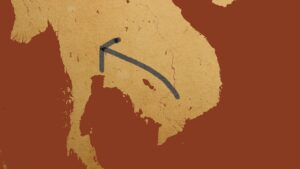
The Yunlu manchao 雲麓漫鈔 j. 5 by Zhao Yanwei 趙彥衛 claims (under 福建市舶司) that Zhenlifu is merely another name for Zhenla which fits the idea that the Chinese did not really know where to locate the place. Modern Chinese commentators reject the Yunlu manchao suggestion as an error. They rather follow the Zhufanzhi, Wenxian tongkao and Songshi that all regard Zhenlifu as part of Zhenla.
Thank you for pointing that out!! I just saw that yesterday as well, and included it in another post that I was writing.
I think what it shows is this:
Modern scholars look at this information assuming that Chinese in this period had knowledge about “the region of Southeast Asia” in a very similar way to the way we view it today. So they knew that “Zhenla” was “Cambodia” which they assume was accessed from the east; “Zhenlifu” was someplace in the Chao Phraya River plain (so one would have to go a long way from “Zhenla” to get there); “Sanfoqi” was “Srivijaya” down at the southern end of Sumatra; “Shepo” was “Java” on the island of Java etc.
However, it’s clear (and should be common sense) that they did not have that kind of knowledge. For a place like Zhenla, they reached it by going inland along rivers and canals. They didn’t have the concept of a space as large as “Cambodia” today. They just knew the citadel they reached where they engaged in trade. And from that perspective, they also knew of another citadel in the area (and probably very nearby in our modern view of space) that was under Zhenla’s authority, Zhenlifu.
From that very small view of the world, we can understand how it would be possible to equate Zhenlifu with Zhenla. Ships that came from there, or went there, were essentially going to the same place. Hence, we can easily imagine how in ~1200 AD, someone at the Fujian Maritime Customs Office (福建市舶司), or however we translate that, would equate these two places.