
I recently read a chapter by the late historian John K. Whitmore entitled u201cBuilding a Buddhist Monarchy in u0110ai Viu00eat: Temples and Texts under Lu00fd Nhu00e2n-tu00f4ng (r. 1072u20131127)u201d and it made me think about the problem of looking at Vietnamese history from the perspective of Southeast Asia.
That is what Whitmore does in this chapter. To quote, he states that u201cAgainst the background of other Buddhist monarchies across Southeast Asia, we perceive Vietnamese kingship through its texts (chronicles, biographies, cult tales, inscriptions) and the variety of Buddhist temples that existed there.u201d [283]
To establish that background, Whitmore cites the works of historians who have contributed to the field of premodern Southeast Asian history such as O. W. Wolters, Keith Taylor, Michael Aung-Thwin, and Kenneth Hall.
Whitmore goes on to look at information about Buddhism in Vietnamese sources and argue that Lu00fd Dynasty Vietnam was a Buddhist monarchy. He then makes comparisons with other places in Southeast Asia at that time and concludes by stating, among other comments, the following:
u201cWhere, then, did Ly Nhu00e2n-tu00f4ngu2019s Buddhist monarchy in u0110ai Viu00eat stand in comparison with the other Buddhist monarchies of early Southeast Asia? They all grew out of the vibrant Buddhist world of the seventh to tenth centuries. Mranma [i.e., ] and u0110ai Viu00eat both saw the emergence of Buddhist kingships out of the broad existing mix of local beliefs and Buddhist temples. . .u201d [301]
[John K. Whitmore, u201cBuilding a Buddhist Monarchy in u0110ai Viu00eat: Temples and Texts under Lu00fd Nhu00e2n-tu00f4ng (r. 1072u20131127),u201d in Buddhist Dynamics in Premodern and Early Modern Southeast Asia, edited by D. Christian Lammerts, 283-306 (Singapore: ISEAS, 2015)]
So, from this perspective, Lu00fd Dynasty Vietnam and Buddhist monarchies in the areas of what is now Myanmar and Thailand were basically the same. They all emerged from a common Buddhist world in Southeast Asia.
What I have always found odd about this perspective (and Whitmore here was repeating ideas that have been around for decades), is that it treats Vietnam circa 1000 AD like a blank slate. We are supposed to believe that after over a millennium of contact with empires to the north somehow Vietnamese just didnu2019t know anything about that world.
They didnu2019t know, for instance, what a government was, and it took them (according to historians like Whitmore and Taylor) centuries to be able to start to figure out what that was, but ultimately the Chinese had to do it themselves by somehow u201cteachingu201d the elite during the period of the Ming occupation in the early fifteenth century, and then after that the Vietnamese finally figured out how to structure and run a government.
Meanwhile, we are supposed to imagine that in the eleventh century, the Vietnamese were more like people in Myanmar and Thailand, peoples with whom they had never had any contact.
How can that possibly make sense?
What I am going to do here is something which scholars who look at Vietnam from the perspective of Southeast Asia do not do, and that is to put it in the context of East Asia, a region which it actually had considerable historical contact with.
In particular, in what follows, I am going to look at the period of the reign of Lu00fd Thu00e1i Tu1ed5 (r. 1010-1028), the first emperor of the Lu00fd Dynasty (1010-1225) and to examine information in the u0110u1ea1i Viu1ec7t su1eed ku00fd tou00e0n thu01b0 from his reign that relates to Buddhism.
Before doing so, let us consider the roll of Buddhism in that place to the north of Vietnam at that time, the Song Dynasty (960-1279) empire.
I am going to quote here an extended passage from a chapter on Song government policy towards religions by historian Patricia Ebrey. [Patricia Ebrey, u201cSong Government Policy,u201d in Modern Chinese Religions I: Song-Liao-Jin-Yuan (960-1368 AD), edited by John Lagerwey and Pierre Marsone, 73-137 (Leiden: Brill, 2015) ]
Here is what Ebrey writes about Song Taizong (r. 976u2013997), the second Song Dynasty emperor.
On the Daoist side, Taizong favored Zhang Shouzhen u5f35u5b88u771f (948u2013983), credited with a revelation of Taizongu2019s succession. Taizong had a large Daoist temple built outside Changu2019an, at the site of that revelation. Called Palace of Highest Clarity and Great Peace u4e0au6e05u592au5e73u5bae, it was completed in 980. This Daoist temple later held portraits of Taizong and subsequent emperors.
In 989 Taizong had the house where his father had lived in Kaifeng converted into a Daoist temple. After this temple was completed in 995, he had a group of 31 nuns assigned to it. Subsequent emperors followed this precedent and converted their former homes into Buddhist or Daoist temples after taking the throne. Taizong also funded the construction of major Daoist temples in the capital, such as the 1242 room-unit Highest Clarity Palace u4e0au6e05u5bae. When completed, Taizong wrote out the name plaque for it.
Taizongu2019s involvement with Buddhism was more extensive. In 980 he conferred names and name plaques on several hundred Buddhist temples that lacked them. The names were either Great Peace and the Prosperity of the Nation u592au5e73u8208u570b (the reign name at the time) or Qianming u4e7eu660e, the name of Taizongu2019s birthday.
Although Taizong did not rescind the law against casting Buddhist statues, he did allow images to be cast for projects he funded, such as the renovation of the monasteries at Mt. Wutai and Mt. Emei. In 980 he had a eunuch craftsman go to Mt. Wutai to cast a statue of Wenshu (Mau00f1jusri) and commissioned the renovation of ten temples there. He sent another eunuch to Sichuan to cast an image of Puxian (Samantabhadra) at Mt. Emei. He had one of his leading literary men, Xu Xuan u5f90u9249 (916u201391) write a commemorative account, which mentioned that the bronze statue was twenty feet tall.
Another very striking Buddhist building he had constructed was the 360-foot tall pagoda at Kaibao monastery u958bu5bf3u5bfa, so tall it was visible ten li away. The construction took eight years (982u2013989) and was said to be fantastically expensive.
Taizong founded or rebuilt dozens of Buddhist temples in Kaifeng, mostly during the period 976u2013989. The barracks where he had been born he had rebuilt as a Buddhist monastery. This Founding holiness cloister u555fu8056u9662 took six years to build (980u2013985) and costs u201cin the tens of millions.u201d All the buildings together came to nine hundred room-units and were roofed with glazed tile.
Among the valuable items enshrined there was a tooth of the Buddha, a sandalwood image of King Udayana, and the mummified corpse of a fourth-century monk. The next emperor would place a portrait of Taizong himself in this monastery, so that ancestral offerings could be made to him there.
Taizong favored both Indian and Chinese monks at his court. The most eminent of the Indian monks was known in Chinese as Faxian u6cd5u8ce2 (d. 1000). From Kashmir, he arrived at the Song capital in 980 and was active in the translation project discussed below. The most prominent of the Chinese monks Taizong patronized was Zanning u8d0au5be7 (919u20131001).
Zanning was a learned monk, familiar with both Buddhist and Confucian texts, who had risen to the highest office supervising the sangha in the southern kingdom of Wu-Yue u5433u8d8a, with its capital in Hangzhou. When the king of Wu-Yue submitted to Song in 978, Zanning accompanied him to the Song capital, along with his other leading officials. Taizong was taken with Zanning, then in his late fifties, and according to the Comprehensive Record of the Buddhas and Patriarchs, frequently summoned him, one day summoning him seven times. He also appointed him to literary offices. . .
Early in his reign Taizong allowed large numbers of monks to be ordainedu2014Zanning reported that 170,000 had been ordained between 976 and 982. Taizong thought that monks were too numerous in the southeast and in 995 lowered the quota for new ordinations to one in 300 in Jiangnan, Zhedong, Zhexi, and Fujian and the next year extended the policy to Huainan and Sichuan. He also created minimum requirements for ordainment as a Buddhist monk. The postulant had to have memorized one hundred pages of a sutra and read three hundred pages of Buddhist scriptures.
Taizong wrote several Buddhist works himself, which were printed and circulated with the Buddhist canon. Nine were later entered into the canon. [78-81]
The Song Dynasty was not a u201cBuddhistu201d dynasty. Like dynasties before and after it, the Song Dynasty was centered on a state cult.
That state cult, to quote Ebrey again, required the emperor and his officials u201cto perform sacrifices to the imperial ancestors and a long list of deities, many of the sacrifices dating back to ancient times and mentioned in the Confucian classics. Preparing for these ritual performances was the chief responsibility of the staff of government ritual offices.u201d [73]
To quote Ebrey yet again, u201cBeyond the state cult, the Song state claimed the authority to approve, regulate, codify, and control all religious activity in the realm, including the institutionalized religions of Buddhism and Daoism.u201d [73]
From that context, let us now look at some of the limited information that we have about Buddhism in Lu00fd Dynasty Vietnam, by looking at Buddhist-related information that is recorded in the main chronicle for that period, the u0110u1ea1i Viu1ec7t su1eed ku00fd tou00e0n thu01b0, for the reign of the Lu00fd Dynasty founder, Lu00fd Thu00e1i Tu1ed5.
1010
u8a54u767cu5e9cu9322u4e8cu842cu7de1uff0cu8cc3u5de5u5efau5bfau4e8eu5929u5fb7u5e9cu51e1u516bu6240uff0cu7686u7acbu7891u523bu529fu3002
Xuu1ed1ng chiu1ebfu phu00e1t tiu1ec1n kho 2 vu1ea1n quan, thuu00ea thu1ee3 lu00e0m chu00f9a u1edf phu1ee7 Thiu00ean u0110u1ee9c, tu1ea5t cu1ea3 8 su1edf, u0111u1ec1u du1ef1ng bia ghi cu00f4ng. [2/3a]
An edict was issued ordering the treasury to allocate 20,000 strings of cash to hire workers to construct temples in eight locations in Heavenly Virtue Prefecture (Thiu00ean u0110u1ee9c phu1ee7 u5929u5fb7u5e9c), and to erect a stele at each to record the merit.
u00a0
u53c8u6275u57ceu5185u8d77u8208u5929u5fa1u5bfau3001u4e94u9cf3u661fu6a13uff0cu57ceu5916u96e2u5275u9020u52ddu56b4u5bfau3002
Lu1ea1i u1edf trong thu00e0nh lu00e0m chu00f9a ngu1ef1 Hu01b0ng Thiu00ean vu00e0 tinh lu00e2u Ngu0169 Phu01b0u1ee3ng. Ngou00e0i thu00e0nh vu1ec1 phu00eda nam du1ef1ng chu00f9a Thu1eafng Nghiu00eam. [2/3b]
Additionally, within the citadel, the Prospering Heaven Imperial Temple (Hu01b0ng Thiu00ean ngu1ef1 tu1ef1 u8208u5929u5fa1u5bfa) and the Five Phoenix Asterisms Towers (Ngu0169 Phu01b0u1ee3ng tinh lu00e2u u4e94u9cf3u661fu6a13) were erected. Outside the citadel, the Temple of Triumphant Solemnity (Thu1eafng Nghiu00eam tu1ef1 u52ddu56b4u5bfa) was constructed.
u00a0
u8a54u5929u4e0bu900bu4ea1u4ebau3c55u672cu8cabuff0cu4ecdu547du8af8u9115u9091u6240u6709u5bfau89c0u5df2u983du6bc0u8005uff0cu6089u91cdu4feeu4e4bu3002
Xuu1ed1ng chiu1ebfu truyu1ec1n cho nhu1eefng ku1ebb tru1ed1n tru00e1nh phu1ea3i vu1ec1 quu00ea cu0169. Lu1ea1i hu1ea1 lu1ec7nh cho cu00e1c hu01b0u01a1ng u1ea5p, nu01a1i nu00e0o cu00f3 chu00f9a quu00e1n u0111u00e3 u0111u1ed5 nu00e1t u0111u1ec1u phu1ea3i su1eeda chu1eefa lu1ea1i. [2/4a]]
An edict was issued to All Under Heaven for runaways to return to their native places, and ordering that all [Buddhist] temples and [Daoist] abbeys in the various villages and towns which had fallen into disrepair all be restored.
u00a0
u662fu6b72u5ea6u767eu59d3u70bau50e7u3002u767cu5e9cu9280u4e00u5343u516du767eu516bu5341u4e24u9444u6d2au9418uff0cu7f6eu6275u5927u6559u5bfau3002
Nu0103m u1ea5y u0111u1ed9 du00e2n lu00e0m su01b0. Phu00e1t bu1ea1c u1edf kho 1,680 lu1ea1ng u0111u1ec3 u0111u00fac chuu00f4ng lu1edbn, treo u1edf chu00f9a u0110u1ea1i Giu00e1o. [2/4b]
In this year, common people were ordained as monks. 1,680 taels of silver were allocated from the treasury to cast a large bell, which was placed in the Great Teaching Temple (u0110u1ea1i Giu00e1o tu1ef1 u5927u6559u5bfa).
After coming to power, Lu00fd Thu00e1i Tu1ed5 had eight temples built in Heavenly Virtue Prefecture (Thiu00ean u0110u1ee9c phu1ee7 u5929u5fb7u5e9c). This prefecture had previously been known as Cu1ed5 Phu00e1p u53e4u6cd5, a name that the monk u0110u1ecbnh Khu00f4ng (? u2013 808) had coined. There is a story about how he came up with the name, and the term u201cphu00e1pu201d in the name was intended to refer to the Buddhist dharma.
Cu1ed5 Phu00e1p was where Lu00fd Thu00e1i Tu1ed5 was born and raised, and we can therefore guess that his order to build eight Buddhist temples there was intended to honor his homeland.
That he changed the name of his homeland to u201cHeavenly Virtue,u201d however, suggests that he felt that there was something more powerful than the Buddhist dharma, namely, Heaven.
We see further evidence of this in the fact that he built a Prospering Heaven Imperial Temple (Hu01b0ng Thiu00ean ngu1ef1 tu1ef1 u8208u5929u5fa1u5bfa) within the imperial citadel.
Finally, in building a Buddhist temple within the imperial citadel, and in building the Temple of Triumphant Solemnity close by outside the citadel, Lu00fd Thu00e1i Tu1ed5 was participating in East Asian imperial practices that went back many centuries.
There is a fascinating article by historian Chen Jinhua on what he calls u201cBuddhist palace chapelsu201d during the Tang Dynasty period (618-907). [Chen Jinhua. 2004. The Tang Buddhist Palace Chapels. Journal of Chinese Religions 32(1), 101u2013173. doi:10.1179/073776904804760039]
Essentially what Chen does in this article is to document the existence of Buddhist (and Daoist) temples within the u201cpalatine citiesu201d (Gongcheng u5baeu57ce or Danei u5927u5185) of the Tang capitals of Changu2019an and Luoyang. He begins by first examining evidence for such temples prior to the Tang period.
Just to give a sense, and only looking at Buddhist temples, in the Sui Dynastyu2019s eastern capital of Luoyang, there were four temples inside the palatine city, two Buddhist and two Daoist. One of each was dedicated for the use of men, and the other for women. [107] Tang Dynasty emperor Taizong had the Cloister for Glorifying the Dharma (u5f18u6cd5u9662 Hongfa yuan) constructed within the palatine city, where for a time in 648 he interacted with the famous monk, Xuanzang. [108]
After Taizong died in 649, his successor, Tang Gaozong, built a convent within the palatine city, the Crane Forest Temple (Helin si u9db4u6797u5bfa), while Taizongu2019s former concubine (and the future Empress Wu) went to reside in the Temple of Felt Deeds (Ganye si u611fu696du5bfa), outside the palatine city walls in Changu2019an. [109-110] In 695, Empress Wu celebrated the completion of a new translation of a Buddhist sutra in the Temple of Pervasive Emptiness (Biankong si u904du7a7au5bfa) in the palatine city in Luoyang. [113]
In the early 700s, the famous Buddhist monk and traveler Yijing spent time at the Temple of the Buddhau2019s Light (Foguang si u4f5bu5149u5bfa) within the palatine city. [120-121] The list goes on and on and on, and long past the period of the Tang Dynasty.
As such, there was nothing special in East Asia about building Buddhist temples in an imperial capital, or inside the palatine city. If anything, the one point that seems a bit special about the temples constructed by Lu00fd Thu00e1i Tu1ed5 is the repeated appearance of the term u201cHeavenu201d in their names, a point we will return to below.
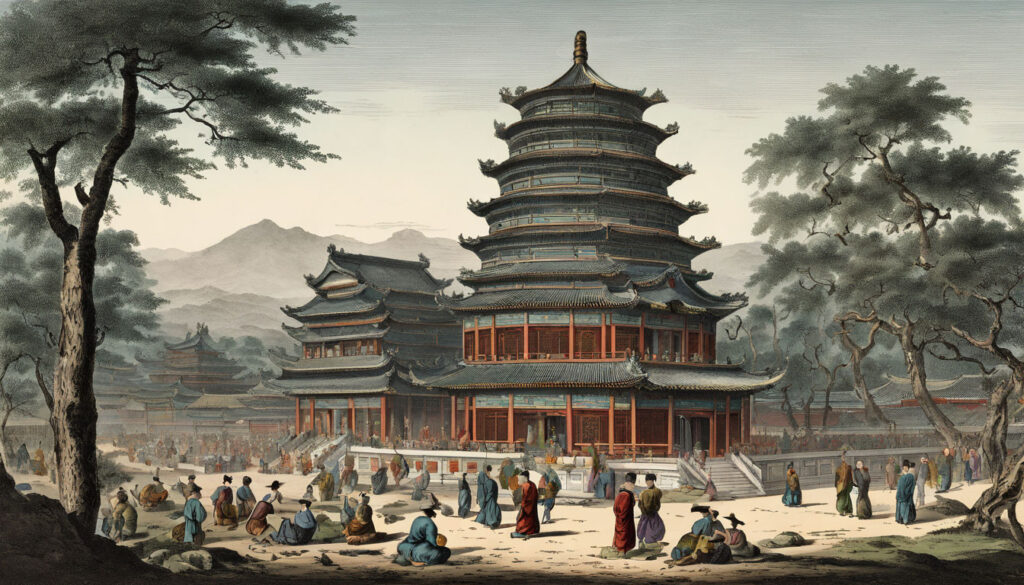
While we can see in the article by Chen Jinhua that Tang Dynasty emperors carried out activities in their palace temples that related to Buddhism, during the period of the Song Dynasty (960-1279), it is clear that Buddhist and Daoist temples at the imperial capital served other purposes as well.
Here is a passage from the Draft of the Essential Collected Statues of the Song (Song huiyao jigao u5b8bu6703u8981u8f2fu7a3f), a text that contains information about the functioning of government, on what emperors did when they had to pray for rain.
This passage mentions four different types of religious structures: Daoist palaces (gong u5bae) and abbeys (guan u89c0), and Buddhist temples (si u5bfa) and cloisters (yuan u9662).
u570bu671du51e1u6c34u65f1u707du7570uff0cu6709u7948u5831u4e4bu79aeu3002u7948u7528u9152u3001u812fu3001u91a2uff0cu5831u5982u5e38u7940u3002(u5baeu89c0u5bfau9662u4ee5u9999u8336u3001u7d20u994cu3002) u4eacu57ceu7389u6e05u662du61c9u5baeu3001u4e0au6e05u5baeuff0cu666fu9748u5baeu3001u592au4e00u5baeu3001u592au6e05u89c0u3002u6703u9748u89c0uff0cu7965u6e90u89c0uff0cu5927u76f8u570bu5bfau3001u5c01u79aau5bfauff0cu592au5e73u8208u570bu5bfau3001u5929u6e05u5bfau3001u5929u58fdu5bfauff0cu555fu8056u9662u3001u666eu5b89u9662uff0cu4ee5u4e0au4e58u8f3fu89aau79b1u3002
u6216u5206u9063u8fd1u81e3u544au660au5929u4e0au5e1du65bcu5357u90cauff0cu7687u5730u7947u65bcu5317u90cau6216u5357u90cauff0cu592au5edfuff0cu793eu7a37uff0cu8af8u65b9u5dbdu93aeu6d77u7006u3002
u5929u9f4au4ec1u8056u5e1du5edfu3001u4e94u9f8du5802u3001u57ceu968du5edfu3001u7945u7960u3001u5831u6148u5bfau3001u5d07u590fu5bfau3001u5831u5148u5bfauff0cu4e5du9f8du5802u3001u6d5au6e9du5edfu3001u5b50u5f35u3001u5b50u590fu5edfu3001u4fe1u9675u541bu5edfu3001u6bb5u5e72u6728u5edfu3001u6241u9d72u5edfu3001u5f35u5100u5edfu3001u5433u8d77u5edfu3001u55aeu96c4u4fe1u5edfuff0cu4ee5u4e0au4e26u6555u5efau3001u9063u5b98uff0cu4ecdu4ee4u8af8u5bfau9662u5baeu89c0u958bu555fu9053u5834u3002
u4e94u5dbdu56dbu7006u5edfu3001u6cb3u4e2du5e9cu540eu571fu3001u4eb3u5ddeu592au6e05u5baeu3001u5157u5ddeu6703u771fu5baeu3001u6cb3u4e2du5e9cu592au5be7u5baeu3001u9cf3u7fd4u5e9cu592au5e73u5baeu3001u8212u5ddeu9748u4ed9u89c0u3001u6c5fu5ddeu592au5e73u89c0u3001u4eb3u5ddeu660eu9053u89c0u3001u6cd7u6d32u5ef6u7965u89c0u3001u5157u5ddeu666fu9748u5baeu3001u592au6975u89c0uff0cu4ee5u4e0au4e26u52d1u5deeu671du81e3u6216u5167u4f8duff0cu81eau4eacu9f4eu9999u5408u3001u795du677fuff0cu99b3u9a5bu5c31u7948u3002
u4e94u5dbdu771fu541bu89c0u3001u6cd7u6d32u666eu7167u5bfau3001u897fu4eacu7121u754fu4e09u85cfu5854uff0cu4ee5u4e0au4e26u9063u5167u81e3u8a63u5efau9053u5834u3002 [u5b8bu6703u8981u8f2fu7a3fuff0fu79aeuff0fu79aeu4e00u516buff0fu7948u96e8]
Whenever the dynasty faces disasters like floods or droughts, there are rituals for praying and recompensing. For praying, wine, dried meat, and salted meat are used, while recompensing follows [the technique of] regular sacrifices. ([Daoist] palaces and abbeys and [Buddhist] temples and cloisters use incense and vegetarian offerings.)
In the capital, the following places receive personal prayers from the royal carriage [i.e., the emperor]: The Palace of Bright Response from Jade Clarity, the Palace of Highest Clarity, the Palace of Great Efficaciousness, the Palace of Great Unity, the Ultimate Clarity Abbey, the Converging Efficaciousness Abbey, the Auspicious Origins Abbey, the Great Kingdom-Assisting Temple, the Fengshan [a kind of sacrifice] Temple, the Great Peace and Prosperity of the Nation Temple, the Heavenly Clarity Temple, the Heavenly Longevity Temple, the Founding Holiness Cloister, and the Universal Peace Cloister.
Alternately, close officials are dispatched to proclaim to the Vast Heaven Thearch on High at the Southern Suburb, the August Earth God at the Northern Suburb or the Southern Suburb, the Imperial Ancestral Temple, the Altar of Soil and Grain, and the sacred peaks, strongholds, seas, and waterways of the various directions.
Officials are dispatched to the following, all of which have been built by imperial decree: The Temple of the Emperor of Humane Holiness, Equal to Heaven [i.e., the god of Mount Tai], the Five Dragon Hall, the Temple of the City God, the Parsee Prayer Hall, the Temple for Recompensing Benevolence, the Revering Xia Temple, the Temple for Recompensing Predecessors, the Nine Dragon Hall, the Temple of the Dredged Canal, the Temple of Zizhang and Zixia, the Lord Xinling Temple, the Duangan Mu Temple, the Bian Que Temple, the Zhang Yi Temple, the Wu Qi Temple, and the Shan Xiongxin Temple. Further, the various [Buddhist] temples and cloisters, and [Daoist] palaces and abbeys are ordered to set up sacred ritual spaces [daochang u9053u5834].
Order court officials or palace attendants [i.e., eunuchs] to bring incense boxes and prayer tablets from the capital and quickly proceed to the following locations to pray: The Five Peaks and Four Waterways Temple, the Earth Goddess [Temple] in Hezhong Superior Prefecture, the Palace of Great Purity in Bo Prefecture, the Palace of the Gathered Perfected in Yan Prefecture, the Palace of Great Tranquility in Hezhong Superior Prefecture, the Palace of Great Peace in Fengxiang Superior Prefecture, the Numinous Immortals Abbey in Shu Prefecture, the Great Peace Abbey in Jiang Prefecture, the Illumined Way Abbey in Bo Prefecture, the Extended Auspiciousness Abbey in Si Prefecture, the Palace of Great Efficaciousness in Yan Prefecture, and the Great Ultimate Abbey,
Order inner officials [i.e., eunuchs] to proceed to, and set up sacred ritual spaces in, the following: The Abbey of the Perfected Lord of the Five Peaks, the Temple of Universal Illumination in Si Prefecture, and the Master u015aubhu0101karasiu1e43ha Tower in the Western Capital.
Remember, this is just for praying for rain. There were other rituals that likewise involved similarly large numbers of temples, cloisters, palaces and abbeys.
Historians like Whitmore and many others have ignored this kind of context. Instead, they have looked at Vietnam by only looking at Vietnam, or by seeing it as part of some imagined world of early Southeast Asia.
More specifically, scholars have imagined a dichotomy between a Southeast Asian world of spirits and Buddhism and a Chinese world of Confucian bureaucracy. However, as the above passage and the quote from Ebreyu2019s chapter make clear, Confucian bureaucracies appealed to countless spirits and the power of Buddhism to serve their needs.
The Lu00fd Dynasty fits perfectly into this context. In fact, if there is any way that it differs, it would be that there is much less evidence of the courtu2019s attention to spirits in Vietnam compared to what we can see with its counterpart to the north, the Song Dynasty.
That, however, is probably due to the limited number of sources for that period in Vietnam and the difference in scale between the two polities.
Nonetheless, the limited information that we have, still points to clear similarities between the worlds of the Lu00fd and the Song. Take, as an example, this entry from 1011.
1011
u662fu6b72uff0cu57ceu5185u5de6u8d77u5927u6e05u5babuff0cu53f3u8d77u842cu6b73u5bfauff0cu69cbu93aeu798fu85cfu3002u57ceu5916u5efau56dbu5927u5929u738bu5bfau3001u9326u8863u9f8du8208u8056u58fdu5bfau3002
Nu0103m u1ea5y, u1edf trong thu00e0nh bu00ean tu1ea3 du1ef1ng cung u0110u1ea1i Thanh, bu00ean hu1eefu du1ef1ng chu00f9a Vu1ea1n Tuu1ebf, lu00e0m kho Tru1ea5n Phu00fac. Ngou00e0i thu00e0nh du1ef1ng chu00f9a Tu1ee9 u0110u1ea1i Thiu00ean Vu01b0u01a1ng vu00e0 cu00e1c chu00f9a Cu1ea9m Y, Long Hu01b0ng, Thu00e1nh Thu1ecd. [2/5a]
In this year, within the citadel, the Palace of Great Purity (u0110u1ea1i Thanh cung u5927u6e05u5bab) was erected on the left, and the Ten-Thousand Year Temple (Vu1ea1n Tuu1ebf tu1ef1 u842cu6b73u5bfa) on the right, while a Guarded Blessings Storehouse (Tru1ea5n Phu00fac tu1ea1ng u93aeu798fu85cf) was constructed.
Outside the citadel, the Four Great Heavenly Kings Temple (Tu1ee9 u0110u1ea1i Thiu00ean Vu01b0u01a1ng tu1ef1 u56dbu5927u5929u738bu5bfa) was constructed, [as were] the Noble Robe (Cu1ea9m Y u9326u8863), Dragon Rising (Long Hu01b0ng u9f8du8208), and the Sagely Longevity (Thu00e1nh Thu1ecd u8056u58fd) temples.
As I mentioned above, while we have less information about the Lu00fd Dynastyu2019s relationship with the spirit world than we do for the Song Dynasty, the construction of Daoist and Buddhist temples within the palatine city, mentioned above, can lead us to guess that the types of rituals that the Song Dynasty carried out when praying for rain were also probably carried out in the Lu00fd Dynasty capital as well.
Again though, everything was probably on a smaller scale.
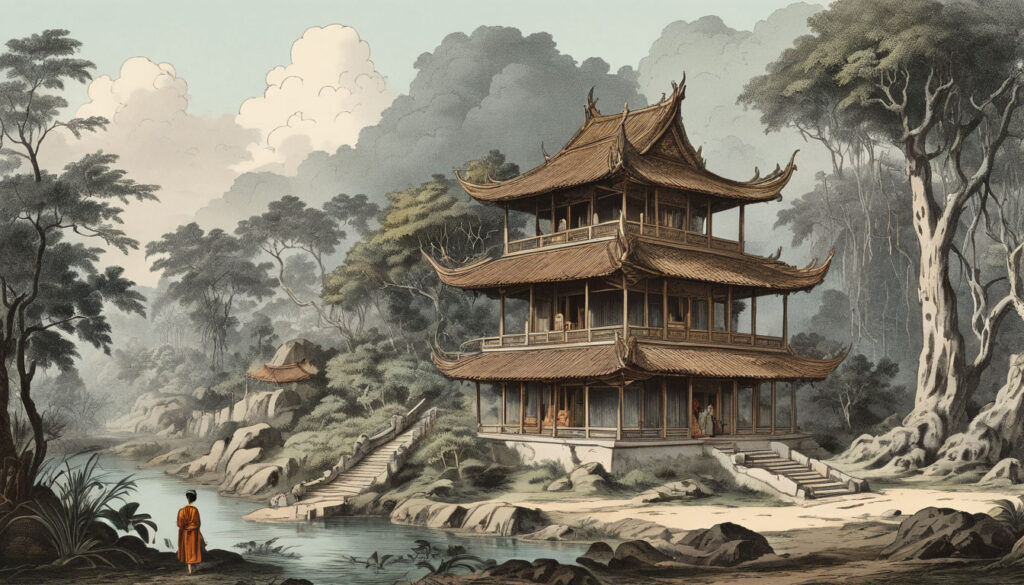
As for the temples that were built outside of the imperial citadel, the first mentioned was a temple dedicated to the Four Heavenly Kings. These were four Buddhist gods who guarded over the four cardinal directions.
There was a temple dedicated to these deities constructed in Changu2019an during the period of the Northern Zhou Dynasty (557-581). And not long later, Prince Shu014dtoku (574-622) had a Four Heavenly Kings Temple (Shitennu014dji u56dbu5929u738bu5bfa) constructed in Japan, while shortly after that, in the seventh century, a Four Heavenly Kings Temple was constructed in Korea (Sachu2019u014fnwang sa u56dbu5929u738bu5bfa).
This temple played an important role in protecting the emperor, the capital, and the kingdom.
These other temples look like they must have played similar roles. Any reference to a u201cdragonu201d is likely a reference to the emperor, while the expression u201csagely longevityu201d (thu00e1nh thu1ecd u8056u58fd) was a reference to an emperoru2019s lifespan.
Letu2019s keep moving. ud83dude0a
1014
u4e94u6708uff0cu53f3u8857u50e7u7d82u6c88u6587u82d1u594fu8acbu7acbu6212u5872u65bcu842cu6b72u5bfau8cdcu50e7u5f92u53d7u6212u3002u53efu5176u594fu3002
u79cbu4e5du6708uff0cu8a54u767cu5e9cu91d1u4e09u767eu5341u4e24uff0cu9444u937eu7f6eu4e8eu8208u5929u5bfau3002
. . .
u51acu5341u6708uff0cu8a54u767cu5e9cu9280u516bu767eu4e24uff0cu9444u937eu4e8cu53e3u7f6eu4e8eu52ddu56b4u5bfau53cau4e94u9cf3u661fu6a13u3002
Thu00e1ng 5, Hu1eefu nhai tu0103ng thu1ed1ng lu00e0 Thu1ea9m Vu0103n Uyu1ec3n tu00e2u xin lu1eadp u0111u00e0n chay u1edf chu00f9a Vu1ea1n Tuu1ebf u0111u1ec3 cho tu0103ng u0111u1ed3 thu1ee5 giu1edbi. Vua chuu1ea9n tu00e2u.
Mu00f9a thu, thu00e1ng 9, xuu1ed1ng chiu1ebfu phu00e1t 310 lu1ea1ng vu00e0ng trong kho u0111u1ec3 u0111u00fac chuu00f4ng treo u1edf chu00f9a Hu01b0ng Thiu00ean. . .
Mu00f9a u0111u00f4ng, thu00e1ng 10, xuu1ed1ng chiu1ebfu phu00e1t tru0103m lu1ea1ng bu1ea1c trong kho u0111u1ec3 u0111u00fac hai quu1ea3 chuu00f4ng treo u1edf chu00f9a Thu1eafng Nghiu00eam vu00e0 tinh lu00e2u Ngu0169 Phu01b0u1ee3ng. [2/7a]
In the fifth lunar month, Director of the Buddhist Registry for the Left Avenue Thu1ea9m Vu0103n Uyu1ec3n petitioned to establish a precept platform at Ten-Thousand Year Temple to grant ordination to monks. His petition was approved.
In autumn, during the ninth lunar month, an edict was issued ordering the treasury to allocate 310 taels of gold for the casting of a bell to be placed at Prospering Heaven Temple (Hu01b0ng Thiu00ean tu1ef1 u8208u5929u5bfa).
In the winter, during the tenth lunar month, an edict was issued ordering the treasury to allocate 800 taels of silver for casting two bells to be placed at Thu1eafng Nghiu00eam Temple and the Five Phoenix Asterisms Towers.
Thu1ea9m Vu0103n Uyu1ec3nu2019s title here is significant.
There was a Central Buddhist Registry (Senglu si u50e7u9304u53f8), also known as the Buddhist Registry for the Avenues of the Capital (Zuoyou jie senglu si u5de6u53f3u8857u50e7u9304u53f8), that was established by the Tang Dynasty, and continued by all later dynasties.
It was u201cresponsible for monitoring the numbers, qualifications, and conduct of Buddhist monks and nuns, normally staffed with senior monks of the capital monasteries recognized by the state as leaders of the empire-wide Buddhist clergy, sometimes given nominal official ranks.u201d From 807 onward, it was under the authority of the Court of State Ceremonial (Honglu si u9d3bu81dau5bfa). [Hucker, 405]
Therefore, we can see evidence here of a government agency that controlled the Buddhist sangha like the one that existed China.
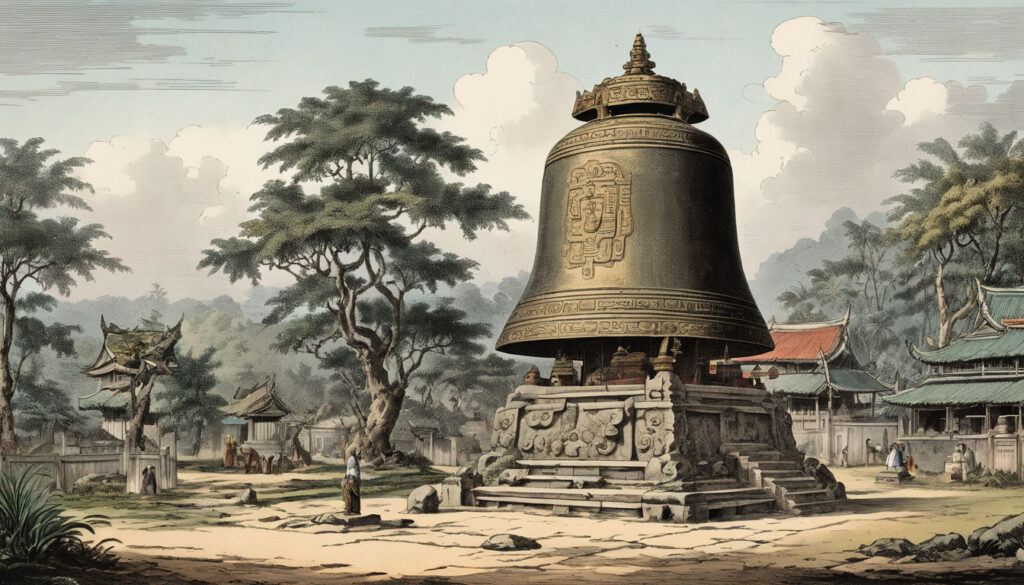
As for casting bells, that was a means to gain merit, but it also had a practical function as bells served as a means of communication. They could call Buddhist devotees to a temple, but they could also be used to warn the population at large of danger.
Given that these bells were cast for temples at the capital (the Prosperity Heaven Temple had to be the same as the Prospering Heaven Imperial Temple), we can imagine that these bells were meant to fulfill those various purposes.
1016
u5ea6u4eacu5e2bu5343u9918u4ebau70bau50e7u9053u3002
u8d77u5929u5149u3001u5929u5fb7u4e8cu5bfauff0cu53cau5851u56dbu5929u5e1du50cfu3002
u0110u1ed9 cho hu01a1n nghu00ecn ngu01b0u1eddi u1edf kinh su01b0 lu00e0m tu0103ng u0111u1ea1o. Du1ef1ng hai chu00f9a Thiu00ean Quang, Thiu00ean u0110u1ee9c vu00e0 tu00f4 bu1ed1n pho tu01b0u1ee3ng Thiu00ean u0110u1ebf.
Over a thousand people in the capital were ordained as [Buddhist] monks and Daoists.
The Heavenly Radiance (Thiu00ean Quang u5929u5149) and Heavenly Virtue (Thiu00ean u0110u1ee9c u5929u5fb7) temples were erected, and statues of the Four Heavenly Emperors were sculpted.
Here again we have two more temples that have the word u201cHeavenu201d in their names.
Again, if there was anything particular about Lu00fd Dynasty state Buddhism, it looks like it was this u2013 some kind of effort to direct the power of Buddhism toward supporting or reinforcing Heaven and the emperor, key elements in the Lu00fd Dynasty state cult (as they were in the Song Dynasty state cult).
That said, this was not all that different from Song Taizong granting temples the name of Great Peace and the Prosperity of the Nation (Thu00e1i bu00ecnh hu01b0ng quu1ed1c u592au5e73u8208u570b).
As for ordaining over a thousand people in the capital, that was of course far from the 170,000 that Song Taizong reportedly had ordained, but that was probably an exaggeration, and again, the scale was different.
I suspect though that this was related to the construction of the new temples in the capital and the need for people to maintain and run those temples.
That would include the need for people to copy and preserve scriptures, like we see here.
1023
u79cbu4e5du6708uff0cu8a54u5bebu4e09u85cfu7d93u7559u4e8eu5927u8208u85cfu3002u6539u6f6eu967du93aeu70bau6c38u5b89u5ddeu3002
Quu00fd Hu1ee3i, [Thuu1eadn Thiu00ean] nu0103m thu1ee9 14 [1023], (Tu1ed1ng Nhu00e2n Tu00f4ng, hu00fay Trinh, Thiu00ean Thu00e1nh nu0103m thu1ee9 1). Mu00f9a thu, thu00e1ng 9, xuu1ed1ng chiu1ebfu chu00e9p kinh Tam tu1ea1ng u0111u1ec3 u1edf kho u0110u1ea1i Hu01b0ng, u0111u1ed5i tru1ea5n Triu1ec1u Du01b0u01a1ng lu00e0m chu00e2u Vu0129nh An. [2/9b]
In the autumn, during the ninth lunar month, an edict was issued to copy the Tripitaka scriptures and store them in the Great Prosperity Storehouse (u0110u1ea1i Hu01b0ng tu1ea1ng u5927u8208u85cf).
The Lu00fd Dynasty was established right at the time that the Song Dynasty was undertaking a major effort to produce complete copies of the Buddhist canon.
Under Song Taizong, the Song Dynasty began to support the translation and publication of Buddhist texts (after a period of over 150 years when no major translations had been made), and these published works were then distributed to neighboring polities through diplomatic channels.
There are a few times when the Vietnamese received editions of the Buddhist canon, and it is likely that the Lu00fd then ordered copies of these texts made for distribution within Vietnam.
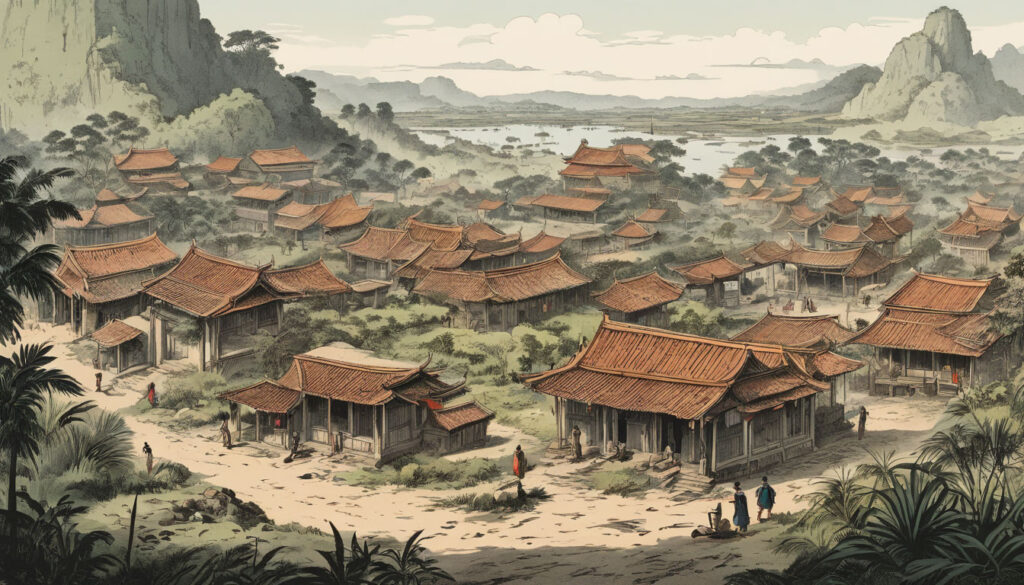
I can keep going (actually no, Iu2019m tired, I need to stop writing), but hopefully I have made my point.
The Lu00fd Dynasty was not a u201cBuddhist monarchyu201d and there is no reason to compare it to polities at that time in places like Myanmar and Thailand.
Instead, it was clearly an East Asian monarchy, and it makes much much much more sense to compare it to polities in the area of what is now China, Korea, and Japan, as well as places like the Khitan state of Xi Xia and the Dali Kingdom in what is now Yunnan Province.
These places were not u201cexact copiesu201d of each other, but to varying degrees they all shared certain common beliefs and practices that they obtained through extended contact, and by looking at them in the larger context of East Asia we can gain an understanding of their similarities and differences.
Meanwhile, by looking at Lu00fd Dynasty Vietnam from the perspective of Southeast Asia, we cannot gain any such insights.


Perhaps it should be noted that American historians were not alone in adopting the Southeast Asian perspective on medieval Vietnam. The late Nguyễn Thế Anh did it as well in a 2002 inquiry into “Buddhist Influence in Vietnamese Political Thought”.
“As far as statecraft and kingship are concerned, Vietnam was by no means a Confucian state during the Tran dynasty (1226-1400), for Buddhism flourished in this country, too. And, although oriented toward Mahayana rather than Theravada, the Vietnamese monarchy was not at this period fundamentally different from that of Ayutthaya. Vietnam was much more monarchical, and Buddhist, than Confucian. Indeed, until the end of the fourteenth century, Vietnamese leaders differentiated themselves from Chinese rulers by granting preeminence to Buddhism over Confucianism.”
https://www.jstor.org/stable/20072608
Thanks for sharing this!! I had forgotten about this article.
This is the correct link to NTA’s article:
https://www.jstor.org/stable/20072413
Great information as always. I adore the various paintings of Lý’s temples too. Current Vietnamese temples with all the fish scale roofs are hideously disappointing.
I agreed with your stance Dr. Kelley, considering how long cultural contact there was with China, Northern Vietnam is bound to be way more similar to it. I do want to ask what do you think about the works of Lieberman and other historians in potraying Lý Dynasty Vietnam as a “Charter Polity” similar to other Southeast Asian Mandala States (I know that these terms are extremely reductive, but just using it for my wording), I don’t have access to Lieberman’s works, I do have a paper that expoused this viewpoint: https://brill.com/view/journals/arwh/1/1/article-p45_4.xml, I’d like to hear an opinion that maybe conflicting with it.
Dear Momoki sensei,
Thank you very much for reading this post and for sharing your article with me. I was unaware of that article, so I am very happy that you told me about it.
What you attempt to do in that article – to try to understand the administrative structure of Ly Dynasty Vietnam – is very important, and I think you have identified the key issues and pointed out the many issues that are unclear.
There is one thing, however, that is unfortunate, and that is that it looks like when you researched this article you were not aware of the book by Charles O. Hucker, “A Dictionary of Official Titles in Imperial China.”
That book is very helpful. Here, for instance, is what it says about “giáp” 甲, a term which you had questions about. Hucker calls this a “Tithing.”
“Sung, Ming-Qing: Tithing, a basic unit of organization among people at the sub-District (xian 縣) level for rudimentary self-government purposes, led by a Tithing Chief (jiazhang 甲長) or Tithing Head (jiatou 甲頭) chosen on a rotational basis from among the well-to-do households in each group. In the Sung period, Tithings numbered from 10 to 30 households apiece; in the Ming and Qing each theoretically numbered 10 households.”
Hucker’s book is about China, and Vietnam of course was not China. However, it would be very interesting to look at the information we have about Vietnam alongside this information about China. My sense is that developments in China were very quickly adopted and implemented in Vietnam. Giáp here could be one example, as it begins in the Song period, as does lộ 路.
While there are some titles in Vietnam that you don’t find in China, like Hành khiển 行遣, 99% (?) of the rest are the same or very similar.
So, I think with Hucker’s book, you would be able to answer some of the questions that you still had when you wrote that article.
However, it looks like that article must have taken a lot of work!! So, perhaps now you would like to take a break from that topic. 🙂
Again though, thank you very much for sharing that article.
Finally, the one difficulty with Hucker’s book is that he used the Wade-Giles system of Romanization. I don’t know if you are familiar with that system, but for people who are not, using this book will be a bit difficult.
There is a version of it here:
https://projects.iq.harvard.edu/files/cbdb/files/hucker_official_titles_ocr_searchable_all_pages.pdf
However, the Romanized titles are unclear in some places.
If you use Library Genesis (https://libgen.is/) to find books. . . There is a Taiwan edition of this book that is available there which is clearer.