In the early years of this blog, I used to write about what I called “the evils of quốc ngữ.” By that I was referring to the problem of scholars relying on flawed modern Vietnamese translations of texts that were originally written in classical Chinese.
I was reminded of that issue today when I stumbled upon it again, but this time in a new and surprising way.
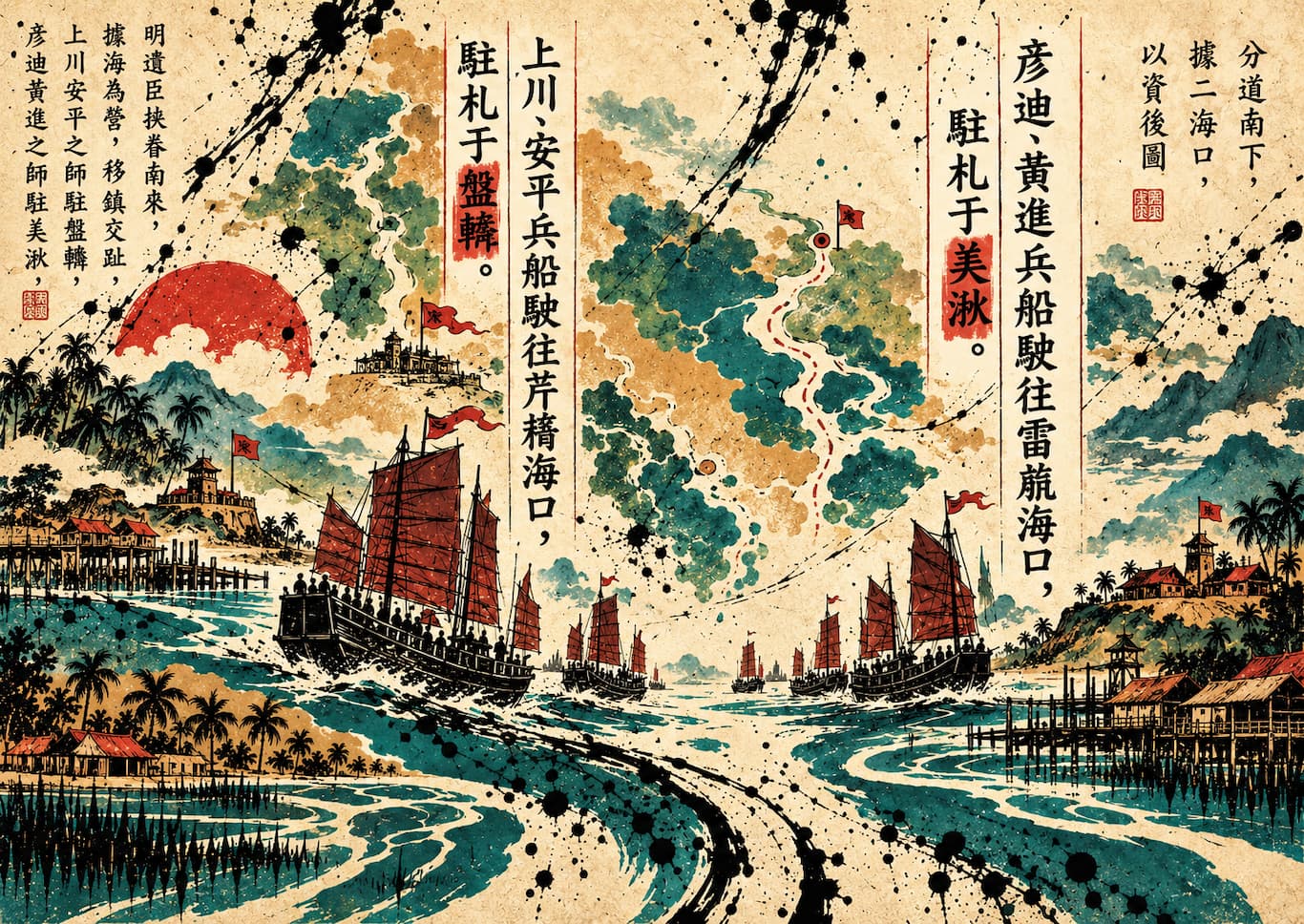
There is a famous passage in the Đại Nam thực lục 大南寔錄 that records the arrival in 1679 of some Ming dynasty loyalists (Yang Yandi/Dương Ngạn Địch 楊彥迪, Huang Jin/Hoàng Tiến 黃進, Chen Shangchuan/Trần Thượng Xuyên 陳上川, and Chen Anping/Trần An Bình 陳安平) whom the Nguyễn lords allowed to settle in the area of what is now southern Vietnam.
Where exactly did they settle? Well, that has been something that people who rely on modern translations have struggled to understand, because the information in the current translation of the Đại Nam thực lục differs from what is recorded in other sources.
The current translation of the Đại Nam thực lục states:
Binh thuyền của Ngạn Địch và Hoàng Tiến vào cửa Lôi Lạp (nay thuộc Gia Định), đến đóng ở Bàn Lân (nay thuộc Biên Hòa).
“The ships carrying Ngạn Địch and Hoàng Tiến entered the Lôi Lạp estuary (now part of Gia Định) and established themselves at Bàn Lân (now part of Biên Hòa).”
Meanwhile, Trịnh Hoài Đức’s Gia Định thành thông chí 嘉定城通志 records that in 1679:
龍門將楊等兵弁船艘,駛進𣒱巤……大小海門……駐札于美湫處〈在今定祥鎮莅所〉。高、雷、廉將陳等兵弁船艘,駛進芹滁海門,駐札于仝狔處盤轔地方〈在今邊和鎮莅所〉。
“The troops and ships of the Long Môn commander Dương sailed into the [Soài Rạp/Lôi Lạp] and Đại–Tiểu estuaries, all belonging to Định Tường, and stationed themselves at Mỹ Tho, where the administrative seat of Định Tường now stands. The troops and ships of Commander Trần of Cao-Lôi-sailed into the Cần Giờ estuary and stationed themselves at Bàn Lân in Đồng Nai, where the administrative seat of Biên Hòa now stands.”
Do you see the problem? Did these Ming loyalists settle in one place or two? And did Yang Yandi/Dương Ngạn Địch settle in Mỹ Tho or Biên Hòa?
This might seem like a minor point, but it’s actually pretty important, as this is key information about the historical settlement of the Mekong Delta.
In fact, if we look at the classical Chinese source text of the Đại Nam thực lục, we find the same information as that found in the Gia Định thành thông chí, and we therefore can see that the modern translation of the Đại Nam thực lục is wrong.
Here it is:
彥迪、黃進兵船駛往雷巤(今屬嘉定)海口,駐札于美湫(今屬定祥);上川、安平兵船駛往芹蒢海口,駐札于盤轔(今屬邊和). . .
The ships carrying Ngạn Địch and Hoàng Tiến sailed to the Lôi Lạp estuary (now part of Gia Định) and established themselves at Mỹ Tho (now part of Định Tường). The ships carrying Thượng Xuyên and An Bình sailed to the Cần Giờ estuary and established themselves at Bàn Lân (now part of Biên Hòa). . .
Problem solved. The Ming loyalists settled in two places, and Yang Yandi settled at Mỹ Tho.
How did I discover this?
I didn’t. An LLM did.
To make a long story short, I’ve been cross-checking various texts against each other: OCRed texts against scanned originals, cleaned-up OCRed texts against Vietnamese translations, etc.
Or, more specifically, it’s not me who has been doing the cross-checking. It’s ChatGPT and Claude who are doing that.
What is more, in this entry on the arrival of the Ming loyalists, ChatGPT and Claude found other errors as well, just none as big as the one above.
Yes, human beings can discover this kind of error, but not at the speed or scale that LLMs can.
A new human translation of the Đại Nam thực lục would take years and would still have many errors.
A new AI translation of the Đại Nam thực lục could be completed in . . . let’s be conservative and say three or four months, and that translation would be infinitely more accurate than anything human beings could ever achieve.
For anyone interested in evidence-based scholarship grounded in accurately understood sources, we have entered the greatest age in human history.
Welcome!!!