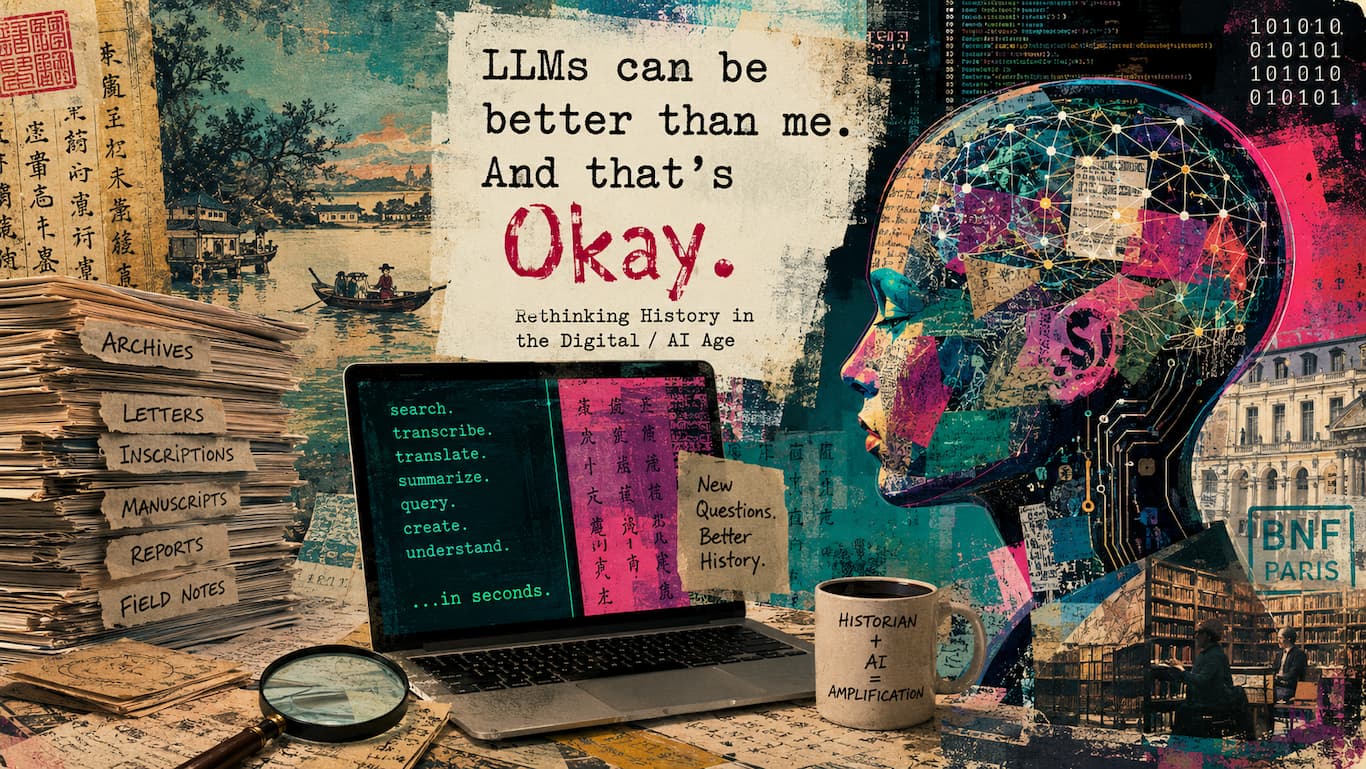
Various Thoughts on Why I’m Fine with LLMs Being Better Than Me
I recently wrote a brief post in which I admitted something that still feels a little strange to say out loud: LLMs can now do much of the work that…
I recently wrote a brief post in which I admitted something that still feels a little strange to say out loud: LLMs can now do much of the work that…

For the past few months, I have been working heavily with ChatGPT (the paid version). It’s open all day long as I work on various things, and I repeatedly turn…

Over the past few years, I’ve seen the same pattern repeated over and over regarding statements made about LLMs. Someone will say something about the capabilities of a given LLM,…

In 2021, archaeologist Pierre-Yves Manguin published an article entitled “Srivijaya: Trade and Connectivity in the Pre-modern Malay World.” At the beginning of the article, Manguin traces the history of the…
Over the past couple of months, I have written a lot of blog posts on the scholarship on “Srivijaya” that makes use of Chinese sources.In particular, I went back to…

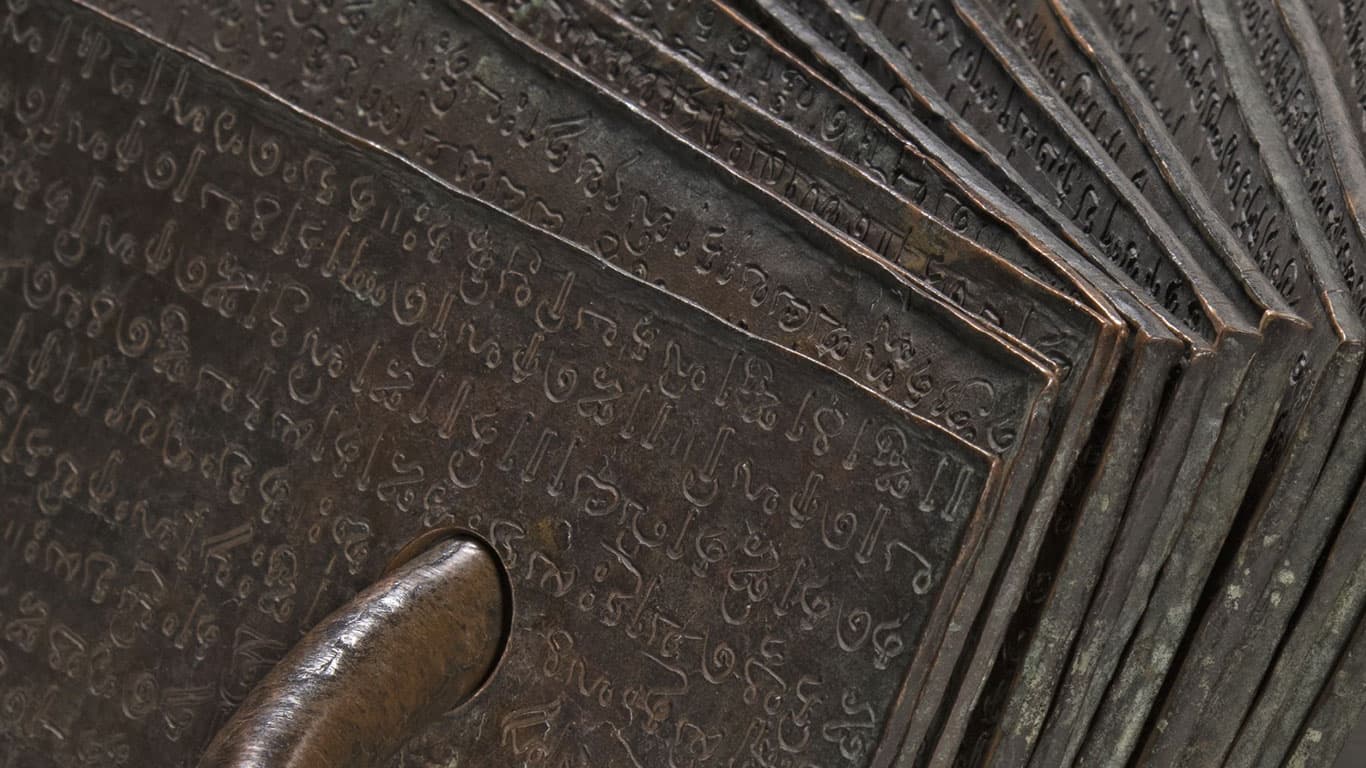
One of the core inscriptions that is cited in the Srivijaya narrative, the Ligor Inscription, as well as some inscriptions from southern India, mention alongside the name “Srivijaya” the name…
The first fifty years of scholarship on “Srivijaya” was conducted through the study of inscriptions and texts. Then in in 1974, a group from Indonesia and America supported by the…

In the 1930s, after scholars had investigated the topic of “Srivijaya” for more than a decade, some of the core ideas in George Cœdès’s 1918 article, “Le Royaume de Çrivijaya,”…

In his 1918 article, “Le Royaume de Çrivijaya,” George Cœdès examined information from three types of sources—inscriptions, Arabic texts, and Chinese texts—to make the argument that there had historically existed…
By the time George Cœdès wrote and published his 1918 article, “Le Royaume de Çrivijaya,” there were various false assumptions that scholars had created about certain placenames mentioned in Chinese…