
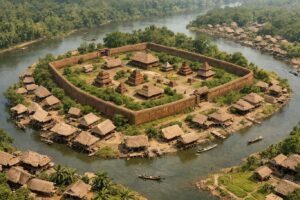
In 2021, archaeologist Pierre-Yves Manguin published an article entitled “Srivijaya: Trade and Connectivity in the Pre-modern Malay World.” At the beginning of the article, Manguin traces the history of the archaeological study of southern Sumatra as the site of “Srivijaya.” It is worth citing this section at length as it...
Read More
Srivijaya Sinology – A Field that Should Exist, But Doesn’t
Over the past couple of months, I have written a lot of blog posts on the scholarship on “Srivijaya” that makes use of Chinese sources. In particular, I went back to the nineteenth century to see who the first scholars were to identify key placenames in Chinese sources that were...
Read More
From Jordaan to Zakharov: The Sailendras and Srivijaya
One of the core inscriptions that is cited in the Srivijaya narrative, the Ligor Inscription, as well as some inscriptions from southern India, mention alongside the name “Srivijaya” the name “Sailendra.” This is the name of a dynasty/line of rulers that is also mentioned in an inscription on Java. For...
Read More
From Cœdès to Manguin: Srivijaya and the Chinese Sources (Part 6)
The first fifty years of scholarship on “Srivijaya” was conducted through the study of inscriptions and texts. Then in in 1974, a group from Indonesia and America supported by the Indonesian Archeological Institute, the University of Pennsylvania Museum, and the Field Museum of Natural History conducted excavations at Palembang from...
Read More
From Cœdès to Manguin: Srivijaya and the Chinese Sources (Part 5)
In the 1930s, after scholars had investigated the topic of “Srivijaya” for more than a decade, some of the core ideas in George Cœdès’s 1918 article, “Le Royaume de Çrivijaya,” were challenged. The first person to do so was R. C. Majumdar, and his critique of Cœdès’s work was substantial....
Read More
From Cœdès to Manguin: Srivijaya and the Chinese Sources (Part 4)
In his 1918 article, “Le Royaume de Çrivijaya,” George Cœdès examined information from three types of sources—inscriptions, Arabic texts, and Chinese texts—to make the argument that there had historically existed a polity based at Palembang on the island of Sumatra called “Srivijaya.” As we have seen, his understanding of Chinese...
Read More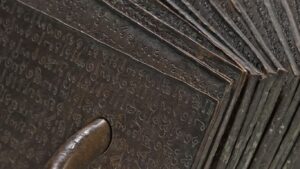
From Cœdès to Manguin: Srivijaya and the Chinese Sources (Part 3)
By the time George Cœdès wrote and published his 1918 article, “Le Royaume de Çrivijaya,” there were various false assumptions that scholars had created about certain placenames mentioned in Chinese sources, particularly Shilifoshi, Sanfoqi, Moluoyu, and Shepo. As we saw in the previous two posts in this series, Cœdès worked...
Read More
The Pyu, Tircul, Javanese, and Shepo
In the history of Burma, scholars have written about what they have perceived as a people who inhabited parts of Upper Burma in the first millennium AD that they refer to as the “Pyu.” However, this name is problematic as it rarely appears in historical sources, and when it does,...
Read More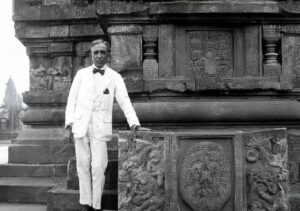
From Cœdès to Manguin: Srivijaya and the Chinese Sources (Part 2)
In thinking about how to explain the problems that we find in George Cœdès’s 1918 article, “Le Royaume de Çrivijaya,” I realized that it would be helpful for readers to have access to an English-language translation of that article. So, I made one with ChatGPT and shared it here. However,...
Read More
A Translation of George Cœdès’s 1918 Srivijaya Article
In writing about George Cœdès’s 1918 article, “Le royaume de Çrīvijaya,” it dawned on me that it would be difficult for many people to understand what I am talking about if they can’t read the original article. I therefore translated it with ChatGPT, and am sharing the translation here. I...
Read More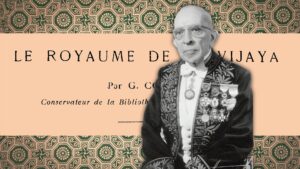
From Cœdès to Manguin: Srivijaya and the Chinese Sources (Part 1)
By the late nineteenth century, as I documented in the previous two series of posts, scholars had linked two placenames recorded in Chinese sources, Shilifoshi 室利佛逝 and Sanfoqi 三佛齊, with the area of Palembang on the island of Sumatra. As I also documented in those posts, those efforts to make...
Read More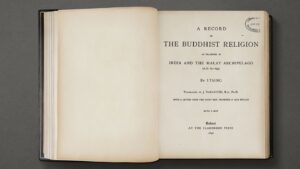
From Chavannes to Sen: Yijing’s Journey through Southeast Asia (Part 4)
In 1967, historian O. W. Wolters published his Early Indonesian Commerce: A Study of the Origins of Srivijaya. In that work, Wolters mentions Yijing, the seventh-century Chinese monk who traveled through Southeast Asia on his way to India and back, 189 times!! From that number alone, I think we can...
Read More
From Chavannes to Sen: Yijing’s Journey through Southeast Asia (Part 3)
In the second half of the nineteenth century, various Western scholars started to investigate what Chinese historical sources recorded about places in Southeast Asia. As they did so, they were confronted with unfamiliar names, like Shilifoshi and Sanfoqi. In trying to understand such terms, there was one placename that played...
Read More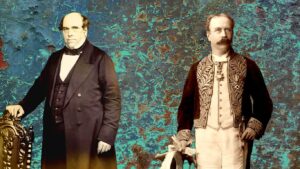
From Chavannes to Sen: Yijing’s Journey through Southeast Asia (Part 2)
In 1894, French Sinologist Émmanuel-Édouard Chavannes translated a text written in the late seventh century by the Chinese monk, Yijing, entitled The Great Tang Biographies of Eminent Monks who Sought the Dharma in the Western Regions (Da Tang Xiyu qiufa gaoseng zhuan 大唐西域求法高僧傳). In that work, Chavannes argued that a...
Read More
What I Now Know about Early Southeast Asia in Chinese Sources
I have been writing about early Southeast Asia in Chinese sources for years now, and it is a very complex topic. Therefore, I decided to create a simplified version of “what I now know” to help anyone who wants to try to understand what I have been writing about. So,...
Read More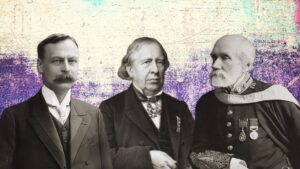
From Chavannes to Sen: Yijing’s Journey through Southeast Asia (Part 1)
Chinese historical sources contain valuable information about early Southeast Asia, however, it takes some effort to determine which exact places some of that information refers to. This task of determining which places in Southeast Asia early Chinese sources refer to is one that the first generations of modern scholars attempted...
Read More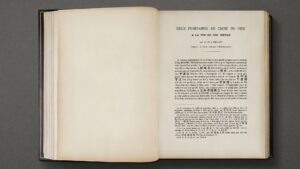
From Pelliot to Wade: Jia Dan’s Itinerary Through Maritime Southeast Asia (Part 4)
By this point, it should be apparent to anyone who has read the previous three posts in this series that Paul Pelliot’s 1904 article, “Deux itinéraires chinois de Chine en Inde à la fin du VIIIe siècle,” is deeply and fundamentally flawed. That 1) Pelliot got fundamental information so fundamentally...
Read More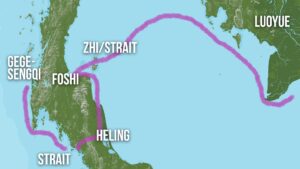
From Pelliot to Wade: Jia Dan’s Itinerary Through Maritime Southeast Asia (Part 3)
In these posts, we are looking at an itinerary through Southeast Asia that Chinese scholar-official Jia Dan recorded in the ninth century. Why is this important? It is important because although there is considerable information in Chinese sources about early Southeast Asia, it can be difficult to determine from that...
Read More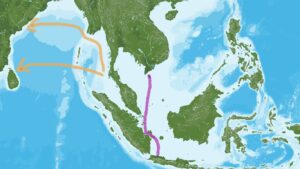
From Pelliot to Wade: Jia Dan’s Itinerary Through Maritime Southeast Asia (Part 2)
This post is a continuation of the previous post where we began to look at 1) Paul Pelliot’s 1904 article, “Deux itinéraires chinois de Chine en Inde à la fin du VIIIe siècle,” in which Pelliot examined a trade route from Guangdong through Southeast Asia and ultimately on to India...
Read More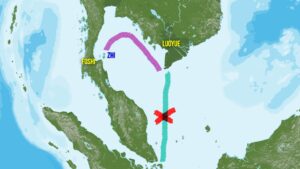
From Pelliot to Wade: Jia Dan’s Itinerary Through Maritime Southeast Asia (Part 1)
In the eighth century, a Chinese scholar-official by the name of Jia Dan 賈耽 (730-805) recorded a great deal of geographic information about foreign lands as well as the routes to and through those lands. A few itineraries that he compiled are included in the New History of the Tang...
Read More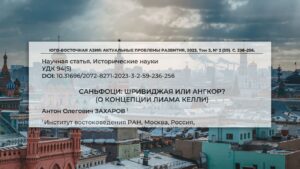
Anton Zakharov’s Review of Rescuing History from Srivijaya (Part 1)
Three years ago, epigrapher Anton O. Zakharov published a detailed discussion of the first part of my “Rescuing History from Srivijaya” article, entitled “Srivijaya or Angkor? Notes on Liam Kelley’s Hypothesis.” It’s 17 pages of single-spaced Russian text! So that’s a significant piece of writing. I’ve long known that it’s...
Read More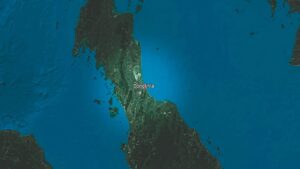
Shepo 闍婆 was DEFINITELY in the Songkhla Area
Several years ago, I first suspected that a name that we find in Song-dynasty-era sources, Sanfoqi, referred to “Kambuja/Kampuchea” rather than what most of the rest of the scholarly world has always thought, which is that it referred to a polity called “Srivijaya” based at Palembang. In testing this idea,...
Read More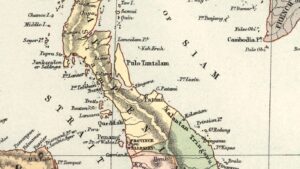
The Inland Water Route from Nakhon Si Thammarat to Songkhla
If you look at old European maps of the area of what is now southern Thailand, you will notice something odd. From the seventeenth to the nineteenth centuries, these maps make it look like there was a large island along the coast. And then at the end of the nineteenth...
Read More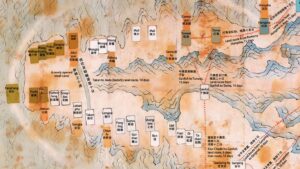
The Lake Songkhla to Kedah Trade Route in the 18th Century
For years, I have been arguing that the area between Lake Songkhla and Kedah was home to a trans-peninsular trade route of immense importance in the final centuries of the first millennium AD. This was the area that Arabs referred to as Zabag, and which Chinese referred to as Shepo...
Read More
Elephants and Dragon Teeth Gate (Longyamen)
In developing the idea that Chinese sources provide evidence of a kingdom called “Srivijaya” at Palembang on the island of Sumatra, a placename called “Longyamen” 龍牙門, meaning “Dragon Teeth Gate,” has played an important role. It goes like this: 1) scholars have argued that a kingdom mentioned in Song-Ming dynasty...
Read More
An Insulting Assessment of My Work
I was looking around for something on the Journal of the Siam Society website and saw a new article by Pierre-Yves Manguin on “George Coedès and Śrīvijaya: From Epigraphy to Archeology.” For anyone who hasn’t read anything on this blog in the past six years and hasn’t read the works...
Read More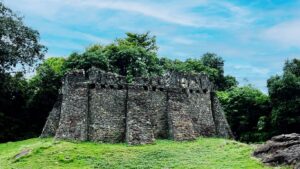
The Seventeenth-Century Rise of Hà Tiên and Singora
One of the first papers I ever published was called “Thoughts on a Chinese Diaspora: The Case of the Mạcs of Hà Tien” (2000). I wrote it as a final paper in a graduate seminar on diasporas in world history. The paper was about a group of Chinese refugees, under...
Read More
Old Harbor in the Ming shilu
For the past five years, I have been arguing that a placename that appears in Chinese historical sources, Sanfoqi, was a reference to Cambodia, rather than to a proposed polity on the island of Sumatra called “Srivijaya,” as virtually everyone else thinks. While there is a lot of general information...
Read More
Sanfoqi, Old Harbor and the Baolin Polity in the Rekidai Hōan
For the past five years, I have been putting forth the argument that a Chinese place name, Sanfoqi, that scholars believe referred to a polity on Sumatra called “Srivijaya” was actually a reference to “Cambodia,” and literally is the term, “Kambuja.” The most important piece of evidence for the “Sanfoqi...
Read More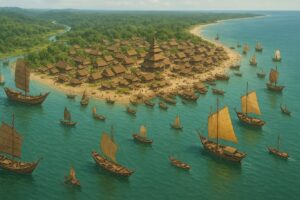
Sanfoqi in the Ming shilu
Many years ago now, in the 1990s, historian Geoff Wade translated the information about Southeast Asia in the Ming shilu (Veritable Records of the Ming), and then in the 2000s that information was put online (https://epress.nus.edu.sg/msl/). Meanwhile, the Chinese text of the Ming shilu is also available online (https://hanchi.ihp.sinica.edu.tw/mql/login.html). One...
Read More
The Jawa – Cham Connection
I was recently reading an article by historian Nicolas Weber entitled “Malays in the Indochinese Peninsula: Adventurers, Warlords and Ministers” [Journal of the Malaysian Branch of the Royal Asiatic Society 94.1 (2021): 1-24], where I came an extremely fascinating passage about a connection between the Cham world and the world...
Read More
Locating Foluo’an 佛羅安
Over the past several years, I have been going through the Chinese sources for Southeast Asian history and reinterpreting them. One big issue that I have found is that people have wrongly identified certain place names, and that has created a lot of confusion in the scholarship that bases itself...
Read More
The History of Cambodia You Never Knew About
As I have been writing for years now, there is a place name in Chinese sources, Sanfoqi 三佛齊, which, for the past 100+ years, scholars have thought indicated a place on the southern end of the island of Sumatra which they think was the capital of a polity called “Srivijaya.”...
Read More
The Lost Water Route between Songkhla and Nakhon Si Thammarat
Five years ago, I listened to a colleague at Universiti Brunei Darussalam, Johannes Kurz, give a presentation on how problematic the scholarship on “Srivijaya” is, and in particular, how problematic the use of Chinese sources has been in that body of scholarship. That all made sense to me, because although...
Read More
Did Funan Have a Cham King?
I have recently been examining a fourth-century text Daoist text, the Grand Clarity Scripture of Divine Elixir Made from Liquid Gold (Taiqing jinye shendan jing 太清金液神丹經) attributed to Ge Hong 葛洪 (283–343 CE), that has information about some parts of Southeast Asia. I have translated those parts here. I have...
Read More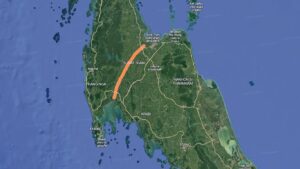
The Surat Thani – Phang Nga Crossing in the Third-Fourth Centuries
In the third century, there were a couple of envoys who traveled to Funan and wrote accounts of the area. Namely, the following: Kang Tai 康泰, Account of Foreign Kingdoms in the Wu Period (Wushi waiguo zhuan 吳時外國傳). This work was also known as the Account of Funan (Funan zhuan...
Read More
On NOT Crossing the Sea from Côn Đảo to Singapore
If you read the extent scholarship on Southeast Asia in the first millennium AD, you will find scholars repeatedly indicating that ships sailed across the seas between the area of what is now Côn Đảo, at the southeastern tip of the Indochinese Peninsula, and Singapore. The image above contains two...
Read More
The Chicken Tongue Aromatic (shejixiang) was NOT Cloves
There is an aromatic that is mentioned in early Chinese sources called the “chicken tongue aromatic” (jishexiang 雞舌香). From what I can tell, everyone who has mentioned it thinks it is a reference to cloves. It’s clear to me, however, that it is not. One place where it is mentioned...
Read More
Ge Hong’s Five Kingdoms
In the previous post, I translated information about Southeast Asia in an early fourth-century text entitled Grand Clarity Scripture of Divine Elixir Made from Liquid Gold (Taiqing jinye shendan jing 太清金液神丹經) that is attributed to the Daoist, Ge Hong 葛洪(283–343 CE). Ge Hong has a long introduction to the section...
Read More
Third-Fourth Century Maritime Southeast Asia in a Daoist Text
I recently came to realize that there is geographic information about third-fourth century maritime Southeast Asia in a Daoist text, the Grand Clarity Scripture of Divine Elixir Made from Liquid Gold (Taiqing jinye shendan jing 太清金液神丹經). This text is attributed to Ge Hong 葛洪(283–343 CE), also known as “The Master...
Read More
I FINALLY Figured Out Yijing!!
If you don’t know what this title means, then you can read these blog posts to find out more: “Yijing did NOT Visit Jambi/Srivijaya” “I Found “Malayu / Malaya / Malāyur!!!” The gist is that there is a Tang dynasty monk, Yijing, who traveled to India and back in the...
Read More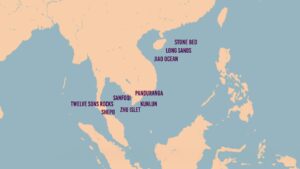
There is no Pulau Aur in Song Dynasty Era Sources
A few days ago, I posted a translation of information about maritime Southeast Asia in Zhou Qufei’s 周去非 1178 work, Lingwai daida 嶺外代答 [Representative Responses about the Region Beyond the Passes]. In that work, Zhou Qufei describes the route from to China from Sanfoqi, a place that I argue was...
Read More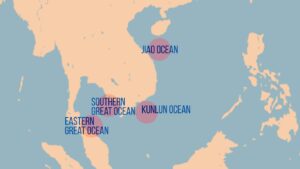
Geographic Space in the Lingwai Daida
I have just shared a translation that ChatGPT and I made of the sections in Zhou Qufei’s twelfth-century Lingwai daida that relate to maritime Southeast Asia. I would like to now start discussing the information in that text. I’ll begin by talking in general terms about the conceptions of space...
Read More
12th-Century Maritime Southeast Asia in the Lingwai Daida
Zhou Qufei’s 周去非 1178 work, Lingwai daida 嶺外代答 [Representative Responses about the Region Beyond the Passes], is a very important Chinese source for information about maritime Southeast Asia at that time. For some reason, this work has never been translated. However, it should have been, and it should have been...
Read More
Cham Pu Muslims
In previous posts I have been challenging a long-held belief that a “surname” that appears in Chinese sources, “Pu,” indicates the Arab name, “Abu” or the Javanese-Malay title, “mpu/empu.” In this post, I would like to go a bit deeper by looking at a specific Cham clan that lived in...
Read More
More Evidence for the Cham Pu/Po in Chinese Historical Sources
In a recent blog post, I talked about how in Song dynasty era sources, there is a “surname” that appears in numerous Chinese records about tribute missions coming from Southeast Asia — “Pu” 蒲 – that scholars have argued indicates the Arabic name “Abu” or certain Southeast Asian terms. Among...
Read More
More Evidence of Two “Javas”
I have made the argument that there was a trans-peninsular empire/polity in the area of Songkhla – Kedah that foreigners referred to by the name “Java/Jaba,” and that it was only in the thirteenth century that foreign traders recorded information about island Java, at which point, there were “two Javas”...
Read More
More Evidence for the Trans-Peninsular Crossing at Kedah – Songkhla
In the previous post, I mentioned that there was a tribute mission from the Chola Kingdom in 1015 that was led by a certain Suolisanwen (娑里三文) with a deputy envoy Pu Shu 蒲恕 (or Pu Jiaxin 蒲加心), and I argued that the “Pu” here is the Cham honorific, pu/po. This...
Read More
When the Cham Ruled the Seas
In Song dynasty era sources, there is a “surname” that appears in numerous records about tribute missions coming from Southeast Asia (and beyond), and that is “Pu” 蒲. This character appears in the names of envoys from various places. Over a century ago, there were scholars who proposed that this...
Read More
The Angkorian Independence from Java “Myth”
Several years ago, when I first started researching about “Srivijaya” and quickly realized that a place name in Chinese sources (Sanfoqi) that scholars thought indicated that supposed polity on Sumatra was actually a reference to “Kambuja,” I consulted an excellent 2011 dissertation from Berkeley by Ian Nathanial Lowman entitled “The...
Read More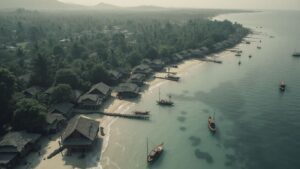
The Myth of Jambi as a Capital of “Srivijaya”
I was reading a book that was published in 2022 called The Oxford Handbook of Early Southeast Asia. It contains a chapter on “Srivijaya” by Pierre-Yves Manguin. In that chapter, there is a section on “The Troubled Eleventh Century and the Shift to Jambi” where Manguin writes that “In the...
Read More
Rescuing History from Srivijaya – Part 2
A couple of years ago, I published an article entitled “Rescuing History from Srivijaya: The Fall of Angkor in the Ming Shilu (Part 1).” A continuation of that article, “Rescuing History from Srivijaya: The Fall of Angkor in the Ming Shilu (Part 2),” has just been published, and at some...
Read More
Geography and a New Story of Early Southeast Asian History
In recent years I’ve written some articles about early Southeast Asian history, and I don’t like how have written those articles. When you write for a “scholarly” audience, there are certain things that you are expected to do, and in my case, I am going through a lot of sources,...
Read More
Here is an Example of the Problem with the Scholarship on “Srivijaya”
As I have said a million times by now, there is a place name in Chinese historical sources, Sanfoqi 三佛齊, that in the early twentieth century, French scholar George Cœdès claimed indicated a place called “Srivijaya,” a polity supposedly based at Palembang on the island of Sumatra. As I have...
Read More
I FINALLY Found Sanfoqi!!
Off and on over the past few years, I have been researching about a place called “Sanfoqi” 三佛齊. This is a name that appears in Chinese sources from the tenth through the fourteenth centuries, and it was clearly a very important trading center in Southeast Asia. Since the early twentieth...
Read More
A Working Paper on the Chinese Sources on Early Southeast Asia
I’ve recently published a working paper entitled “Revisiting the Chinese Sources on Early Southeast Asia.” I started looking at the Chinese sources for early Southeast Asian history a few years ago, and discovered a lot of problems with the ways that modern scholars have understood and written about those materials....
Read More
The Zhu Fan Zhi and the Complete Mess Scholars Have Made
The scholarship on early Southeast Asian history that relies on Chinese sources is a complete mess. From the very beginning, scholars got a lot of things wrong, and then they just kept going and kept producing ever more flawed scholarship. By this point, the extant scholarship is simply unusable. If...
Read More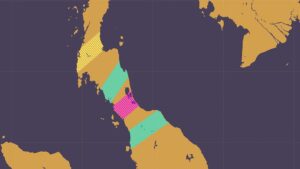
Seeing Trans-Peninsular Networks in Chinese Historical Sources (Part 1)
Chinese historical sources have long been used to try to gain an understanding of early Southeast Asian history. However, when scholars have made use of these sources, they have usually done so without talking about the context in which that information is placed in Chinese historical sources. In other words,...
Read More
Srivijaya 3.0 (21): The Language of Jāba – I Can’t Figure It Out
I have recently been writing a lot about a place that I refer to as “Jāba,” a kingdom that I argue was based in the area of what is now Songkhla in southern Thailand and which from the fifth to fourteenth centuries was an important node in a trans-peninsular trade...
Read More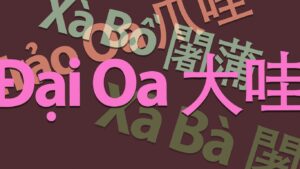
Srivijaya 3.0 (20): “Jāba” in the Đại Việt sử ký toàn thư
By now I think that I have clearly established the fact that there was a kingdom located in the area of what is now Songkhla that was at the center of an important trans-peninsular trade network. I refer to this kingdom as “Jāba” (although it may have actually been called...
Read More
Srivijaya 3.0 (19): A Vietnamese Encounter with “Cha Ba” in the Early 19th Century
In 1810, two Vietnamese officials presented to Emperor Gia Long a map of the routes to, and within parts of, Siam with an accompanying text based on information they had acquired the previous year while on a diplomatic mission. Known as the Collected Records of the Routes in the Kingdom...
Read More
Srivijaya 3.0 (18): The Burma-Jāba Connection
In many recent posts, I have been writing about a place that I call “Jāba.” This was the center of a major trans-peninsular trade empire, and it was located around the area of what is now Songkhla in southern Thailand. This place is referred to in various historical sources by...
Read More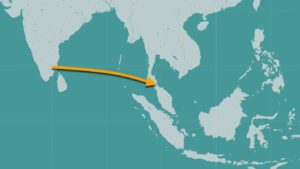
Srivijaya 3.0 (17): The “Chola Invasion of Srivijaya”
In the eleventh century, a place in Southeast Asia called “Srivishaya” was attacked by a kingdom from southern India known as the Chola kingdom. We know about this from inscriptions in Sanskrit and Tamil that have been found in India. What we also know from these inscriptions is that prior...
Read More
Srivijaya 3.0 (16): The “Thai” Origin of the Mongol Invasion of Java
In early 1292, Kublai Khan, the Mongol emperor of the Yuan Dynasty in China, gave orders to three of his officials to lead troops to attack the island of Java. Why did he do this? The History of the Yuan states that when these men met with the emperor before...
Read More
Srivijaya 3.0 (15): Marco Polo Visited Thailand
Yes, you read that correctly. Marco Polo visited Thailand. Ok, I know that there was no place called “Thailand” in the late thirteenth century when Marco Polo traveled across Southeast Asia on his way back to Venice, however, he did pass through places that are now part of Thailand. This...
Read More
Srivijaya 3.0 (14): I Found “Malayu / Malaya / Malāyur”!!!
Ok, I think I have finally found “Malayu”!!! The term, “Malayu,” and the related terms of Malaya and Malāyur appear in several historical sources before the 1400s, and they clearly refer to a place. Where was that place? In a previous post, where I debunked the idea that Tang Dynasty...
Read More
Srivijaya 3.0 (13): The Description of Jāba/Zābaj in Arabic Texts
Having shared the translations of some of the information in Arabic texts about Southeast Asia in the last post, let’s take a look at what they have to say about the place called Jāba/Zābaj, which I argue was a trans-peninsular trading empire that was based at Songkhla in what is...
Read More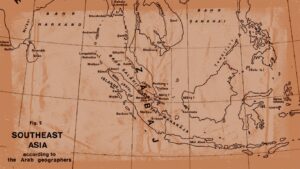
Srivijaya 3.0 (12): The Arabic Texts about Southeast Asia
In recent posts, I have been talking about information in Arabic texts. There are a group of texts in Arabic that provide information about Southeast Asia starting in the ninth century. I can’t read Arabic, so I have to rely on translations, and there are a couple of main translations...
Read More
Srivijaya 3.0 (11): Why There were Two “Javas” in the 1200s-1300s
As stated in the previous post, there were two “Javas” in the past in Southeast Asia. These two Javas are referred to in Arabic, Chinese and other sources variously as Java/Jaba/Zabag/Shepo and mul-Java/Zhuawa. Originally only one Java was mentioned in historical sources. Then in the 1200s and 1300s both of...
Read More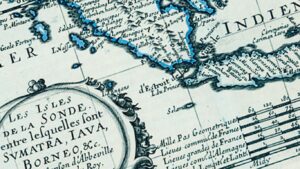
Srivijaya 3.0 (10): The Two “Javas” in Southeast Asia
One issue that has confused historians for over a century is the fact that there is more than one place that was referred to as “Java” (or something close to that name) in the past in Southeast Asia. I think this can be seen the clearest in Chinese sources, but...
Read More
Srivijaya 3.0 (09): Yijing did NOT Visit Jambi/Srivijaya
There was a Chinese Buddhist monk by the name of Yijing 義淨 (635–713) who traveled to India in the second half of the seventh century and stayed there for 11 years. Yijing left some records of his journey, and that information has served as “evidence” for the existence of a...
Read More
Srivijaya 3.0 (08): The Real China-India Maritime Route During the Tang Period
The belief that there was historically a dynamic and important maritime kingdom on the island of Sumatra called “Srivijaya” has created an incalculable number of problems for scholarship on premodern Southeast Asian history. This is because, over the past century, scholar after scholar after scholar has interpreted historical sources with...
Read More
Srivijaya 3.0 (07): Jaba/Songkhla in The Crystal Sands
A colleague and friend pointed out to me that I should look at information in a work known as The Crystal Sands: The Chronicles of Nagara Sri Dharrmaraja. This is a Thai-language text that was translated into English and published in 1975 by the late historian David K. Wyatt. Cornell...
Read More
Srivijaya 3.0 (05): Ok, So There WAS a Srivijaya. . . But It’s Not What You Think. . .
A while ago I made a video where I said something like “no place called Srivijaya ever existed”. . . I kind of knew at the time that I might end up eating those words, but I like to be provocative, and I had a strong sense at that time...
Read More
Rescuing History from Srivijaya Paper (Part 1)
At long last, the first part of a 2-part article on “Srivijaya” has just been published. In this article, I argue that information in Chinese sources (about “Sanfoqi” 三佛齊) that has been used to construct the history of a supposed maritime polity in Southeast Asia called “Srivijaya” is actually about...
Read More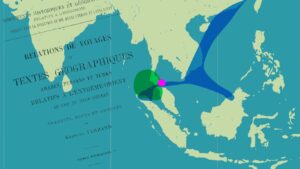
Srivijaya 3.0 (04): Revisiting the Arabic Sources for Southeast Asian History
I have recently come up with a new picture of premodern Southeast Asian history by revisiting Chinese, Siamese, and Cambodian sources. In particular, I have come to conclude that there was never a place called “Srivijaya,” a kingdom that was supposedly “rediscovered” by George Cœdès in 1918. Instead, I am...
Read More
Srivijaya 3.0 (03): Angkor as an International Entrepôt
As I stated in the previous post (The “One Country – One King” Problem in Premodern Southeast Asian History), when historians have looked at the records of tribute missions to China from Southeast Asian polities in the past, they have generally viewed those records as representing tribute missions from individual...
Read More
Srivijaya 3.0 (02): The “One Country – One King” Problem in Premodern Southeast Asian History
There is a major problem that plagues the scholarship on premodern Southeast Asian history, and I call it the “one king – one country” problem. When European scholars during the colonial period first examined Southeast Asian history and tried to develop political chronologies for the various polities in the region,...
Read More
Srivijaya 3.0 (01): Yet Another Series
I can see everything clearly now. It all falls into place. It all makes sense. . . Over the past couple of years, I have provided extensive evidence to overturn the idea that there was ever a maritime kingdom called “Srivijaya.” This supposed kingdom was “discovered” by French scholar George...
Read More
How is it Possible that the “Srivijaya Myth” Could Last So Long?
I am well aware that many people are going to respond with immediate disbelief to the idea of the article that I am about to publish that there was no “Srivijaya” and that the information in Chinese sources about “Sanfoqi” that was employed to produce a history for “Srivijaya” is...
Read More
What Does “Post-Srivijaya” Southeast Asian History Look Like?
I have recently written a long 2-part article that demonstrates that there was never a kingdom called “Srivijaya.” The first part will be published in a few days. Much of the information that was used to create the history of that supposed kingdom came from Chinese sources, and I have...
Read More
There Was No Srivijaya. I Am 100 Billion % Sure of That.
[Update: As I’ve researched this further, I’ve changed my mind a little bit. I still am 1 billion % sure that the “Srivjaya” that has been talked about in academic writings – that is, a supposed maritime polity based at Palembang – did not exist. What I think the “Srivjjaya/Srivishaya”...
Read More
Take a Look at These Images and Ask Yourself. . .
The Google Ngram Viewer shows how many times certain terms appear in digitized printed texts. The image below shows what we see when we input the terms “Srivijiya” and “Sri Vijaya” in the Google Ngram Viewer. The Google search engine can show us how many websites contain a term that...
Read More
Srivijaya 2.0 (14): If Coedès was This Bad when it Came to Srivijaya. . .
George Cœdès (1886-1969) was a French scholar of the Southeast Asian past who published prolifically, and through his writings, has exerted an enormous influence on the writing of premodern Southeast Asian history. Those writings include extensive translations of Cambodian inscriptions and a survey of early Southeast Asian history that was...
Read More
Srivijaya 2.0 (13): The Ryukyu Letter to Siam that Proves Sanfoqi = Kambuja
On 8 October 1431, the king of Chuzan 中山, one of the principalities that made up the Kingdom of Ryukyu on the island of Okinawa, sent a letter to the King of Siam. It was a very polite letter, as diplomatic letters tend to be. But the king of Chuzan...
Read More
The Female Deity Worshipped by the Kings of Angkor
Did you know that Angkorian kings used to regularly travel to the lower Mekong region to worship a female deity? No, you didn’t know that. I know you didn’t. But don’t feel bad about that. It’s not your fault! You’re still as smart as ever. It’s more like you’ve been...
Read More
Premodern Southeast Asian Imperialism, Decolonizing Historical Knowledge, and the Liberal Bias in Western Historical Scholarship
In researching about “Srivijaya” recently, I have been reading about Southeast Asian history in the fourteenth and fifteenth centuries and I’ve come to realize something that I had not thought of before: There was big-time imperialism taking place in Southeast Asia before the European white boys showed up and tried...
Read More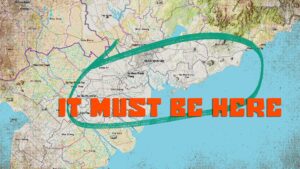
Srivijaya 2.0 (12): The Lost Multinational History of the Saigon – Vũng Tàu Coast?
Over the past few months, I have been demonstrating that information in Chinese sources that has been used for the past century to write about the history of an imagined polity called “Srivijaya” is actually about Cambodia. In particular, there is information in Chinese sources about a place called “Sanfoqi”...
Read More
Deconstructing Srivijaya is Easy!
How can it be possible to deconstruct/debunk 100 years of scholarship in a couple weeks/months? In 2021, it’s actually pretty easy, and this video explains why that is the case. For more, see the series of posts on “Srivijaya 2.0.” https://youtu.be/2ag2LCBbnXw
Read More
Srivijaya 2.0 (11): The Okinawan Evidence for Sanfoqi = Angkor
In these posts I have been demonstrating that a Chinese name (Sanfoqi) that scholars think refers to a kingdom on the island of Sumatra (Srivijaya) actually referred to “Kambuja,” that is, Cambodia, or more specifically, to the kingdom of Angkor. All of the evidence that I have presented supports this...
Read More
Srivijaya 2.0 (10): Sanfoqi in the Ming shilu
As I stated at the beginning of this series, there is the name of a kingdom in Chinese sources, Sanfoqi, that scholars have long argued indicates “Srivijaya,” the name of a kingdom that supposedly existed on the island of Sumatra. As I have demonstrated in this series, prior to the...
Read More
Srivijaya 2.0 (9): Foreigners in 14th-Century Cambodia
As we saw in an earlier post, there is a chronology for fourteenth-century Cambodian history that is recorded in a group of chronicles that we can call the Nong texts. As we also saw, the Ming shilu, a Chinese historical source that contains information from the fourteenth century, contains a...
Read More
Srivijaya 2.0 (8): Ayutthaya in the Ming shilu
To be able to understand the information that the Ming shilu 明實錄 (Veritable Records of the Ming) contains about Cambodia in the fourteenth century, we have to also get a sense of what that text records about the neighboring Siamese polity of Ayutthaya, because as we saw in the previous...
Read More
Srivijaya 2.0 (7): External Evidence for the Nong Chronicle
For Cambodian history, there are various chronicles that record information, and the main chronicles begin by discussing events in the fourteenth century. However, the current versions of these chronicles were compiled much more recently, starting in the early nineteenth century. In particular, in the early nineteenth century there was a...
Read More
Srivijaya 2.0 (6): Claude Jacques and the Reality Revealed by Chinese Views of Indochina
In 1979, French archaeologist Claude Jacques published an article that has been frequently cited entitled “‘Funan,’ ‘Zhenla’: The Reality Concealed by these Chinese Views of Indochina.” In this article, Jacques criticized historians for relying too heavily on employing Chinese sources in reconstructing the history of early Cambodia as he felt...
Read More
Srivijaya 2.0 (5): Michael Vickery and the Cambodian Chronicles
Chinese sources (the Ming shilu) record that in the late fourteenth century there was some kind of conflict between a place called Sanfoqi and Java, and that for some reason the Ming Dynasty emperor believed that Siam (Ayutthaya) was in a position to communicate with Java to alleviate this conflict...
Read More
Srivijaya 2.0 (4): The Sanfoqi Murder Mystery and its Repercussions
In 1377, the kingdom of Sanfoqi sent an envoy to the Ming court to request an official seal for the Sanfoqi monarch. The Ming Hongwu Emperor obliged, and sent an envoy to deliver the seal. That Ming envoy, however, never made it to Sanfoqi. Instead, word eventually reached the Ming...
Read More
Srivijaya 2.0 (3): Sayonara Cambodia! Sanfoqi is Moving to Sumatra!!
In the previous post, we saw that in various Chinese texts dating from the Song to the Ming periods, there was a kingdom called Sanfoqi that was located in the area of what is now Cambodia. What we didn’t talk about in that post, is the fact that during the...
Read More
Srivijaya 2.0 (2): Where was Sanfoqi?
Sanfoqi is the Chinese name of an historical kingdom that scholars believe once existed on the island of Sumatra and was called “Srivijaya.” I disagree. I am 100,000% convinced that Sanfoqi referred to “Kambuja,” that is, the Cambodian empire based at Angkor. One of the clearest ways to see this...
Read More
Srivijaya 2.0 (1): A New Series
Several months ago, I spent a couple of weeks quickly researching and writing about “Srivijaya.” That is the name of a purported kingdom that was based at Palembang on the island of Sumatra and which supposedly flourished from roughly the seventh to thirteenth centuries. The posts that I wrote at...
Read More